'%20d='m0%200%2016%2011h61%2061%2061%2061%2060L47%2037h61%2061%2060%2061L16%2063h61%2061%2061%2061%2060L47%2089h61%2061%2060%2061L16%20115h61%2061%2061%2061%2060L47%20141h61%2061%2060%2061L16%20166h61%2061%2061%2061%2060L47%20192h61%2061%2060%2061L16%20218h61%2061%2061%2061%2060z'/%3e%3c/svg%3e)
About
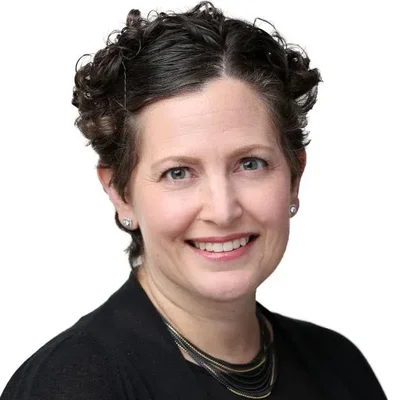
Beth W. Rackow holds one of the least glamorous and most consequential jobs in American gynecology: she is vice chair of the American College of Obstetricians and Gynecologists Committee on Coding and Nomenclature, the group that decides how procedures get described in the billing language insurers read. Whether a hysteroscopic fibroid removal is authorized or denied is, downstream, partly a decision her committee shapes.
She trained as a surgeon before she trained as a fertility physician. After obstetrics and gynecology residency at the Hospital of the University of Pennsylvania (2003) she completed a reproductive endocrinology and infertility fellowship at Yale University School of Medicine (2005), and she now holds an associate professorship in the Department of Obstetrics and Gynecology at Columbia University Irving Medical Center.
Her named program at Columbia is the Pediatric and Adolescent Gynecology Program, which she directs — a service most IVF centers do not run at all, and the reason her panel includes patients who are not trying to conceive yet. She edits the newsletter of the North American Society for Pediatric and Adolescent Gynecology, and consults in English and French.
Clinical Expertise
- Minimally invasive gynecologic surgery: laparoscopic and hysteroscopic operations to remove fibroids, excise or ablate endometriosis, lyse adhesions and open a blocked or malformed uterine cavity
- Uterine cavity correction before transfer: hysteroscopic treatment of polyps, submucosal fibroids and intrauterine scarring, the step that decides whether an embryo has anywhere to implant
- Endometriosis: medical and surgical management in patients whose pain and subfertility come from the same disease
- Adolescent gynecology: menstrual disorders, congenital anomalies of the reproductive tract, and reproductive health concerns in teenagers — an age group most fertility clinics turn away
- PCOS and ovulatory disorders: endocrine management from adolescence through family building
- Reproductive endocrinology: fertility evaluation and IVF-side care, grounded in subspecialty fellowship training rather than general practice
Why Choose Dr. Beth W. Rackow
She is the surgeon and the fertility physician in one training. An REI fellowship at Yale plus a career in operative gynecology means a patient who needs an operation before a cycle does not have to build a plan across two offices that do not talk to each other.
She directs a program almost no IVF clinic has. Columbia’s Pediatric and Adolescent Gynecology Program exists under her, which matters for families with a teenage patient and for adults who want continuity from adolescence through their own fertility treatment.
She sits on the inside of the coding system. An ACOG coding and nomenclature vice chair knows how a procedure has to be documented to get paid — practical information for anyone whose surgery will be submitted to an insurer.
French-speaking care is available, not just translation on the intake form.
Professional Affiliations
Associate Professor, Department of Obstetrics and Gynecology, Columbia University Irving Medical Center; Director, Pediatric and Adolescent Gynecology Program. Vice Chair, ACOG Committee on Coding and Nomenclature. Newsletter editor, North American Society for Pediatric and Adolescent Gynecology. Residency at the Hospital of the University of Pennsylvania, 2003; reproductive endocrinology and infertility fellowship, Yale University School of Medicine, 2005.
Suitable For
- Patients told they need an operation before IVF: fibroids, polyps, adhesions, a uterine septum or hydrosalpinx, evaluated by someone who also understands the cycle it is meant to improve
- Endometriosis with pain and subfertility, where medical suppression and surgical excision have to be sequenced
- Teenagers with gynecologic or reproductive concerns, and parents who want a physician whose whole program is that age group
- PCOS and irregular or abnormal bleeding across decades of care rather than one cycle
- Congenital anomalies of the uterus or outflow tract
- French-speaking patients