'%20d='m0%200%2016%2011h61%2061%2061%2061%2060L47%2037h61%2061%2060%2061L16%2063h61%2061%2061%2061%2060L47%2089h61%2061%2060%2061L16%20115h61%2061%2061%2061%2060L47%20141h61%2061%2060%2061L16%20166h61%2061%2061%2061%2060L47%20192h61%2061%2060%2061L16%20218h61%2061%2061%2061%2060z'/%3e%3c/svg%3e)
About
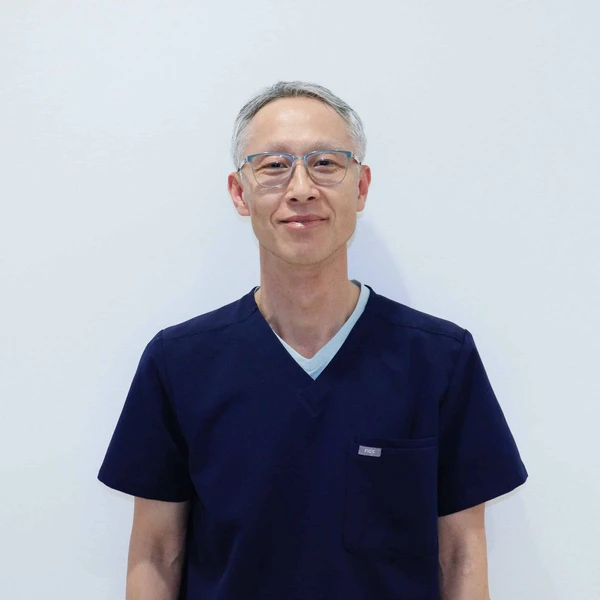
The certifications came first: in November 2011 the American Association of Bioanalysts certified Seungwook Hong as a high-complexity clinical laboratory director, and a month later as a clinical consultant. He has run AFMC’s embryology laboratory as Lab Director since 2019, after seven years directing the IVF lab at CHA Fertility Center in Los Angeles.
His doctorate is the reason egg-freezing patients here are handed to a specialist rather than a generalist. At CHA University (Ph.D. in molecular developmental biology, 2004-2009), he researched vitrification — the flash-freezing technique — for human oocytes and blastocysts, exploring under his doctoral advisor how the methods translate into clinical ART use.
His lab career began in 1995 as a senior embryologist at CHA Fertility Center in South Korea, moved through a visiting-scholar period at Columbia University’s New York-Presbyterian Hospital (1999-2001), and then two decades of Los Angeles laboratory leadership at CHA Fertility Center as supervisor (2001-2011) and director (2012-2019). His earlier training covered embryo co-culture and ICSI manipulation, in-vitro maturation of immature human oocytes, embryo cryopreservation, and semen analysis and sperm washing for IUI and IVF.
Clinical Expertise
- Oocyte and blastocyst vitrification: the doctoral specialty behind egg freezing and embryo banking at AFMC, from freezing protocol to survival outcomes.
- Embryo culture and co-culture: full in-vitro development management from fertilization through the blastocyst stage, including Day 3 and Day 5 culture decisions.
- ICSI and embryo micromanipulation: intracytoplasmic sperm injection and micromanipulation procedures, trained from his CHA co-culture and ICSI program onward.
- Semen analysis and sperm processing: laboratory-side workup and preparation of samples for IUI and IVF, including handling for male-factor cases.
- In-vitro maturation (IVM): culture of immature human oocytes, part of his documented CHA training block (1996-1997).
- Laboratory quality management: as an ABB-certified high-complexity lab director, quality control, procedure standards and data management; his early work included mouse-embryo IVF assays to quality-control follicular media.
Why Choose Dr. Hong
A clinic’s stated lab accreditation is only as good as the person reading the culture dishes. AFMC’s lab is directed by someone whose name carries both ABB certifications — clinical consultant and high-complexity laboratory director — which is the formal credential set for running a lab like this in the United States.
Freezing is his home event. Vitrification drives egg freezing, embryo banking and donor-egg logistics at once, and his doctorate was spent on exactly human oocyte and blastocyst vitrification rather than general developmental biology. If your plan includes preserving eggs or embryos, the lab director has personally built his reputation on that step.
He also arrived at AFMC from running an established Los Angeles IVF lab — CHA Fertility Center’s — first as supervisor from 2001 and then as its director from 2012 to 2019, so the bench systems he brought to Diamond Bar came from an operating center, not a startup.
Professional Affiliations
Dr. Hong is a member of the American Society for Reproductive Medicine (ASRM) and the American Association of Bioanalysts (AAB), the body behind his 2011 dual certifications. He trained and worked through CHA University and CHA General Hospital’s fertility center in South Korea, spent 1999-2001 as a visiting scholar and senior embryologist at Columbia University’s New York-Presbyterian Hospital Center for Reproductive Health, and has been part of the CHA Fertility Center Los Angeles lab leadership from 2001 until he joined AFMC in 2019.
Suitable For
Patients whose cycle outcome depends on the lab. Embryo culture quality decides which embryos reach transfer. AFMC cycles run under an ABB-certified director, which is the assurance point to ask about during your consultation.
Egg freezing and fertility preservation. Whether you are banking eggs electively or before medical treatment, vitrification survival is the number that matters, and this lab’s director wrote his doctorate on oocyte and blastocyst vitrification.
ICSI and embryo manipulation cases. Male-factor couples needing ICSI, or patients adding embryo biopsy for genetic testing, rely on micromanipulation experience dating back to his 1997-1998 co-culture and ICSI training block.
Semen analysis and sperm preparation. Male partners in IUI and IVF programs get laboratory processing — analysis, washing, selection — supervised by the same director.