'%3e%3cpath%20fill='red'%20d='M0%200h720v480H0z'/%3e%3cpath%20fill='%23000095'%20d='M0%200h360v240H0z'/%3e%3cg%20fill='%23fff'%3e%3cpath%20d='m154%20126.9-2.5%209.6%209.4%202.6-1.8-7.1zm46.9%205.1-1.8%207.1%209.4-2.6-2.5-9.6zm-41.8-24-5.1%205.1%201.9%206.9z'/%3e%3cpath%20d='m155.9%20120-1.9%206.9%205.1%205.1z'/%3e%3cpath%20d='m154%20113.1-6.9%206.9%206.9%206.9%201.9-6.9zm14%2027.8%205.1%205.1%206.9-1.9zm18.9%205.1%209.6%202.5%202.6-9.4-7.1%201.8z'/%3e%3cpath%20d='m192%20140.9%207.1-1.8%201.8-7.1zm-31.1-1.8%202.6%209.4%209.6-2.5-5.1-5.1zm19.1%205%206.9%201.9%205.1-5.1z'/%3e%3cpath%20d='m173.1%20146%206.9%206.9%206.9-6.9-6.9-1.9zm-12.2-45.1-9.4%202.6%202.5%209.6%205.1-5.1zm-1.8%2031.1%201.8%207.1%207.1%201.8zm45-12%201.9-6.9-5.1-5.1z'/%3e%3cpath%20d='m168%2099.1-7.1%201.8-1.8%207.1zm32.9%208.9-1.8-7.1-7.1-1.8zm5.1%2018.9%206.9-6.9-6.9-6.9-1.9%206.9z'/%3e%3cpath%20d='m200.9%20108-8.9-8.9-12-3.2-12%203.2-8.9%208.9-3.2%2012%203.2%2012%208.9%208.9%2012%203.2%2012-3.2%208.9-8.9%203.2-12z'/%3e%3cpath%20d='m200.9%20132%205.1-5.1-1.9-6.9zm5.1-18.9%202.5-9.6-9.4-2.6%201.8%207.1zm-6.9-12.2-2.6-9.4-9.6%202.5%205.1%205.1zm-26-6.9-9.6-2.5-2.6%209.4%207.1-1.8zm6.9%201.9-6.9-1.9-5.1%205.1z'/%3e%3cpath%20d='m186.9%2094-6.9-6.9-6.9%206.9%206.9%201.9z'/%3e%3cpath%20d='m192%2099.1-5.1-5.1-6.9%201.9zM173.1%20146l-9.6%202.5%204.5%2016.6%2012-12.2zm-5.1%2019.1%2012%2044.9%2012-44.9-12-12.2zm-7.1-26-9.4-2.6-4.4%2016.4%2016.4-4.4z'/%3e%3cpath%20d='m147.1%20152.9-12%2045.1%2032.9-32.9-4.5-16.6zm-12-20.9L102%20165.1l45.1-12.2%204.4-16.4z'/%3e%3cpath%20d='m154%20126.9-6.9-6.9-12%2012%2016.4%204.5zm0-13.8-2.5-9.6-16.4%204.5%2012%2012z'/%3e%3cpath%20d='M135.1%20108%2090%20120l45.1%2012%2012-12zm90%2024-16.6%204.5%204.4%2016.4%2045.1%2012.2z'/%3e%3cpath%20d='m199.1%20139.1-2.6%209.4%2016.4%204.4-4.4-16.4zm-12.2%206.9-6.9%206.9%2012%2012.2%204.5-16.6zm19.1-19.1%202.5%209.6%2016.6-4.5-12.2-12z'/%3e%3cpath%20d='m192%20165.1%2033.1%2032.9-12.2-45.1-16.4-4.4zm7.1-64.2%209.4%202.6%204.4-16.4-16.4%204.4z'/%3e%3cpath%20d='M225.1%20108%20258%2075.1l-45.1%2012-4.4%2016.4zm-12.2-20.9L225.1%2042%20192%2075.1l4.5%2016.4zm12.2%2044.9%2044.9-12-44.9-12-12.2%2012z'/%3e%3cpath%20d='m206%20113.1%206.9%206.9%2012.2-12-16.6-4.5zm-38-38L135.1%2042l12%2045.1%2016.4%204.4z'/%3e%3cpath%20d='m160.9%20100.9%202.6-9.4-16.4-4.4%204.4%2016.4z'/%3e%3cpath%20d='m147.1%2087.1-45.1-12%2033.1%2032.9%2016.4-4.5zm39.8%206.9%209.6-2.5-4.5-16.4-12%2012z'/%3e%3cpath%20d='M192%2075.1%20180%2030l-12%2045.1%2012%2012z'/%3e%3cpath%20d='m173.1%2094%206.9-6.9-12-12-4.5%2016.4z'/%3e%3c/g%3e%3ccircle%20cx='180'%20cy='120'%20r='51.1'%20fill='%23000095'/%3e%3ccircle%20cx='180'%20cy='120'%20r='45.1'%20fill='%23fff'/%3e%3c/g%3e%3c/svg%3e)
About
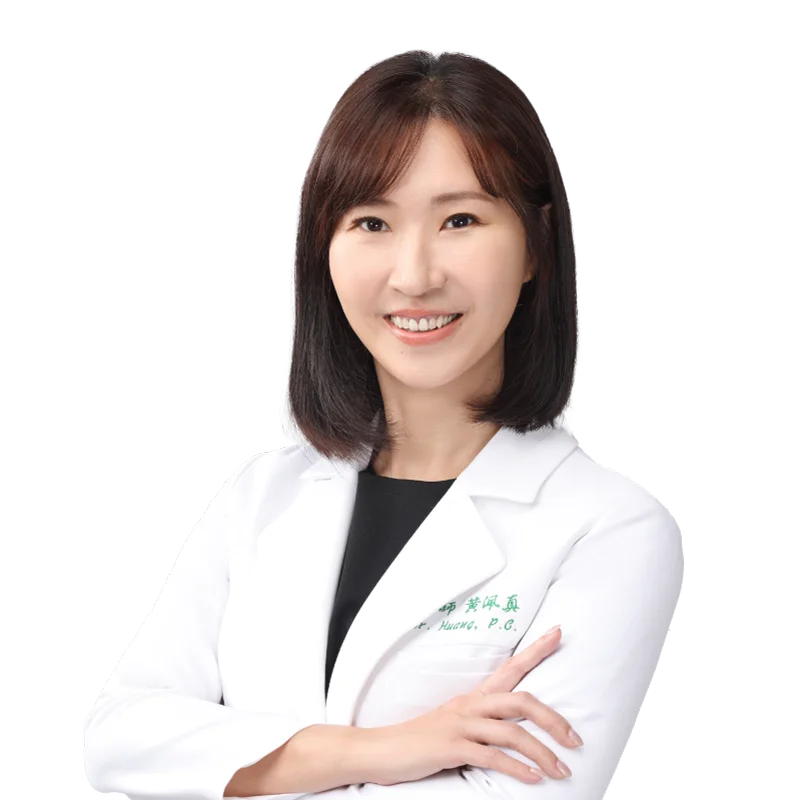
The degree sequence itself carries information. The medical degree came through Kaohsiung Medical University’s post-baccalaureate medicine program, a route that can only be entered by someone who already holds a first degree in another subject, and the qualification that came before it is a master’s from the Graduate Institute of Physiology at National Taiwan University’s College of Medicine. The doctorate, in clinical medical science from China Medical University’s Graduate Institute, came afterwards and on the clinical rather than the bench side. Dr. Pei-Chen Huang now holds the Deputy Medical Director post at NUWA Fertility Center.
Hospital practice was built in the central Taiwan teaching system. Two appointments came at Taichung Veterans General Hospital: physician in the department of obstetrics and gynecology, and physician in its department of reproductive endocrinology. That combination covers general obstetric and gynecologic disease in the same hospital years as the hormonal subspecialty, which is the part of training that handles conditions where a gynecologic problem and a fertility goal arrive together. The next post was attending physician at the reproductive medicine center of China Medical University Hospital, a unit organized around treatment cycles rather than around a general women’s service.
The practice groups into three blocks. Treatment and diagnosis: infertility, IVF, IUI, recurrent miscarriage, egg freezing and egg donation. Genetic testing: genetic counseling kept apart from preimplantation genetic screening and preimplantation genetic diagnosis. Operative: endometriosis, hysteroscopic surgery and ovarian cyst aspiration. The last of these is the item most fertility practices leave unmentioned, since aspiration drains a cyst rather than removing the ovary’s healthy tissue along with it.
Clinical Expertise
- Preimplantation genetic screening and diagnosis: two different laboratory questions with two different planning paths. Screening asks whether an embryo carries the usual chromosome count, which is why the conversation reaches cycles marked by age, several negative tests or several losses. Diagnosis asks whether a known single-gene condition runs in the family, and that needs a test built for the family before any embryo is biopsied. The sampling event looks the same from the outside; the work behind it is not.
- Genetic counseling: the conversation before and after embryo testing — what a result of uncertain significance means for a transfer decision, what testing cannot rule out, and what the alternatives are if no embryo comes back clear. Keeping counseling apart from the laboratory test itself is the distinction that matters to a couple choosing.
- Egg donation: assessment and arrangement of a donated-egg pathway when own ovarian reserve no longer supports a cycle, including the sequencing of recipient preparation and donor cycle.
- Ovarian cyst aspiration and endometriosis: drainage of an endometriotic cyst as an alternative to excision, weighed against the trade between removing disease and preserving follicles. Keeping both routes available frames the choice as one of several options rather than a default operation.
- Recurrent miscarriage: re-opening the assessment after repeated loss, with embryo chromosome status, the shape of the cavity, hormonal factors and clotting all on the list of candidate causes, and immunology brought in where it belongs.
- IVF, IUI and AIH: full cycle management from stimulation through transfer, and insemination at the lower intervention tier. AIH, insemination using the partner’s sperm, is practised alongside IVF.
- Hysteroscopic surgery: inspection and correction of polyps, adhesions and endometrial disease through the cervix, before an embryo is placed. NUWA reports a patient with an endometrial polyp and ovulation disorder who conceived in one IVF cycle.
- Egg freezing: preserving unfertilized eggs by vitrification, for a patient who wants a fertility option before cancer treatment or before a relationship and a plan are in place.
Why Choose Dr. Huang
Embryo testing and the counseling around it are both named. In Taiwan’s regulatory setting, deciding whether PGS or PGD applies, and then interpreting what comes back, are separate skills from arranging a biopsy. Where genetic counseling stands as its own practice, the result conversation is held by the physician who ordered the test.
Physiology first, medicine second, clinical research after both. Physiology was studied to master’s level before the medical qualification, and the clinical doctorate came after it, so the study of how the systems work preceded the training in treating them. That shows up in the kind of cases handled here: endocrine and metabolic problems where the mechanism determines whether a protocol has any chance of working, rather than a protocol being repeated until one succeeds.
Two tiers of hospital practice. An obstetrics and gynecology department post and a reproductive endocrinology department post at the same medical center hospital, followed by an attending role in a dedicated reproductive medicine center. Gynecologic disease that coexists with a fertility goal and cycle execution are covered by the same résumé.
An academic appointment in the same field. The Ministry of Education-designated assistant professorship runs alongside the hospital posts, which places part of the work inside a teaching institution rather than only in clinic.
Hard cases with documented outcomes. Among the patient stories NUWA publishes for this physician are a couple told elsewhere that their eggs and sperm could not achieve fertilization, who then conceived with laboratory support; a patient with a long difficult-treatment history who conceived a second child from one transfer; and a patient from the Philippines with PCOS who carried to a live birth.
Professional Affiliations
Appointments: Deputy Medical Director at NUWA Fertility Center, working in reproductive medicine; physician at the Reproductive Medicine Center, China Medical University Hospital; physician in the department of obstetrics and gynecology and in the department of reproductive endocrinology at Taichung Veterans General Hospital. An assistant professorship designated by the Ministry of Education belongs to the same working background.
Degrees: Ph.D., Graduate Institute of Clinical Medical Science, China Medical University; Master’s, Graduate Institute of Physiology, National Taiwan University College of Medicine; M.D., Kaohsiung Medical University Post-Baccalaureate Medicine. Both hospital employers are large teaching institutions in central and southern Taiwan, and the Taichung appointment spans two departments there, obstetrics and gynecology together with reproductive endocrinology.
Suitable For
Couples weighing PGS or PGD: one question is chromosome number in embryos, the other is a specific inherited condition the parents carry, and the two have different eligibility rules, timing and cost. Both testing routes are practised, with genetic counseling alongside them, so the choice is argued rather than assumed.
Recurrent loss or repeated implantation failure: the causes are spread across embryo, cavity, endocrine and clotting systems, so the assessment has to be re-opened instead of the last protocol repeated. Recurrent miscarriage is a named focus, and hysteroscopy and PGS sit in the same practice.
Advanced maternal age with reserve testing: as age advances, the number of eggs a cycle is likely to recover and the chromosome status of the resulting embryos both enter the plan, so testing decisions and stimulation decisions have to be made together rather than one after the other.
Ovulation disorders such as PCOS: inducing ovulation in this group is a monitoring problem as much as a prescribing one, because response and hyperstimulation risk both vary widely. One reported case involves a patient with PCOS from the Philippines treated to a live birth.
Considering a donated-egg program: moving to donor eggs is a medical and a personal decision at the same time, and the recipient’s preparation has to be scheduled against a donor cycle. Egg donation is handled inside the practice itself, so the pathway is planned there rather than handed to a referral letter.
Endometriotic cysts with infertility: excising a cyst can cost ovarian reserve, so drainage is one option among several and the choice depends on cyst size, both ovaries and how soon a cycle is planned. Ovarian cyst aspiration is offered alongside endometriosis care.