'%3e%3cpath%20fill='red'%20d='M0%200h720v480H0z'/%3e%3cpath%20fill='%23000095'%20d='M0%200h360v240H0z'/%3e%3cg%20fill='%23fff'%3e%3cpath%20d='m154%20126.9-2.5%209.6%209.4%202.6-1.8-7.1zm46.9%205.1-1.8%207.1%209.4-2.6-2.5-9.6zm-41.8-24-5.1%205.1%201.9%206.9z'/%3e%3cpath%20d='m155.9%20120-1.9%206.9%205.1%205.1z'/%3e%3cpath%20d='m154%20113.1-6.9%206.9%206.9%206.9%201.9-6.9zm14%2027.8%205.1%205.1%206.9-1.9zm18.9%205.1%209.6%202.5%202.6-9.4-7.1%201.8z'/%3e%3cpath%20d='m192%20140.9%207.1-1.8%201.8-7.1zm-31.1-1.8%202.6%209.4%209.6-2.5-5.1-5.1zm19.1%205%206.9%201.9%205.1-5.1z'/%3e%3cpath%20d='m173.1%20146%206.9%206.9%206.9-6.9-6.9-1.9zm-12.2-45.1-9.4%202.6%202.5%209.6%205.1-5.1zm-1.8%2031.1%201.8%207.1%207.1%201.8zm45-12%201.9-6.9-5.1-5.1z'/%3e%3cpath%20d='m168%2099.1-7.1%201.8-1.8%207.1zm32.9%208.9-1.8-7.1-7.1-1.8zm5.1%2018.9%206.9-6.9-6.9-6.9-1.9%206.9z'/%3e%3cpath%20d='m200.9%20108-8.9-8.9-12-3.2-12%203.2-8.9%208.9-3.2%2012%203.2%2012%208.9%208.9%2012%203.2%2012-3.2%208.9-8.9%203.2-12z'/%3e%3cpath%20d='m200.9%20132%205.1-5.1-1.9-6.9zm5.1-18.9%202.5-9.6-9.4-2.6%201.8%207.1zm-6.9-12.2-2.6-9.4-9.6%202.5%205.1%205.1zm-26-6.9-9.6-2.5-2.6%209.4%207.1-1.8zm6.9%201.9-6.9-1.9-5.1%205.1z'/%3e%3cpath%20d='m186.9%2094-6.9-6.9-6.9%206.9%206.9%201.9z'/%3e%3cpath%20d='m192%2099.1-5.1-5.1-6.9%201.9zM173.1%20146l-9.6%202.5%204.5%2016.6%2012-12.2zm-5.1%2019.1%2012%2044.9%2012-44.9-12-12.2zm-7.1-26-9.4-2.6-4.4%2016.4%2016.4-4.4z'/%3e%3cpath%20d='m147.1%20152.9-12%2045.1%2032.9-32.9-4.5-16.6zm-12-20.9L102%20165.1l45.1-12.2%204.4-16.4z'/%3e%3cpath%20d='m154%20126.9-6.9-6.9-12%2012%2016.4%204.5zm0-13.8-2.5-9.6-16.4%204.5%2012%2012z'/%3e%3cpath%20d='M135.1%20108%2090%20120l45.1%2012%2012-12zm90%2024-16.6%204.5%204.4%2016.4%2045.1%2012.2z'/%3e%3cpath%20d='m199.1%20139.1-2.6%209.4%2016.4%204.4-4.4-16.4zm-12.2%206.9-6.9%206.9%2012%2012.2%204.5-16.6zm19.1-19.1%202.5%209.6%2016.6-4.5-12.2-12z'/%3e%3cpath%20d='m192%20165.1%2033.1%2032.9-12.2-45.1-16.4-4.4zm7.1-64.2%209.4%202.6%204.4-16.4-16.4%204.4z'/%3e%3cpath%20d='M225.1%20108%20258%2075.1l-45.1%2012-4.4%2016.4zm-12.2-20.9L225.1%2042%20192%2075.1l4.5%2016.4zm12.2%2044.9%2044.9-12-44.9-12-12.2%2012z'/%3e%3cpath%20d='m206%20113.1%206.9%206.9%2012.2-12-16.6-4.5zm-38-38L135.1%2042l12%2045.1%2016.4%204.4z'/%3e%3cpath%20d='m160.9%20100.9%202.6-9.4-16.4-4.4%204.4%2016.4z'/%3e%3cpath%20d='m147.1%2087.1-45.1-12%2033.1%2032.9%2016.4-4.5zm39.8%206.9%209.6-2.5-4.5-16.4-12%2012z'/%3e%3cpath%20d='M192%2075.1%20180%2030l-12%2045.1%2012%2012z'/%3e%3cpath%20d='m173.1%2094%206.9-6.9-12-12-4.5%2016.4z'/%3e%3c/g%3e%3ccircle%20cx='180'%20cy='120'%20r='51.1'%20fill='%23000095'/%3e%3ccircle%20cx='180'%20cy='120'%20r='45.1'%20fill='%23fff'/%3e%3c/g%3e%3c/svg%3e)
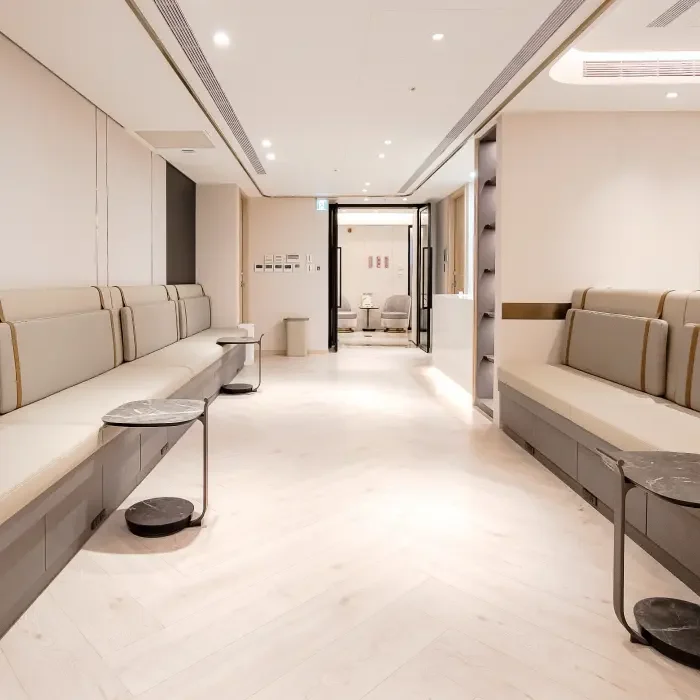
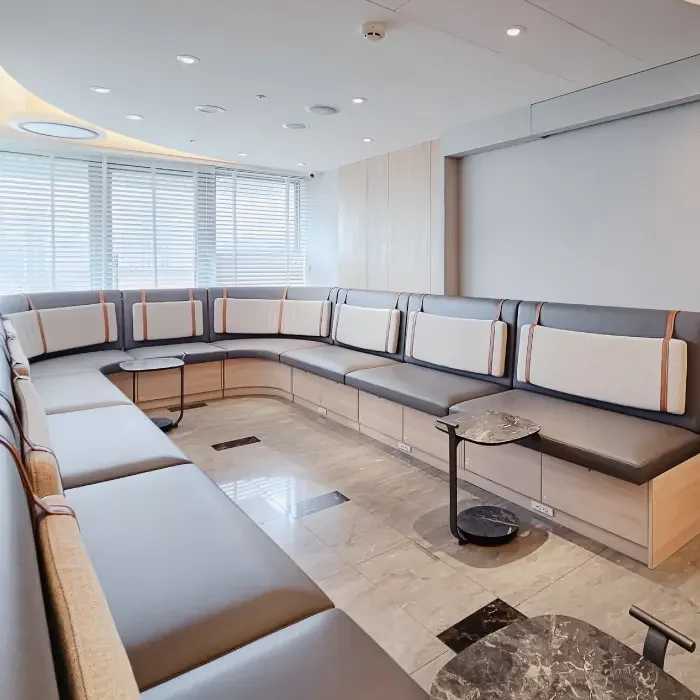
About NUWA Fertility Center Taipei
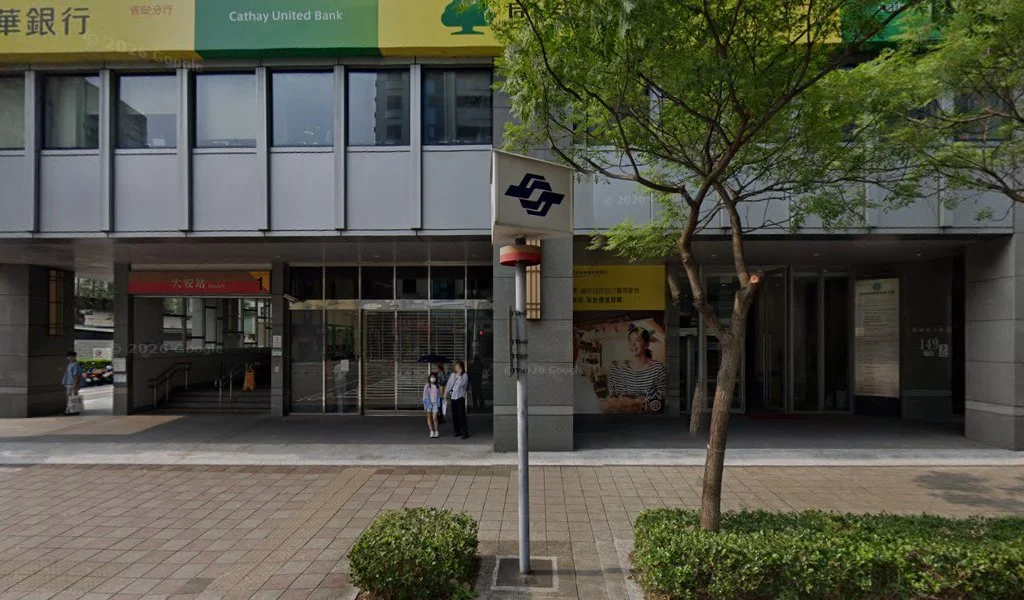
NUWA Fertility Center Taipei sits on the 14th and 15th floors of a building on Section 3 of Xinyi Road in Da-an District, a short walk from Exit 1 of Da-an MRT Station. The clinic is registered as 350102F728 and is approved by the Ministry of Health and Welfare’s National Health Administration to perform assisted reproduction, which is the legal prerequisite for running IVF, donor egg and donor sperm programs in Taiwan. It trades in English as NUWA Fertility Center within the NUWA HEALTHCARE group.
The group runs five licensed sites: fertility campuses in Taipei, Taoyuan and Taichung, plus TCM centers in Taipei and Taichung. The TCM sites hold their own practice registrations and their own physicians, so they are a separate clinical team under the same corporate roof rather than a department of the fertility center. That split matters practically: a patient can move between a stimulation cycle and acupuncture-based preconception conditioning without changing groups, but the two are billed and licensed separately.
How the clinic describes itself is unusually direct about the mix — modern fertility medicine and traditional Chinese medicine covering the same patient from preconception through prenatal support, with FemTech tools and gamete preservation behind it. Its English materials put the aim as building the best female-oriented care in Asia, with Western and Chinese medicine practitioners and reproductive specialists working alongside psychological support.
On the technology side, the clinic divides assisted reproduction into four generations: conventional IVF, ICSI, embryo chromosome screening (PGT-A/PGS) and single-gene testing (PGD), and a fourth tier it defines as AI plus time-lapse culture. Eight AI time-lapse incubators are the headline of that last tier, alongside individual culture chambers, ZEISS micromanipulation optics and continuous culture monitoring.
Every figure below is the clinic’s own published statistic. Taiwan has no CDC NASS, SART or HFEA equivalent open at clinic level. Clinics file cycle data with the National Health Administration, but the agency releases annual national analysis reports, not per-clinic success rates, and NUWA publishes no independently comparable rate.
- 97.2% egg thaw survival, which the clinic sets against the 70-85% range it attributes to the international consensus position.
- 92.7% cumulative pregnancy rate in donor egg cycles.
- Implantation rate of at least 70.9% with PGT-A across all ages, and at least 84.4% under 35. No age band is given for the first figure and no cycle counts are given for either.
- The clinic’s own patient education states that even a woman over 40 who has frozen 20 eggs faces roughly a 10% chance of live birth from those eggs.
For context, the national reports the clinic cites put the 2021 (Republic of China year 110) figures at 44.3% pregnancy per transfer, 22.5% per treatment cycle, 27.9% cumulative live birth per treatment cycle and 43.5% cumulative live birth for patients under 38. The 2023 report records 58.9% live birth per fresh transfer and 39.3% per frozen transfer in donated-oocyte cycles, and notes that donated gametes account for about 6.2% of ART treatment cycles nationwide. As of July 2026, 104 institutions held contracts with the agency for the public subsidy scheme.
Accreditations & Awards
- Taiwan Sustainability Action Award 2025, corporate category, SDG5 Gender Equality, Silver level, awarded to NUWA’s registered corporate entity for a fertility-equality programme addressing the low birth rate. The clinic adds that 251 organisations and 503 entries competed that year and that it was the only reproductive medicine recipient.
- Womany Best DEI Company 2023, Silver, accepted by CEO Dr. Ching-Hui Chen. The citation names an all-female clinical team and an LGBTQ+ friendly workplace. The clinic states it was the first reproductive medicine institution in Taiwan to receive this award.
- Embryo Academy, set up with the National Taiwan University Institute of Biotechnology. The clinic describes it as the first programme of its kind in Asia, built to train embryologists through structured coursework and hands-on laboratory practice.
- Sustainability department, which the clinic describes as the only one inside a reproductive medicine institution in Taiwan.
- Psychological care inside fertility treatment, described as uncommon in Asia. The clinic reports its public radio programme passing 160,000 listens and close to 300 patients served through the counselling line.
- Peer-reviewed and conference output every year from 2021 to 2025. Two 2024-2025 papers presented to the Taiwan Society for Reproductive Medicine look at embryo morphology grade against PGT-A results, and at how far a blastocyst re-expands after thawing against implantation success.
- National Health Administration approval as an assisted-reproduction institution, with five separate practice registration codes across the group’s sites.
Why Choose NUWA Fertility Center Taipei
A Western medicine cycle and a Chinese medicine course sit in one group. The clinic treats “integrating a fertility center with a TCM clinic” as its main line rather than an add-on. TCM services here cover infertility, menstrual regulation, preconception conditioning, implantation support, miscarriage care, postpartum recovery, internal medicine, weight management and cosmetic acupuncture, delivered by physicians with more than twenty years of practice in an independent acupuncture room. The two sides keep separate licences and separate physicians, so the coordination is organizational, not a merged treatment protocol.
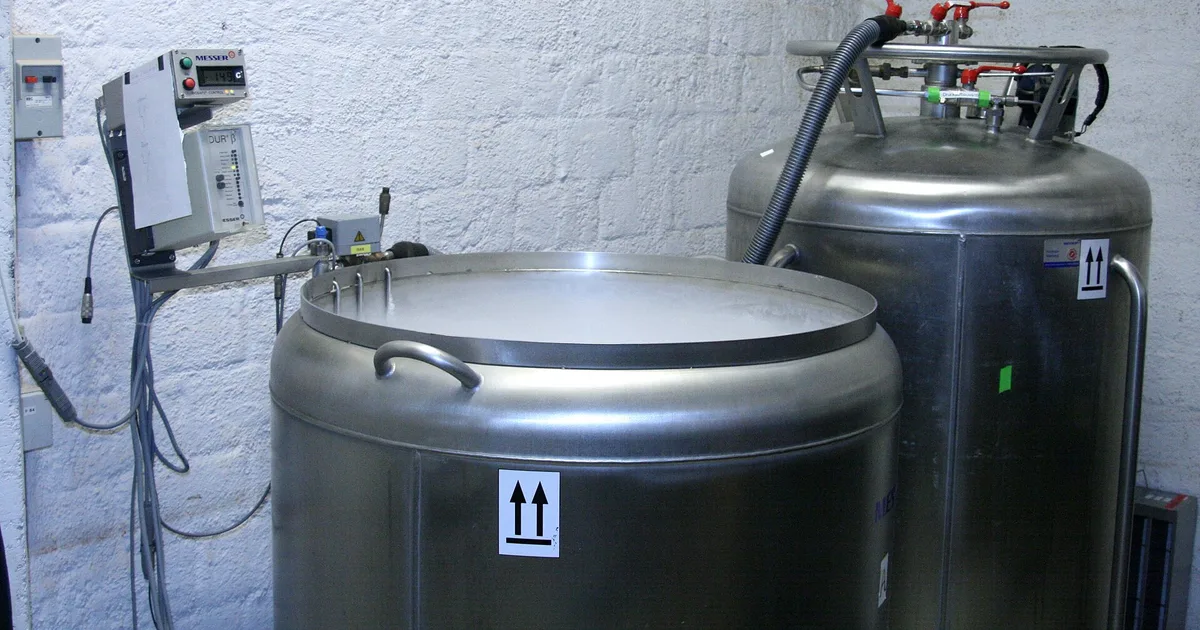
The laboratory is built around not losing an embryo to a process error. Culture runs in individual chambers — the clinic’s own phrasing is a private suite per embryo — inside eight AI time-lapse incubators that image development continuously and score it, so embryos are not removed from stable conditions for assessment. A specimen verification system the clinic calls Match is presented as the check that each sample and each step line up. Redundancy covers the environment rather than the observation: 37 degrees C incubators, a uterine environment simulator, a warmed retrieval stage that keeps eggs at body temperature from the operating room to the bench, 24-hour culture monitoring with alarms, and a wireless temperature logger on every liquid nitrogen tank holding -196 degrees C.
Air quality is specified rather than asserted. The clinic states it installed a bipolar ion air-purification system carrying European CE, TUV and SGS certification, which senses air quality continuously and releases positive and negative ions to reduce bacteria, mould, chemical contamination and static. Semen analysis runs on an automated high-magnification analyzer measuring pH, concentration, morphology and progressive, non-progressive and total motility.
Gamete preservation is a standing service, including from other clinics. Vitrification is the core technique, and the clinic publishes egg freezing, sperm freezing and embryo freezing as separate programs. It also accepts material already frozen elsewhere through three routes: delegated transfer of frozen embryos, delegated transfer of frozen eggs or sperm, and a self-arranged transfer of eggs, sperm or embryos into the NUWA laboratory so the rest of the cycle continues there. Both spouses attend in person with identification to complete the paperwork.
Scheduling is written for people who work. The Taipei fertility campus opens 08:30 and runs until 21:00 Monday through Thursday, closing at 17:00 on Friday and Saturday, which puts follicular monitoring before a workday, at lunch, or after it. Registration is online or through the NUWA HEALTHCARE app, and a physician can be named on the booking form. Published clinic-closure notices and a consolidated outpatient schedule cover holiday periods.
Language support is staffed, not improvised. International patient services run in English, Cantonese and Japanese, with a dedicated language counselor accompanying the patient through consultations. LINE, WeChat and WhatsApp are listed as contact channels for overseas enquiries, and prior test results and cycle dates are submitted before the visit so the first appointment goes to planning rather than to history taking. The main site is Traditional Chinese, with Simplified Chinese, English, Japanese and Korean versions.
IVF & Fertility Services
Reproductive services
- Infertility workup and preconception checkup — basic and extended infertility panels, semen analysis, hysterosalpingography (HSG), and hysteroscopy.
- IVF — conventional insemination in the laboratory. A reproductive medicine physician must examine and clear the couple first, and the cycle must meet the conditions set by the Artificial Reproduction Act.
- IUI — artificial insemination, with its own published cycle and process notes.
- Egg freezing — vitrification, published thaw survival of 97.2%, with a step-by-step freezing process guide.
- Sperm freezing — male fertility preservation, aligned with the public medical preservation subsidy.
- PGT-A (PGS) — embryo chromosome screening for aneuploidy before transfer.
- PGT-M (PGD) — single-gene disease testing. Sex-linked conditions such as colour blindness and haemophilia are the statutory exception where fetal sex may be known.
- ERA — endometrial receptivity array, offered as a standalone test.
- AI time-lapse culture — eight incubators imaging development continuously, with algorithmic scoring used in embryo selection.
- Incoming frozen material — delegated transfer of embryos, eggs or sperm, or a self-arranged transfer into the NUWA laboratory.
- Injection teaching — supervised training for patients self-administering stimulation medication at home.
Donor and shared programs — donor egg cycles (published cumulative pregnancy rate of 92.7%, seven-step process), egg donation through the clinic’s donor programme, donor sperm, and sperm donation.
Traditional Chinese medicine, delivered by NUWA TCM Clinic: male and female infertility, gynaecological conditioning, menstrual care, pregnancy preparation, miscarriage care, postpartum recovery, internal medicine, tocolysis, cosmetic acupuncture, weight management, and general TCM courses.
Also available — LGBTQIA+ family-building information, international patient appointment handling, the NUWA HEALTHCARE app for booking and records, an on-site sperm collection room, and the instruction that home-collected samples reach the laboratory within two hours at body temperature.
Fees & Packages
There is no published price list. NUWA directs every service page to consultation and booking rather than to figures, so self-pay cycle costs require a quote. What the clinic does publish in detail is the government subsidy schedule, which applies to married couples meeting the eligibility rules. TWD converted at roughly NT$32 = US$1.
IVF Subsidy 3.0, in force from 2025-11-01 and adjusted on 2026-04-01 and 2026-09-01:
| Item | Published cap | Approx. USD |
|---|---|---|
| Under 40, cycles 1-3 per child | NT$150,000 each cycle | about $4,700 |
| Under 40, cycles 4-6 per child | NT$60,000 each cycle | about $1,900 |
| Age 40 to under 45, cycles 1-3 | NT$130,000 each cycle | about $4,100 |
| Low-income and lower-middle-income households | NT$150,000, any cycle, any age | about $4,700 |
| Maximum cycles per child | 6 under age 40; 3 at age 40-44 | — |
| Embryos per transfer, from 2026-04-01 | 1 under age 38; 2 at age 38-44 | — |
| Implantation-only cycles (previously frozen eggs or embryos) | NT$30,000 first application, NT$20,000 on reapplication | about $940 / $625 |
From 2026-09-01, the age that fixes a couple’s cap for that child is the wife’s age at the first subsidy application for that pregnancy, so a birthday mid-treatment does not move the patient into a lower tier. Cycle counts are recalculated against live births already achieved with subsidy support, which means a couple who completes one child can reapply for the next. Eligibility requires one spouse of Taiwanese nationality, the wife under 45, and an infertility diagnosis from a licensed reproductive institution. Applications are filed by the institution, treatment must start within a year of approval, and the disbursement follows within about a month of the institution’s claim.
Medical fertility preservation subsidy, from 2025-09-01: Taiwanese nationals aged 18-40 with breast or haematologic cancer receive up to NT$70,000 per egg retrieval cycle and up to NT$8,000 per sperm retrieval and preservation procedure, capped at two subsidised procedures per person per lifetime. The agency requires the procedure to happen at an institution that is both a contracted assisted-reproduction centre and an accredited cancer-treatment hospital, and estimates 600 patients in the first year.
Expanded childbirth subsidy, from 2026-01-01: up to NT$100,000 per child combining maternity benefits and the new childbirth payment, for Taiwanese-national women including foreign spouses of Taiwanese citizens, pro-rated upward for twins. Paid with Labor Insurance maternity benefits, no separate application.
Local government top-ups published for 2026 cover egg freezing in Taipei, New Taipei, Taichung and Taoyuan, sperm freezing in Taichung, and preconception screening, SMA and NIPT in Taoyuan; a 2025 Hualien scheme run with Minno Hospital reaches NT$60,000. The Taipei IVF top-up claimed through NUWA is up to NT$25,000. The clinic’s own reminder is that the three programmes have different eligibility rules and application routes, and that not all of them must be filed through a reproductive institution.
Since 2021, when the predecessor Subsidy 2.0 began, the programme had supported more than 26,000 couples and over 31,000 babies as of October 2025.
Patient Journey
- First consultation and baseline assessment. Blood is drawn for ovarian reserve including AMH, and an ultrasound is scheduled; the male partner has a CASA semen analysis. The clinic’s own threshold for seeking a reproductive specialist: under 34 and trying for a year without success, 35 to 38 after six months, and over 38 while still attempting.
- Statutory eligibility is confirmed before anything starts. Under the Artificial Reproduction Act a married couple must be examined and cleared by a reproductive medicine physician, and the institution can only run IVF once the legal conditions are met. Infertility is treated as a medical indication, not a preference.
- Stimulation and home injections. Once the protocol is set, the patient injects daily; the clinic runs teaching sessions for patients self-administering at home.
- Follicular monitoring. Repeat ultrasound and blood work through the cycle. With the Taipei campus open until 21:00 four evenings a week, a scan can be fitted around a workday.
- Retrieval and fertilisation. Egg collection is done in an operating room under intravenous sedation, while the laboratory performs ICSI or conventional IVF. Retrieved eggs stay on a warmed stage at 37 degrees C from the room to the bench.
- Culture, with optional biopsy. Embryos develop in AI time-lapse incubators that image them continuously, and PGT-A or PGT-M biopsy is done where indicated.
- Transfer and the pregnancy test. After transfer, the clinic’s specific instruction is to avoid hot springs, heavy resistance training and other high-temperature or intense activity for a week, and to keep the scheduled ultrasound and blood follow-up.
Donor egg cycle, seven steps: consent and building the egg inventory → physician review and medication preparation → retrieval and fertilisation → embryo culture → transfer → pregnancy confirmation and support → the statutory filing the Act requires.
Egg donation: age and health screening → blood work and baseline ultrasound → stimulation and monitoring → the retrieval procedure → post-procedure follow-up. Compensation is positioned as nutrition and travel support rather than payment for eggs.
International patients: contact by the online form or LINE, WeChat or WhatsApp → send previous test results and cycle history → a consultation slot and physician are assigned → attend the Taipei campus (Exit 1, Da-an MRT) → the cycle is planned, with follow-up either in person or through referral back home. A language counselor accompanies the visit throughout.
Booking: online registration, the NUWA HEALTHCARE app, a published master outpatient timetable, holiday closure notices, and a physician preference field on the appointment form.
Local Legal Framework
Assisted reproduction in Taiwan is governed by the Artificial Reproduction Act. The clinic’s published position on each rule that shapes treatment:
- Only approved institutions may perform these procedures. Assisted reproduction must be carried out by an institution approved by the central health authority, and NUWA states its fertility center holds that approval and that its donor egg program follows the Act in full.
- Treatment requires a medical indication. Infertility is not optional in the paperwork: a married couple must be examined and assessed by a reproductive medicine physician and meet the statutory conditions before an institution may perform IVF.
- Sex selection is prohibited, Article 16 Section 3. Embryo sex cannot be chosen. The exception is a sex-linked hereditary disease — the clinic names colour blindness and haemophilia — where genetic testing may reveal sex in order to reduce the risk of passing on that condition.
- Anonymity runs both ways, Article 13. The institution may not disclose identifying information on either the donor or the receiving couple, which limits what it can provide to characteristics such as ethnicity, skin tone and blood type. Government modelling cited by the clinic puts the probability of consanguineous marriage arising from donated gametes at roughly one in fifty million, and the National Health Administration operates a lookup procedure for adult children born through ART to check biological relatedness before marriage.
- A hard cap on how far one donation spreads. Gametes from a single donor may not serve more than two recipient couples, supply stops after one pregnancy succeeds, and remaining material must be destroyed once that couple has a live birth.
- Buying and selling gametes is illegal. Egg donation is framed as voluntary giving, with compensation of a nutritional and travel character rather than a price attached to eggs.
- Family-building services and the current statutory boundary. The clinic lists LGBTQIA+ information among its services and advocates publicly for separating marriage from reproduction. Under the Act as it stands, however, receiving donated eggs or sperm requires a couple whose marriage is registered under Taiwan law, so single patients and cross-border or same-sex partnerships cannot be treated as a direct medical offering.
- The subsidy is an administrative measure, not a right. IVF Subsidy 3.0 is operated by the National Health Administration, in force from 2025-11-01 with revisions on 2026-04-01 and 2026-09-01 affecting age tiers, transfer counts and amounts, and claims run through contracted institutions — 104 of them as of July 2026. Medical fertility preservation started 2025-09-01 and the expanded childbirth payment on 2026-01-01. Amounts and eligibility follow the announcements in force at the time of application.
Location
- NUWA Fertility Center Taipei (main campus): 14F, 15F, No.149, Sec.3, Xinyi Rd., Da-an Dist., Taipei City 106, Taiwan — Exit 1, Da-an MRT Station. Phone +886-2-2706-5288.
- NUWA Fertility Center Taoyuan: 6F, No. 839, Jingguo Rd., Taoyuan Dist., Taoyuan City 330, Taiwan. Phone +886-3-316-6288.
- NUWA Fertility Center Taichung: 9F, No. 88, Sec. 1, Huizhong Rd., Xitun Dist., Taichung City 407, Taiwan. Phone +886-4-2255-7688.
- Coordinates: 25.0337, 121.5421.
- Practice registration: 350102F728 (Taipei fertility campus).