'%20d='m0%200%2016%2011h61%2061%2061%2061%2060L47%2037h61%2061%2060%2061L16%2063h61%2061%2061%2061%2060L47%2089h61%2061%2060%2061L16%20115h61%2061%2061%2061%2060L47%20141h61%2061%2060%2061L16%20166h61%2061%2061%2061%2060L47%20192h61%2061%2060%2061L16%20218h61%2061%2061%2061%2060z'/%3e%3c/svg%3e)
About
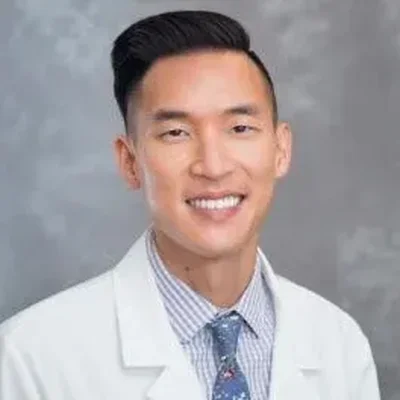
Dr. Philip Cheng has written publicly that male fertility supplements probably do not work, and that patients should be wary of them. It is an easy position for a surgeon to take: the interventions he is asked to judge end in a measured outcome — sperm found or not found, tubes patent or not, parameters improved or not — and a product that cannot be measured against that is not competing on the same terms.
He is RMA New Jersey’s full-time board-certified urologist and provides what the clinic describes as a full spectrum of care for male infertility patients: sperm retrieval, vasectomy reversal, and varicocelectomy. He is one of the lead physicians of RMA Men’s Health, and works out of the Basking Ridge office, with Englewood and Jersey City also listed among his RMA locations.
His training crossed the country three times. Baylor College of Medicine in Houston, graduating with honors. Then Boston: an internship in general surgery at Brigham and Women’s Hospital, followed by a urology residency at the same institution. Then the University of Utah for a fellowship in Genitourinary Reconstruction and Andrology — completed under the direction of Dr. James M. Hotaling, who is now RMA’s other in-house urologist. He began seeing patients in Basking Ridge in September 2019, and RMA’s own announcement of his arrival called him the organization’s first full-time urologist. He is also a violinist.
Clinical Expertise
- Sperm retrieval: the first service RMA names on his page. For men with no sperm in the ejaculate, sperm is obtained from the epididymis or testis for use with ICSI — the difference between a couple using their own genetic material or not
- Vasectomy reversal: the second named operation, where the decision has inputs beyond the vasal ends: years since the procedure, antisperm antibodies, and the female partner’s age, since reversal and direct retrieval-plus-IVF are competing strategies with different timelines
- Varicocelectomy: repair of the venous enlargement that degrades semen parameters in a subset of men, with a judgment call about whether the improvement is worth the recovery period before a cycle
- Male infertility evaluation: obstruction, congenital anomaly and other structural problems as the primary buckets, with categorization determining whether the fix is surgical
- Genitourinary reconstruction: his fellowship discipline, the background that makes complex anatomy, scar tissue and prior failed repairs part of the practice rather than an exclusion
- Evidence triage on supplements: he has stated his assessment of the male fertility supplement market directly rather than leaving patients to ask
Why Choose Dr. Philip Cheng
Three named operations, and they cover most of what surgery can actually fix in male infertility. Retrieval, reversal and varicocelectomy are the procedures that change a couple’s options rather than only refining them. Few fertility practices have a urologist on staff who does all three; RMA’s page lists them for him specifically.
Reconstructive fellowship training is the relevant depth for reversals and retrievals. The University of Utah Genitourinary Reconstruction and Andrology program is where vasal anastomosis technique and management of abnormal anatomy get taught. Reversal success depends on work at that scale, and on handling scarring from prior surgery — including prior failed reversals done elsewhere.
His teacher is the other urologist in the building. Dr. James Hotaling directed his fellowship and is RMA’s in-house urologist for male infertility. That means the two men who evaluate male-factor cases at RMA were trained to the same standards in the same program, and the male side of a couple’s workup does not depend on one physician’s personal habits.
Harvard-affiliated residency. Brigham and Women’s Hospital in Boston is where he completed general surgery internship and urology residency, a program with the case volume and complexity typical of a large academic center.
Scholarly recognition outside the clinic. He is a Fulbright Scholar and a Phi Beta Kappa member, received the Baylor College of Medicine Basic Science Honor, and holds scholarships from the Rice University/Baylor College of Medicine Medical Scholars Program, the Society of Genitourinary Reconstructive Surgeons and IVUmed, and the North American Taiwanese Medical Association Foundation.
Professional Affiliations
Board-certified urologist. Training: Baylor College of Medicine (MD, with honors), Brigham and Women’s Hospital (general surgery internship and urology residency), University of Utah (fellowship in Genitourinary Reconstruction and Andrology under Dr. James M. Hotaling). Honors include the Fulbright Scholar designation, Phi Beta Kappa, the Baylor College of Medicine Basic Science Honor, and scholarship support from the Society of Genitourinary Reconstructive Surgeons, IVUmed, the Rice/Baylor Medical Scholars Program and the North American Taiwanese Medical Association Foundation.
Suitable For
- No sperm in the ejaculate: retrieval is the step that decides whether a couple uses the man’s own sperm, and obstructive versus non-obstructive azoospermia changes both the operation and the prognosis
- Couples where the female partner is already in stimulation: if the woman is about to start a cycle and no sperm has been found, retrieval timing has to be matched to hers rather than scheduled independently
- Considering reversal after a vasectomy: reversal and going straight to retrieval with IVF are separate strategies with different odds and timelines; the surgeon who would perform the repair is the right person to compare them
- Varicocele affecting semen parameters: whether to operate, how much improvement to expect, and whether waiting for that improvement costs more than it gains depends on the specific grade
- Already taking male fertility supplements: his published view is that most do not work. If you want to know which line item to cut from the budget, he has already answered it
- Northern New Jersey patients: with Englewood and Jersey City listed alongside Basking Ridge, the male evaluation can happen closer to home instead of traveling to a separate urology practice