'%3e%3cpath%20fill='red'%20d='M0%200h720v480H0z'/%3e%3cpath%20fill='%23000095'%20d='M0%200h360v240H0z'/%3e%3cg%20fill='%23fff'%3e%3cpath%20d='m154%20126.9-2.5%209.6%209.4%202.6-1.8-7.1zm46.9%205.1-1.8%207.1%209.4-2.6-2.5-9.6zm-41.8-24-5.1%205.1%201.9%206.9z'/%3e%3cpath%20d='m155.9%20120-1.9%206.9%205.1%205.1z'/%3e%3cpath%20d='m154%20113.1-6.9%206.9%206.9%206.9%201.9-6.9zm14%2027.8%205.1%205.1%206.9-1.9zm18.9%205.1%209.6%202.5%202.6-9.4-7.1%201.8z'/%3e%3cpath%20d='m192%20140.9%207.1-1.8%201.8-7.1zm-31.1-1.8%202.6%209.4%209.6-2.5-5.1-5.1zm19.1%205%206.9%201.9%205.1-5.1z'/%3e%3cpath%20d='m173.1%20146%206.9%206.9%206.9-6.9-6.9-1.9zm-12.2-45.1-9.4%202.6%202.5%209.6%205.1-5.1zm-1.8%2031.1%201.8%207.1%207.1%201.8zm45-12%201.9-6.9-5.1-5.1z'/%3e%3cpath%20d='m168%2099.1-7.1%201.8-1.8%207.1zm32.9%208.9-1.8-7.1-7.1-1.8zm5.1%2018.9%206.9-6.9-6.9-6.9-1.9%206.9z'/%3e%3cpath%20d='m200.9%20108-8.9-8.9-12-3.2-12%203.2-8.9%208.9-3.2%2012%203.2%2012%208.9%208.9%2012%203.2%2012-3.2%208.9-8.9%203.2-12z'/%3e%3cpath%20d='m200.9%20132%205.1-5.1-1.9-6.9zm5.1-18.9%202.5-9.6-9.4-2.6%201.8%207.1zm-6.9-12.2-2.6-9.4-9.6%202.5%205.1%205.1zm-26-6.9-9.6-2.5-2.6%209.4%207.1-1.8zm6.9%201.9-6.9-1.9-5.1%205.1z'/%3e%3cpath%20d='m186.9%2094-6.9-6.9-6.9%206.9%206.9%201.9z'/%3e%3cpath%20d='m192%2099.1-5.1-5.1-6.9%201.9zM173.1%20146l-9.6%202.5%204.5%2016.6%2012-12.2zm-5.1%2019.1%2012%2044.9%2012-44.9-12-12.2zm-7.1-26-9.4-2.6-4.4%2016.4%2016.4-4.4z'/%3e%3cpath%20d='m147.1%20152.9-12%2045.1%2032.9-32.9-4.5-16.6zm-12-20.9L102%20165.1l45.1-12.2%204.4-16.4z'/%3e%3cpath%20d='m154%20126.9-6.9-6.9-12%2012%2016.4%204.5zm0-13.8-2.5-9.6-16.4%204.5%2012%2012z'/%3e%3cpath%20d='M135.1%20108%2090%20120l45.1%2012%2012-12zm90%2024-16.6%204.5%204.4%2016.4%2045.1%2012.2z'/%3e%3cpath%20d='m199.1%20139.1-2.6%209.4%2016.4%204.4-4.4-16.4zm-12.2%206.9-6.9%206.9%2012%2012.2%204.5-16.6zm19.1-19.1%202.5%209.6%2016.6-4.5-12.2-12z'/%3e%3cpath%20d='m192%20165.1%2033.1%2032.9-12.2-45.1-16.4-4.4zm7.1-64.2%209.4%202.6%204.4-16.4-16.4%204.4z'/%3e%3cpath%20d='M225.1%20108%20258%2075.1l-45.1%2012-4.4%2016.4zm-12.2-20.9L225.1%2042%20192%2075.1l4.5%2016.4zm12.2%2044.9%2044.9-12-44.9-12-12.2%2012z'/%3e%3cpath%20d='m206%20113.1%206.9%206.9%2012.2-12-16.6-4.5zm-38-38L135.1%2042l12%2045.1%2016.4%204.4z'/%3e%3cpath%20d='m160.9%20100.9%202.6-9.4-16.4-4.4%204.4%2016.4z'/%3e%3cpath%20d='m147.1%2087.1-45.1-12%2033.1%2032.9%2016.4-4.5zm39.8%206.9%209.6-2.5-4.5-16.4-12%2012z'/%3e%3cpath%20d='M192%2075.1%20180%2030l-12%2045.1%2012%2012z'/%3e%3cpath%20d='m173.1%2094%206.9-6.9-12-12-4.5%2016.4z'/%3e%3c/g%3e%3ccircle%20cx='180'%20cy='120'%20r='51.1'%20fill='%23000095'/%3e%3ccircle%20cx='180'%20cy='120'%20r='45.1'%20fill='%23fff'/%3e%3c/g%3e%3c/svg%3e)
About
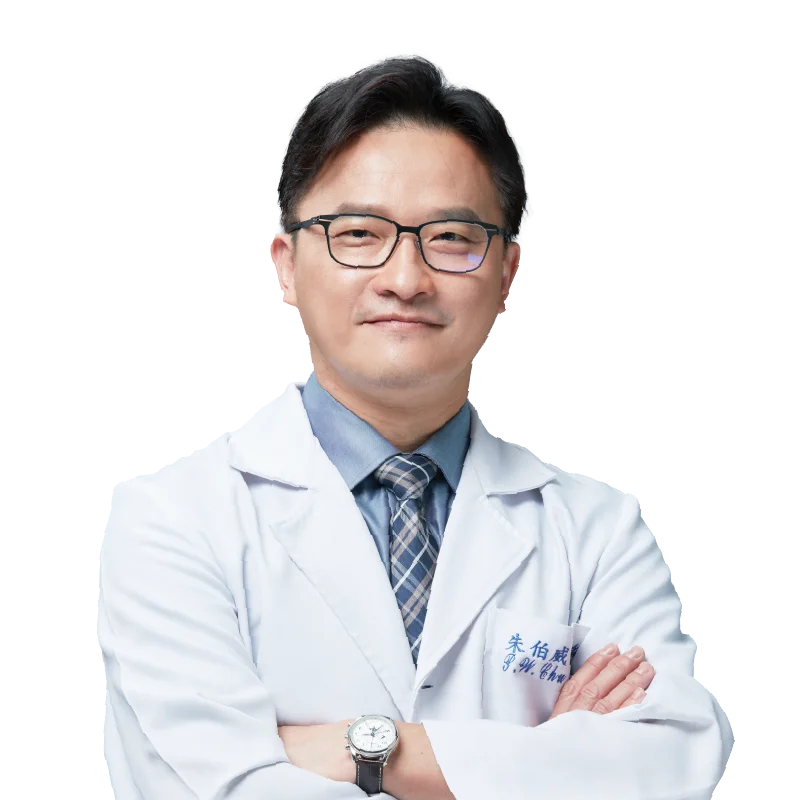
A 2011 paper in Fertility and Sterility examined the effect of the Notch 1 signaling pathway on implantation competency. A 2018 paper in Biology of Reproduction showed that low-dose bisphenol A activates the ERK signaling pathway and weakens steroidogenic gene expression in human placental cells. Both carry Chu PW as first author, and both are laboratory questions about why an embryo implants or fails to. That research line sits behind the clinical title now held by Dr. Po-Wei Chu: Director and Attending Physician in the Reproductive Medicine Department at NUWA Fertility, plus an assistant professorship appointed by Taiwan’s Ministry of Education.
The training is single-institution and dual-track. The M.D. came from the Department of Medicine at National Defense Medical Center, the military medical school that operates Tri-Service General Hospital, and the doctorate from the same institution’s Graduate Institute of Medical Sciences. A physician who completes both halves at NDMC then heads the reproductive endocrinology and infertility department at the hospital NDMC runs has moved through one system from classroom to unit leadership, which is a rarer path than a fellowship followed by a private clinic.
The rest of the appointments are leadership posts. Director of the Department of Reproductive Endocrinology and Infertility at Tri-Service General Hospital; Director of the Reproductive Medicine Center at Tai-An Hospital; Vice President of Xiamen Anbao Hospital; Deputy Secretary-General of the Taiwan Society for Reproductive Medicine. The stated research interests are narrower than that résumé — reproductive endocrinology and infertility treatment — and they describe the daily work: hormonal assessment, stimulation design, and deciding which level of intervention a couple needs.
Clinical Expertise
- IVF: stimulation design, trigger timing, retrieval, culture decisions and transfer, with individual protocol changes for weak responders and a decision point at blastocyst culture about whether to grow embryos further or transfer earlier.
- IUI: sperm optimization placed into the uterine cavity around an induced or monitored ovulation, the appropriate step when the diagnosis does not yet require laboratory fertilization.
- Reproductive endocrinology: the hormonal side of both the workup and the cycle itself, correcting the imbalances that keep ovulation from occurring and adjusting medication while a stimulation is already running.
- Diminished ovarian reserve: dose and schedule changed for low antral follicle count or low AMH, since repeating a standard protocol in a patient with limited reserve usually adds cycles rather than eggs.
- Natural cycle and low-stimulation transfer: harvesting the single dominant follicle with little or no stimulation, a route with a lower drug load but a narrower window, so timing and monitoring have to be exact.
- PGT-A: chromosome screening of embryos before transfer, which adds a biopsy, a waiting interval for genetic results and the risk of no testable embryo, and has to be scheduled around retrieval rather than decided afterwards.
- Infertility diagnosis and workup: systematic assessment of both partners — ovulation, tubal status, cavity and semen — as the basis for choosing where to start on the treatment ladder.
Why Choose Dr. Chu
Nine published papers, four with Chu as first author. The first-author work is on implantation biology, placental cell function and reproductive toxicology rather than case descriptions. A physician who has run those experiments tends to frame a failed transfer as a mechanism question, which is the more useful posture when a couple has already had two or three attempts.
A reproductive department run at a military medical center. Heading reproductive endocrinology and infertility at Tri-Service General Hospital is unit-level responsibility inside a teaching hospital, where case mix includes patients with medical comorbidities that a stand-alone clinic would refer out. The Tai-An Hospital reproductive medicine center directorship adds a second institution of the same kind.
Society office in the operating layer. Deputy secretary-general of the Taiwan Society for Reproductive Medicine is administrative work inside the specialty body — minutes, programmes, policy documents — which gives a different view of practice standards than ordinary membership does.
Hospital leadership on both sides of a border. The vice presidency of Xiamen Anbao Hospital means running a hospital, not only a clinic, and gives direct experience of how Chinese-language reproductive services operate outside Taiwan. Patients arriving from other markets with records in hand usually need exactly that comparison.
Professional Affiliations
Society role: deputy secretary-general of the Taiwan Society for Reproductive Medicine. Academic title: assistant professor appointed by the Ministry of Education. Clinical appointments: director and attending physician, Reproductive Medicine Department, NUWA Fertility; director, Department of Reproductive Endocrinology and Infertility, Tri-Service General Hospital; director, Reproductive Medicine Center, Tai-An Hospital; vice president, Xiamen Anbao Hospital.
Degrees: Ph.D., Graduate Institute of Medical Sciences, National Defense Medical Center; M.D., Department of Medicine, the same institution. The publications span reproductive biology and obstetric case work, in Fertility and Sterility, Biology of Reproduction, the Journal of the Chinese Medical Association, PLOS One, the Journal of Medical Sciences and Taiwan journals of obstetrics and gynecology, dating from 2004 to 2020.
Suitable For
Low ovarian reserve needing a new protocol: when AMH or follicle count is low, the standard stimulation produces few oocytes and repeating it rarely changes the yield, so dose, schedule and the decision to accumulate across cycles all have to move together.
Natural cycle or mild stimulation routes: fewer drugs means accepting whatever the body recruits, which suits patients avoiding heavy stimulation but demands precise timing of the retrieval or transfer window.
Cross-border cycles where screening results take time: PGT-A adds a biopsy and a laboratory interval before results return, so an international itinerary has to be planned with the transfer deliberately separated from the retrieval visit.
Complex cases needing department-level judgment: prior experience leading a hospital reproductive unit covers the situations where infertility treatment has to be sequenced around another medical problem rather than run on its own.
Choosing between IUI and IVF: the decision rests on age, cause and how many attempts have already been made, and a physician who performs both procedures can set the starting level and the point of escalation inside one continuing consultation.