
About
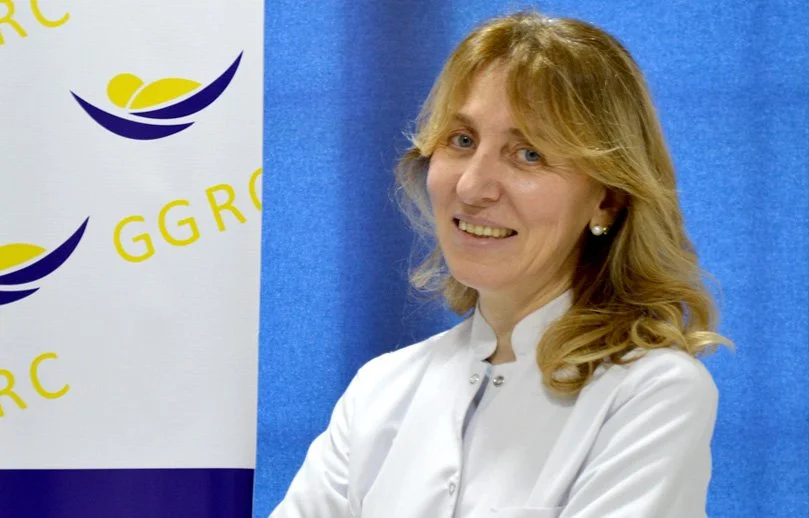
Most reproductive physicians in Georgia took obstetrics and gynecology first and added fertility later. Tamar Maghularia’s route runs the other way: internal medicine at the Tbilisi State Medical Institute from 1979 to 1985, an MD in endocrinology in 1985, a research fellowship in the Department of Obstetrics and Gynecology at the Russian Endocrinology Center in Moscow from 1989 to 1993, and a 1993 PhD in endocrinology and reproductive health. GGRC’s profile states that fertility practice began after that degree, at a time when IVF was moving quickly, and that several well-known fertility specialists were colleagues in that period.
The academic post is her longest-running appointment: professor of the Department of Reproductology at Tbilisi Medical Academy from 1999 to the present. Alongside it, seventeen-plus years at the I. Zhordania Institute of Human Reproduction, first as physician and head of the Department of Reproductive Function Regulation (1993-2010), then in that institute’s International IVF Department from 2010 and still there. In clinical IVF units, the recent posts are Lancet Medical Center’s IVF department (2015-2017), Orsmedi Medical Center (2017-2019), and GGRC’s IVF department from 2019 — the position Grapes.ART, a Chinese-language broker that lists GGRC as a partner, reproduces on its own team page.
The public-health strand is what makes this profile unusual. Family planning and reproductive health training work for the UNFPA/HO project runs from 1997; 2006-2008 added master trainer duties for the UNFPA/RHIYC project on training medical personnel in youth-friendly sexual and reproductive health services; and in 2006 she authored the UNFPA National Guidelines of Family Planning for Georgia. From 1997 to 2000 she was an investigator on WHO Study 95905, on the determinants of how fertility regulation methods are chosen and used in Eastern European countries. GGRC also records certifications and diplomas in ultrasound, management of the infertile couple, assisted conception, embryo transfer and IUI, accumulated over more than thirty years of training and master classes. On the profile page the title line (Georgian ხარისხი) reads “Professor,” which is an academic post, not a college fellowship.
Clinical Expertise
- Reproductive endocrinology and infertility: endocrinology is the starting qualification rather than an add-on — the 1985 MD is in endocrinology, and the 1993 doctorate combined endocrinology with reproductive health. That covers ovulation disorders, menstrual irregularity and endocrine causes of infertility.
- Regulation of reproductive function and fertility control: heading the Department of Reproductive Function Regulation at the Zhordania Institute from 1993 to 2010 placed the work on the mechanisms that regulate fertility and the disorders that disturb them.
- IVF and embryo transfer: International IVF Department practice at the Zhordania Institute from 2010, IVF department posts at Lancet Medical Center and Orsmedi, and GGRC’s IVF department since 2019, with a separate certification in embryo transfer.
- IUI (intrauterine insemination): a named certification and diploma line on the GGRC profile, which supports a decision about insemination rather than immediate IVF in mild male-factor or cervical-factor cases.
- Gynecological ultrasound: ultrasound certification means cycle monitoring and baseline imaging can be read by the physician setting the protocol.
- Management of the infertile couple as a unit, including PCOS and diminished ovarian reserve: “management of the infertile couple” is a listed certification, and the endocrinology background is the frame for metabolic-reproductive overlap such as polycystic ovary syndrome.
Why Choose Dr. Maghularia
Endocrinology comes first in the training, not as an afterthought. The pathway — internal medicine faculty, MD in endocrinology, research fellowship at the Russian Endocrinology Center in Moscow, doctorate in endocrinology and reproductive health — means that when infertility runs alongside thyroid disease, abnormal glucose metabolism, raised prolactin or PCOS, the workup is not limited to the reproductive organs. The endocrine axis upstream of ovulation is part of the original qualification rather than a later elective.
The person who wrote the national guidelines. Authoring Georgia’s UNFPA National Guidelines of Family Planning (2006) requires taking whatever techniques are available in the country, their indications and the operating standards, and reconciling them into one document. A physician who has done that tends to judge a proposed protocol against the standard rather than against individual cases, which is the more useful frame for patients being offered add-ons.
Four decades of practice with two decades of teaching alongside it. Clinical work counts from the 1985 medical degree, and the professorship at Tbilisi Medical Academy’s Department of Reproductology has run since 1999. Teaching forces a treatment sequence to be broken into steps that can be explained and reproduced; combined with the UNFPA trainer roles, the practical effect for international patients is that a plan tends to get explained rather than simply announced.
Population-level research on how people choose fertility treatment. WHO Study 95905 (1997-2000, Georgian site) examined the determinants of choosing and using fertility regulation methods in Eastern European countries. Research of that kind looks at why patients pick one route over another, including cost and access, and it shows up when options are presented — as a comparison of what a pathway involves, not only its medical outline.
Practice across several fertility units, not one. Beyond the Zhordania Institute and GGRC there are IVF posts at Lancet Medical Center (2015-2017) and Orsmedi Medical Center (2017-2019). Having worked in multiple IVF units gives a practical basis for comparing laboratory conditions and transfer strategies rather than assuming one setting is standard.
Professional Affiliations
Degrees: MD in endocrinology (1985) and PhD in endocrinology and reproductive health (Moscow, 1993), with the 1989-1993 research fellowship at the Russian Endocrinology Center’s Department of Obstetrics and Gynecology behind the doctorate, and the Faculty of Internal Medicine at Tbilisi State Medical Institute (1979-1985) behind that. Technical certifications and diplomas cover ultrasound, management of the infertile couple, assisted conception, embryo transfer and IUI, described on the GGRC profile as accumulated over more than thirty years of training and master classes. Society affiliations are memberships in the Georgian Planned Parenthood Federation, the Georgian OBGYN and Reproductologist Association, and ESHRE — no fellowgrades are recorded, and the “Professor” designation is an academic appointment at Tbilisi Medical Academy rather than a learned-society rank.
Suitable For
- Endocrine causes of infertility: PCOS, ovulation disorders, thyroid dysfunction and raised prolactin are all upstream-of-the-ovary problems, which is exactly what an endocrinology qualification and a doctorate in endocrinology and reproductive health address.
- Repeated implantation failure and transfer strategy: a dedicated embryo transfer certification plus IVF-department practice at three different centers fits patients who need transfer timing and endometrial handling reconsidered rather than repeated.
- Advanced maternal age and diminished ovarian reserve: years heading a department of reproductive function regulation correspond to assessing how ovarian and fertility regulation works when the window is short and the protocol choice is consequential.
- Choosing between IUI and IVF: holding certifications in both insemination and embryo transfer allows an intermediate route to be offered where semen parameters and female age permit it, instead of defaulting every case to IVF.
- Patients who want the reasoning behind each step: a guideline author and university professor suits people who intend to understand and participate in protocol decisions rather than accept a plan as given.