'%3e%3cpath%20fill='red'%20d='M0%200h720v480H0z'/%3e%3cpath%20fill='%23000095'%20d='M0%200h360v240H0z'/%3e%3cg%20fill='%23fff'%3e%3cpath%20d='m154%20126.9-2.5%209.6%209.4%202.6-1.8-7.1zm46.9%205.1-1.8%207.1%209.4-2.6-2.5-9.6zm-41.8-24-5.1%205.1%201.9%206.9z'/%3e%3cpath%20d='m155.9%20120-1.9%206.9%205.1%205.1z'/%3e%3cpath%20d='m154%20113.1-6.9%206.9%206.9%206.9%201.9-6.9zm14%2027.8%205.1%205.1%206.9-1.9zm18.9%205.1%209.6%202.5%202.6-9.4-7.1%201.8z'/%3e%3cpath%20d='m192%20140.9%207.1-1.8%201.8-7.1zm-31.1-1.8%202.6%209.4%209.6-2.5-5.1-5.1zm19.1%205%206.9%201.9%205.1-5.1z'/%3e%3cpath%20d='m173.1%20146%206.9%206.9%206.9-6.9-6.9-1.9zm-12.2-45.1-9.4%202.6%202.5%209.6%205.1-5.1zm-1.8%2031.1%201.8%207.1%207.1%201.8zm45-12%201.9-6.9-5.1-5.1z'/%3e%3cpath%20d='m168%2099.1-7.1%201.8-1.8%207.1zm32.9%208.9-1.8-7.1-7.1-1.8zm5.1%2018.9%206.9-6.9-6.9-6.9-1.9%206.9z'/%3e%3cpath%20d='m200.9%20108-8.9-8.9-12-3.2-12%203.2-8.9%208.9-3.2%2012%203.2%2012%208.9%208.9%2012%203.2%2012-3.2%208.9-8.9%203.2-12z'/%3e%3cpath%20d='m200.9%20132%205.1-5.1-1.9-6.9zm5.1-18.9%202.5-9.6-9.4-2.6%201.8%207.1zm-6.9-12.2-2.6-9.4-9.6%202.5%205.1%205.1zm-26-6.9-9.6-2.5-2.6%209.4%207.1-1.8zm6.9%201.9-6.9-1.9-5.1%205.1z'/%3e%3cpath%20d='m186.9%2094-6.9-6.9-6.9%206.9%206.9%201.9z'/%3e%3cpath%20d='m192%2099.1-5.1-5.1-6.9%201.9zM173.1%20146l-9.6%202.5%204.5%2016.6%2012-12.2zm-5.1%2019.1%2012%2044.9%2012-44.9-12-12.2zm-7.1-26-9.4-2.6-4.4%2016.4%2016.4-4.4z'/%3e%3cpath%20d='m147.1%20152.9-12%2045.1%2032.9-32.9-4.5-16.6zm-12-20.9L102%20165.1l45.1-12.2%204.4-16.4z'/%3e%3cpath%20d='m154%20126.9-6.9-6.9-12%2012%2016.4%204.5zm0-13.8-2.5-9.6-16.4%204.5%2012%2012z'/%3e%3cpath%20d='M135.1%20108%2090%20120l45.1%2012%2012-12zm90%2024-16.6%204.5%204.4%2016.4%2045.1%2012.2z'/%3e%3cpath%20d='m199.1%20139.1-2.6%209.4%2016.4%204.4-4.4-16.4zm-12.2%206.9-6.9%206.9%2012%2012.2%204.5-16.6zm19.1-19.1%202.5%209.6%2016.6-4.5-12.2-12z'/%3e%3cpath%20d='m192%20165.1%2033.1%2032.9-12.2-45.1-16.4-4.4zm7.1-64.2%209.4%202.6%204.4-16.4-16.4%204.4z'/%3e%3cpath%20d='M225.1%20108%20258%2075.1l-45.1%2012-4.4%2016.4zm-12.2-20.9L225.1%2042%20192%2075.1l4.5%2016.4zm12.2%2044.9%2044.9-12-44.9-12-12.2%2012z'/%3e%3cpath%20d='m206%20113.1%206.9%206.9%2012.2-12-16.6-4.5zm-38-38L135.1%2042l12%2045.1%2016.4%204.4z'/%3e%3cpath%20d='m160.9%20100.9%202.6-9.4-16.4-4.4%204.4%2016.4z'/%3e%3cpath%20d='m147.1%2087.1-45.1-12%2033.1%2032.9%2016.4-4.5zm39.8%206.9%209.6-2.5-4.5-16.4-12%2012z'/%3e%3cpath%20d='M192%2075.1%20180%2030l-12%2045.1%2012%2012z'/%3e%3cpath%20d='m173.1%2094%206.9-6.9-12-12-4.5%2016.4z'/%3e%3c/g%3e%3ccircle%20cx='180'%20cy='120'%20r='51.1'%20fill='%23000095'/%3e%3ccircle%20cx='180'%20cy='120'%20r='45.1'%20fill='%23fff'/%3e%3c/g%3e%3c/svg%3e)
About
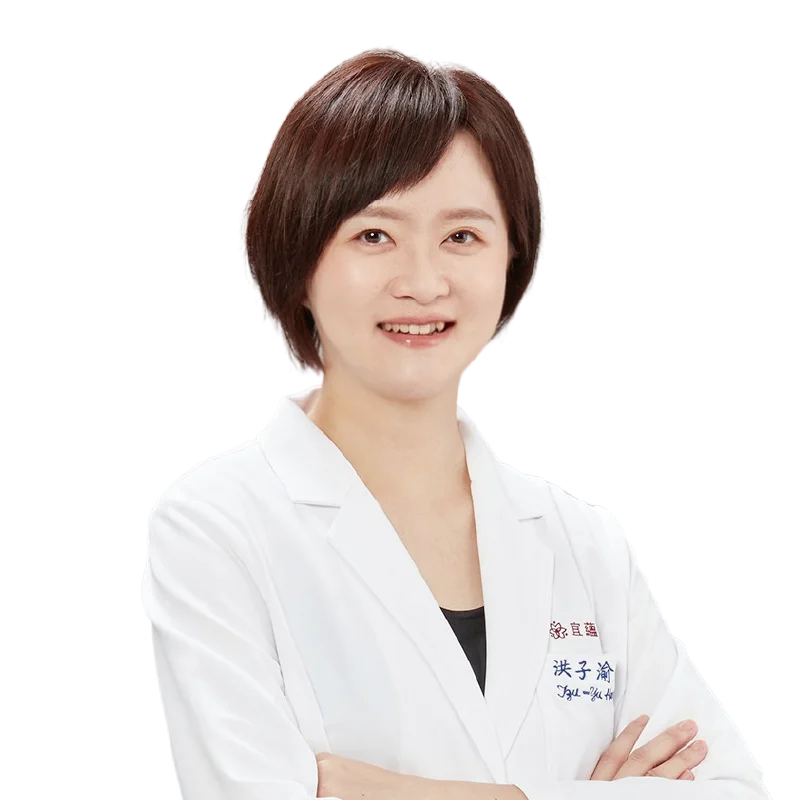
Before NUWA the hospital name is a single one: Mackay Memorial Hospital, where Dr. Tzu-Yu Hung held an attending physician post in the obstetrics division’s infertility department. That department is one of the older dedicated reproductive units in Taiwan, and the attending role there is a cycle-running position — protocols written, monitoring scheduled, retrievals and transfers performed — rather than a consultative one. The current appointment is Deputy Medical Director and physician at NUWA Fertility Center, a title that adds responsibility for how the medical service operates to the outpatient list.
Training runs on two tracks. The first is the School of Medicine at NYCU. The second is the Institute of Biotechnology at National Taiwan University, at doctoral level. In a field where the difference between a good cycle and a failed one often sits in culture conditions, follicle assessment and freezing technique, a physician carrying both a clinical degree and graduate biotechnology training reads laboratory reporting from the technical side, which matters at a center whose embryology work is done in-house and where the clinic describes time-lapse embryo culture among its laboratory equipment.
The ten named specialties divide cleanly into what is done and what is being treated. On the doing side: infertility examination and diagnosis, IVF, IUI, hysteroscopy, egg freezing and embryo freezing. On the treated-cause side: recurrent miscarriage, endometriosis, ovarian failure and polycystic ovary syndrome. The two cryopreservation entries are kept separate rather than merged into one line, which is how the list distinguishes preserving unfertilized eggs from preserving embryos already created in a cycle.
Clinical Expertise
- Egg freezing versus embryo freezing: two different decision points. Eggs are vitrified before fertilization, when the question is preserving an option; embryos are vitrified after a cycle has produced them, when the question is staging transfers or keeping spare material. Both appear as separate named services.
- Recurrent miscarriage: rebuilding the assessment after repeated loss — embryo chromosome status, cavity anatomy, endocrine and clotting factors, and immune contribution — so the next attempt is a different plan rather than the last one repeated.
- Premature ovarian failure: setting expectations against reserve markers before stimulating, and revisiting the route when response falls short, including whether to accumulate embryos over several retrievals or move to a donated-egg discussion.
- Infertility examination and diagnosis: paired workup of ovulation, tubal patency, the uterine cavity and semen analysis before choosing a level of intervention.
- IVF and IUI: the two intervention tiers, with insemination reserved for cases where induced ovulation, a mild male factor or an unexplained diagnosis has not yet justified a retrieval.
- Hysteroscopy: a camera passed through the cervix to find and treat polyps, adhesions, septa and endometrial disease ahead of embryo placement, so the shape of the cavity is assessed directly rather than inferred from imaging.
- Endometriosis: judging what an endometriotic cyst does to egg recruitment against what removing it costs in ovarian tissue, then sequencing treatment around that decision.
- Polycystic ovary syndrome: ovulation induction where drug response varies widely between patients, with hyperstimulation risk monitored cycle by cycle.
Why Choose Dr. Hung
Loss and reserve are named, not folded in. Recurrent miscarriage and ovarian failure both appear as standalone specialties rather than as examples under “infertility”. That distinction matters for patients in these groups, because both are situations where the standard first-line plan is the wrong starting point, and because the assessment for repeated loss runs in a different direction from the assessment for failed stimulation.
Cryopreservation is available at both stages. A patient deciding between freezing eggs now and completing a cycle to freeze embryos is choosing between two techniques, two consent frameworks and two sets of downstream costs. Listing egg freezing and embryo freezing separately says both conversations can be held with the same physician, and the staging question — whether to use a cycle’s embryos fresh, freeze them for later, or freeze spare eggs as well — is decided in the same outpatient list that wrote the protocol.
One institution’s infertility department behind the current title. The attending years at Mackay Memorial Hospital were spent in a single established reproductive unit, so the cycle experience and the diagnosis workup come from the same supervised setting rather than several short postings.
Graduate biotechnology training beside the clinical degree. The Institute of Biotechnology at National Taiwan University follows NYCU’s School of Medicine in Dr. Hung’s training, which puts culture technique, assay design and laboratory reporting inside the same background as the clinical work. In a cycle where the limiting factor is what happens between retrieval and transfer, that is the vocabulary a patient otherwise has to have translated.
Four documented case types under one attending physician. The published stories under this physician cover a thin endometrium managed with a natural-cycle transfer, an endometriotic cyst combined with low sperm count going straight to IVF, a patient with very high thyroid antibody levels who conceived, and several years of unsuccessful natural conception resolved in one IVF cycle. That is a reasonable map of the difficult cases that arrive at a deputy director’s outpatient list.
Professional Affiliations
Appointments held: Deputy Medical Director and physician at NUWA Fertility Center; attending physician of reproductive medicine at Mackay Memorial Hospital. Education: School of Medicine, NYCU, and the Institute of Biotechnology at National Taiwan University at doctoral level.
The institutional anchor of this career is Mackay Memorial Hospital, a Taipei medical-center hospital whose reproductive division has trained several of the physicians now practicing in the city’s fertility clinics. The NYCU medical degree and the National Taiwan University biotechnology posting place the rest of the training in two of the same island’s research-active university systems, one clinical and one laboratory-based, which is the pairing that shows up again in the way the specialty list is organized: procedures on one side, named causes on the other.
Suitable For
Recurrent pregnancy loss needing re-workup: after two or more losses, the next step is identifying which of several unrelated causes applies, and repeating the previous protocol does not answer that. Recurrent miscarriage is a named specialty, and this physician’s published case list includes an immune-factor conception story.
Low ovarian reserve at any age: reserve determines how many cycles a patient can afford to lose, so the plan has to be set against test results rather than against a standard protocol. Ovarian failure appears separately from infertility on the list, and one published case involves a patient with an endometriotic cyst plus low sperm count proceeding directly to IVF.
Thin endometrium affecting implantation: lining thickness changes transfer strategy, often toward a natural or modified cycle and adjusted medication support, before embryo quality becomes the limiting factor. One published case here is a thin-endometrium story carried to a live birth through natural-cycle transfer.
PCOS cycles needing close monitoring: the same dose can produce a minimal response in one patient and an over-response in another, so scan-driven adjustment is the substance of the treatment. Polycystic ovary syndrome is named among the treated causes.
Freezing eggs or embryos for later: choosing between the two depends on whether a cycle has already been completed and whether genetic testing of embryos is wanted, and both services being listed means the comparison can be made in one place.
Long infertility before starting treatment: couples who have tried for years without a diagnosis need the full workup before any intervention tier is chosen, since some of those cases turn on one correctable factor. One published story covers several years of failed natural conception resolved in one IVF cycle.