'%3e%3cpath%20fill='red'%20d='M0%200h720v480H0z'/%3e%3cpath%20fill='%23000095'%20d='M0%200h360v240H0z'/%3e%3cg%20fill='%23fff'%3e%3cpath%20d='m154%20126.9-2.5%209.6%209.4%202.6-1.8-7.1zm46.9%205.1-1.8%207.1%209.4-2.6-2.5-9.6zm-41.8-24-5.1%205.1%201.9%206.9z'/%3e%3cpath%20d='m155.9%20120-1.9%206.9%205.1%205.1z'/%3e%3cpath%20d='m154%20113.1-6.9%206.9%206.9%206.9%201.9-6.9zm14%2027.8%205.1%205.1%206.9-1.9zm18.9%205.1%209.6%202.5%202.6-9.4-7.1%201.8z'/%3e%3cpath%20d='m192%20140.9%207.1-1.8%201.8-7.1zm-31.1-1.8%202.6%209.4%209.6-2.5-5.1-5.1zm19.1%205%206.9%201.9%205.1-5.1z'/%3e%3cpath%20d='m173.1%20146%206.9%206.9%206.9-6.9-6.9-1.9zm-12.2-45.1-9.4%202.6%202.5%209.6%205.1-5.1zm-1.8%2031.1%201.8%207.1%207.1%201.8zm45-12%201.9-6.9-5.1-5.1z'/%3e%3cpath%20d='m168%2099.1-7.1%201.8-1.8%207.1zm32.9%208.9-1.8-7.1-7.1-1.8zm5.1%2018.9%206.9-6.9-6.9-6.9-1.9%206.9z'/%3e%3cpath%20d='m200.9%20108-8.9-8.9-12-3.2-12%203.2-8.9%208.9-3.2%2012%203.2%2012%208.9%208.9%2012%203.2%2012-3.2%208.9-8.9%203.2-12z'/%3e%3cpath%20d='m200.9%20132%205.1-5.1-1.9-6.9zm5.1-18.9%202.5-9.6-9.4-2.6%201.8%207.1zm-6.9-12.2-2.6-9.4-9.6%202.5%205.1%205.1zm-26-6.9-9.6-2.5-2.6%209.4%207.1-1.8zm6.9%201.9-6.9-1.9-5.1%205.1z'/%3e%3cpath%20d='m186.9%2094-6.9-6.9-6.9%206.9%206.9%201.9z'/%3e%3cpath%20d='m192%2099.1-5.1-5.1-6.9%201.9zM173.1%20146l-9.6%202.5%204.5%2016.6%2012-12.2zm-5.1%2019.1%2012%2044.9%2012-44.9-12-12.2zm-7.1-26-9.4-2.6-4.4%2016.4%2016.4-4.4z'/%3e%3cpath%20d='m147.1%20152.9-12%2045.1%2032.9-32.9-4.5-16.6zm-12-20.9L102%20165.1l45.1-12.2%204.4-16.4z'/%3e%3cpath%20d='m154%20126.9-6.9-6.9-12%2012%2016.4%204.5zm0-13.8-2.5-9.6-16.4%204.5%2012%2012z'/%3e%3cpath%20d='M135.1%20108%2090%20120l45.1%2012%2012-12zm90%2024-16.6%204.5%204.4%2016.4%2045.1%2012.2z'/%3e%3cpath%20d='m199.1%20139.1-2.6%209.4%2016.4%204.4-4.4-16.4zm-12.2%206.9-6.9%206.9%2012%2012.2%204.5-16.6zm19.1-19.1%202.5%209.6%2016.6-4.5-12.2-12z'/%3e%3cpath%20d='m192%20165.1%2033.1%2032.9-12.2-45.1-16.4-4.4zm7.1-64.2%209.4%202.6%204.4-16.4-16.4%204.4z'/%3e%3cpath%20d='M225.1%20108%20258%2075.1l-45.1%2012-4.4%2016.4zm-12.2-20.9L225.1%2042%20192%2075.1l4.5%2016.4zm12.2%2044.9%2044.9-12-44.9-12-12.2%2012z'/%3e%3cpath%20d='m206%20113.1%206.9%206.9%2012.2-12-16.6-4.5zm-38-38L135.1%2042l12%2045.1%2016.4%204.4z'/%3e%3cpath%20d='m160.9%20100.9%202.6-9.4-16.4-4.4%204.4%2016.4z'/%3e%3cpath%20d='m147.1%2087.1-45.1-12%2033.1%2032.9%2016.4-4.5zm39.8%206.9%209.6-2.5-4.5-16.4-12%2012z'/%3e%3cpath%20d='M192%2075.1%20180%2030l-12%2045.1%2012%2012z'/%3e%3cpath%20d='m173.1%2094%206.9-6.9-12-12-4.5%2016.4z'/%3e%3c/g%3e%3ccircle%20cx='180'%20cy='120'%20r='51.1'%20fill='%23000095'/%3e%3ccircle%20cx='180'%20cy='120'%20r='45.1'%20fill='%23fff'/%3e%3c/g%3e%3c/svg%3e)
About
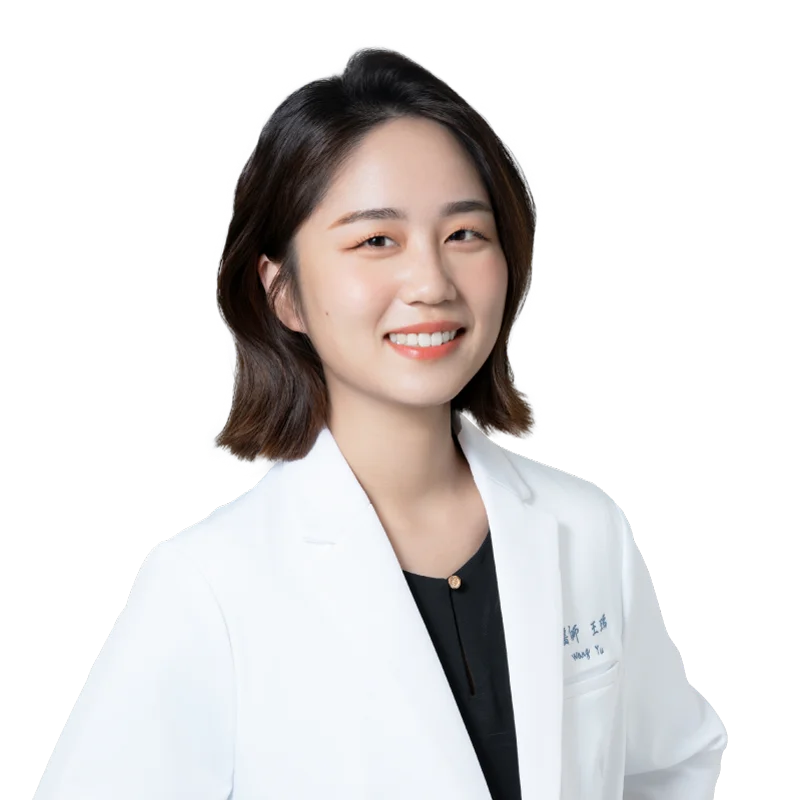
One clinical trajectory runs end to end through a single hospital: resident physician in the Department of Obstetrics and Gynecology at Taichung Veterans General Hospital, then fellow in that hospital’s Division of Reproductive Endocrinology and Infertility, then attending physician in the same division’s reproductive and infertility service. In Taiwan the fellowship is the gate through which a gynecologist becomes a reproductive specialist, and passing all three stages inside one veterans hospital means supervised and independent practice ran against a single protocol set and case mix.
At NUWA Fertility Center the appointment is Director of Fertility Research, held inside the reproductive medicine service. The post sits beside cycle work rather than above it: the same person sees patients and owns the evaluation and methods questions behind those decisions.
The clinical interests come in four blocks rather than a flat list — assisted reproductive technology (IVF, IUI, fertility evaluation, recurrent miscarriage, implantation failure evaluation, genetic counselling, PGS/PGD, egg donation), fertility preservation (egg freezing, embryo cryopreservation), ovarian and endocrine conditions (premature ovarian insufficiency, polycystic ovary syndrome), and minimally invasive procedures (hysterosalpingography and hysteroscopy, hysteroscopic surgery, endometriosis). Four society and certification entries follow, including a Da Vinci robotic surgery physician credential issued through the Taiwan Association of Obstetrics and Gynecology.
Clinical Expertise
- IVF: stimulation, monitoring, retrieval, fertilisation and transfer, with the protocol chosen against age, reserve and the specific diagnosis rather than a default ladder.
- IUI: insemination of washed semen timed to ovulation, used where the barrier is delivery rather than fertilisation.
- Fertility evaluation: the pre-treatment workup — ovulation, tubal patency, cavity status and semen analysis — assembled before any cycle is scheduled, so the entry point into treatment is chosen on evidence.
- Recurrent miscarriage: review across embryo chromosome status, cavity anatomy, endocrine support and immune contribution, since repeating the same transfer approach does not change the odds.
- Implantation failure evaluation: a structured look at cycles where a morphologically good embryo did not establish, covering transfer technique, cavity readiness and embryo genetics as separate variables.
- Genetic counselling: explaining what a screening or diagnostic test can and cannot answer for a couple with a family history, a chromosome rearrangement or advanced maternal age, before a biopsy is commissioned.
- PGS / PGD: chromosome-number screening of embryos on one side and targeted testing for a known single-gene condition on the other, with different indications, biopsy targets and limitations.
- Egg donation: assessment and arrangement of donor oocyte programmes where own-egg retrieval has stopped producing usable embryos, which changes the legal, medical and scheduling framework of the whole treatment.
- Egg freezing and embryo cryopreservation: vitrification for deferred family planning, for banking before gonadotoxic therapy, and for holding surplus embryos or staging transfers across later cycles.
- Premature ovarian insufficiency: working out how much response remains and how wide the treatment window still is, since both the protocol and the realistic expectation depend on that estimate.
- Polycystic ovary syndrome: in PCOS the induction drug tends to work, so the difficulty is a response that comes too strongly rather than too weakly, which makes dose adjustment and hyperstimulation surveillance the substance of the cycle.
- Endometriosis: disease effect on oocyte quality, tubal function and implantation, and the sequencing of surgery against planned treatment.
- Hysterosalpingography (HSG): radiographic confirmation of tubal patency, often the test that decides whether a couple can stay at insemination level or should move straight to IVF.
- Hysteroscopy and hysteroscopic surgery: cervical access to the cavity for identifying and removing polyps, adhesions and septum and for assessing the endometrium before transfer.
- Da Vinci robotic surgery: minimally invasive pelvic surgery performed with a robotic platform, a credential the obstetrics and gynecology association issues after device-specific training.
Why Choose Dr. Wang
The research directorship is a separate named post. NUWA lists Director of Fertility Research among its physicians rather than leaving evaluation methods to whoever happens to be consulting. For a patient whose question is why a cycle failed, that means the same profile carries both the clinical decisions and the assessment framework behind them.
Full in-house specialist formation. Resident, fellow and attending physician in Taichung Veterans General Hospital’s obstetrics and gynecology and reproductive endocrinology and infertility divisions is one continuous chain, and the fellowship stage in Taiwan is supervised sub-specialty training in exactly the stimulation, retrieval and counselling work done at a fertility centre.
A device-specific surgical credential. The Da Vinci robotic surgery physician certification from the Taiwan Association of Obstetrics and Gynecology is issued for a named platform, not for operative interest generally. Patients told to consider surgery around an IVF programme can ask directly whether the clinic operates robotically and who does it.
Screening, diagnosis and counselling in one clinical relationship. Genetic counselling, PGS/PGD and implantation failure evaluation all appear in the same block of interests, so a couple moving from “why did this fail” to “should we test the embryos” stays with one physician instead of being handed between a fertility clinic and a genetics service.
Two regional societies plus a preservation society. Membership of ASPIRE and of ESHRE places the practice inside both the Asia Pacific and European reproductive networks, where laboratory and screening standards differ by region, while the Taiwan Society for Fertility Preservation membership corresponds to the egg freezing and embryo cryopreservation entries on the same list.
Professional Affiliations
Memberships and certification: member of the Asia Pacific Initiative on Reproduction (ASPIRE), member of the European Society of Human Reproduction and Embryology (ESHRE), member of the Taiwan Society for Fertility Preservation, and certified Da Vinci robotic surgery physician of the Taiwan Association of Obstetrics and Gynecology. Appointments: attending physician, Division of Reproductive Endocrinology and Infertility, Department of Obstetrics and Gynecology, Taichung Veterans General Hospital; lecturer, National Yang Ming Chiao Tung University; resident physician, Department of Obstetrics and Gynecology, Taichung Veterans General Hospital; fellow, Division of Reproductive Endocrinology and Infertility, Taichung Veterans General Hospital. Current post is Director of Fertility Research in NUWA’s reproductive medicine team. Degree: National Yang-Ming University, School of Medicine.
Suitable For
Repeated transfers that have not implanted: failure after a good embryo can come from the cavity, from transfer technique, from embryo chromosome status or from none of these, and the workup is only useful if the branches are examined in one plan. Implantation failure evaluation, PGS/PGD and hysteroscopy all appear in the same profile.
A known single-gene condition or chromosome concern: whether testing is indicated, which embryos are at risk and what a result actually rules out are counselling questions before they are laboratory questions, which is why genetic counselling is listed next to PGS/PGD rather than separately.
Donor egg programme planning: once own-egg response has stopped producing transferable embryos, the decision is about changing route rather than increasing dose, and egg donation is named as a specific area of practice.
Premature ovarian insufficiency or PCOS cycle management: the first narrows the treatment window and forces earlier decisions, the second makes response unpredictable within a single cycle. Both conditions belong to the ovarian and endocrine group of Dr. Wang’s named interests.
Tubal and cavity assessment before committing to IVF: HSG answers the patency question and hysteroscopy answers the cavity question, so the pair determines whether a couple should be at insemination level, in IVF, or in surgery first.
Egg or embryo banking before treatment or across several cycles: accumulation over multiple retrievals and storage before medical therapy both depend on vitrification practice and on planning the schedule around whatever treatment is coming, which is the block the fertility preservation society membership sits next to.