
About
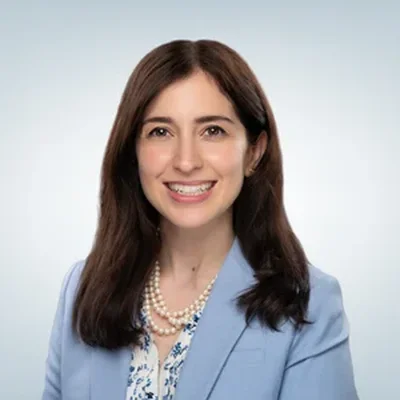
When the Canadian Fertility and Andrology Society published its 2024 clinical practice guideline on fertility preservation for patients about to receive gonadotoxic treatment, Dr. Ann Korkidakis was one of the named authors. Guidelines like that one are what change referral behavior in oncology wards, and she wrote the one her own patients arrive through. A 2022 American Society for Reproductive Medicine Fertility Preservation Prize Paper award recognized the underlying research: identifying the fertility needs of adolescents and young adults with cancer, using population-level data to show how rarely those patients are referred in time.
The access question runs through her whole record, and it is why she went back to school for a Master of Public Health at Johns Hopkins. Her 2024 paper in Fertility and Sterility tied state IVF insurance mandates to racial and ethnic inequities in who actually uses assisted reproduction — the finding that coverage rules do not remove the gap on their own. She also published an analysis of chromosomal errors in 1,107 miscarriages, which is the dataset behind sensible advice to a patient with recurrent pregnancy loss. Alongside those questions she works on early embryo development, including time-lapse assessment and embryo quality against AMH.
Her clinical training is unusually wide: honors graduation in Anatomy and Cell Biology and a medical degree at McGill University, OB/GYN residency at Queen’s University, then REI fellowships at both the University of British Columbia in Vancouver and Beth Israel Deaconess/Harvard Medical School in Boston — two fellowship programs in two countries. Born and raised in a large Greek family in Montreal, she is fluent in French and Greek and is an active candidate for American Board of Obstetrics and Gynecology certification. She consults in person at the Brookline and Worcester fertility centers, and by telehealth to patients anywhere in Massachusetts.
Clinical Expertise
- Fertility preservation before cancer treatment: Egg, embryo and ovarian tissue planning against an oncology start date, with a published guideline behind her approach
- Adolescent and young adult oncofertility: The population her prize-paper research identified as least likely to be referred in time
- Recurrent pregnancy loss: Management informed by her own analysis of chromosomal errors across 1,107 miscarriages
- Early embryo development: Time-lapse morphology, embryo quality and the markers that predict implantation
- IVF and ICSI: Cycle management, including frozen transfer strategy in good-prognosis patients
- Egg freezing for planned delay: Outcomes from a decade of planned oocyte cryopreservation are among the Boston-group papers she appears on
- Access, cost and coverage: A public health researcher’s view of which cycles patients can actually afford
Why Choose Dr. Ann Korkidakis
She wrote the guideline. A named authorship on a national society’s fertility preservation practice guideline is the strongest available credential for a patient whose chemotherapy start date is driving the calendar.
Two fellowship programs, two countries. University of British Columbia and Harvard/Beth Israel Deaconess — a wider range of laboratory and clinical practice than a single-program CV.
A public health degree used on fertility problems. Her MPH research produced a Fertility and Sterility study on insurance mandates and racial inequity in IVF use, so the coverage question gets a researched answer rather than a billing department’s guess.
She published on miscarriage genetics. The 1,107-miscarriage chromosomal analysis is directly useful to patients with recurrent loss, who are usually offered opinions instead of data.
Three languages, two health systems. French and Greek alongside English, with Canadian and US practice experience — relevant for families with either passport.
Professional Affiliations
American Society for Reproductive Medicine; American College of Obstetricians and Gynecologists; New England Fertility Society; Pacific Coast Reproductive Society; Canadian Fertility and Andrology Society. Active candidate for American Board of Obstetrics and Gynecology certification. ASRM Fertility Preservation SIG Prize Paper (2022); New England Fertility Society Research Grant Award (2020).
Suitable For
- Young patients starting gonadotoxic therapy: The population she has spent her research career identifying, and the guideline she co-wrote exists for them
- Two or more miscarriages: Management informed by her own published chromosomal-error analysis
- Egg or embryo freezing before a deadline, medical or personal: Preservation is her award-winning specialty
- French or Greek-speaking families: Consults conducted in the patient’s language
- Patients priced out or under-insured: An MPH researcher’s honest read on what coverage does and does not fix