'%20d='m0%200%2016%2011h61%2061%2061%2061%2060L47%2037h61%2061%2060%2061L16%2063h61%2061%2061%2061%2060L47%2089h61%2061%2060%2061L16%20115h61%2061%2061%2061%2060L47%20141h61%2061%2060%2061L16%20166h61%2061%2061%2061%2060L47%20192h61%2061%2060%2061L16%20218h61%2061%2061%2061%2060z'/%3e%3c/svg%3e)

About Boston IVF - The Waltham Fertility Center
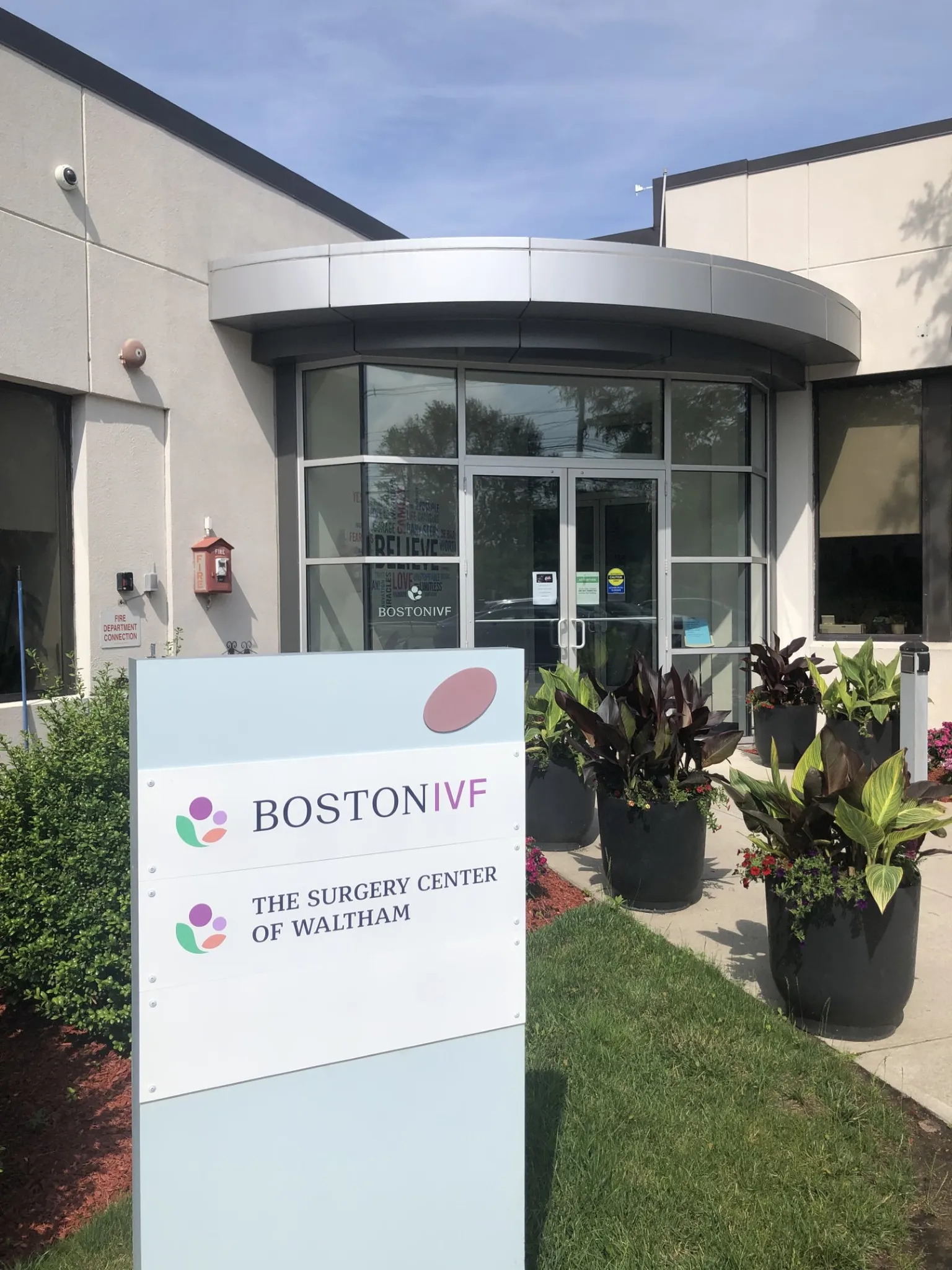
Boston IVF has been doing IVF in New England since 1986, and this is where it keeps its headquarters: the Waltham campus hosts the network’s largest in vitro fertilization and embryology laboratory. Its headline figures are the network’s own marketing wording — “over 150,000 success stories,” an average of 11 babies born a day since opening, and 15,000 cycles a year. Those are system-wide claims across every state Boston IVF operates in; none of them is audited, and none is broken out for Waltham.
If you are comparing Boston IVF’s Massachusetts branch pages, here is the practical difference. Waltham is the headquarters, and it carries the group’s largest IVF and embryology laboratory, the Surgery Center of Waltham, and the Wellness Center. Offices such as Stoneham, Brookline, Quincy, Westborough, Concord, Worcester and Springfield run consultations and cycle monitoring closer to where patients live. The clinic’s own materials list ten Massachusetts locations spanning from Springfield to Cape Cod, and roughly 30 centers with around 40 reproductive endocrinologists across eleven states.
The site itself is a full-service IVF center: consultations, IUI, IVF, HSG, saline sonography, semen analysis, and blood and ultrasound monitoring, with the lab work processed on site. The building is in Waltham off I-90 and Route 128, on the western edge of the Boston metro area, with complimentary parking.
What the success numbers on this page mean
The rates shown are CDC 2022 ART figures reported for the Boston IVF network as a whole. Waltham does not publish its own site-level breakdown, and Boston IVF maintains no standalone success-rate page on its site. Read at face value, the network figures were 52.5% under 35, 39.0% at 35-37, 26.8% at 38-40 and 8.5% at 40 and over, against SART 2023 national benchmarks of 53.2 / 39.9 / 26.2 / 9.4. That is a clinic performing at roughly the national mark, not a statistical outlier, and any Boston IVF clinic you compare in FertilityIQ threads should be judged on the same reporting year and the same denominator. Before you commit, pull the clinic-level report for the exact program you are registering with from SART CORS or the CDC ART portal and check the live-birth-per-retrieval column rather than the per-transfer column.
Accreditations & Awards
- New England firsts — network-level, not site-specific: across the Boston IVF system, the first IVF/ICSI pregnancy and the first donor-egg pregnancy in New England, plus the first Massachusetts birth using frozen eggs. None of these is dated or located at the Waltham address.
- Castle Connolly rankings (2024-2025) — network-level, not site-specific: the system reports being named a top 5 private practice nationally for reproductive medicine in 2025, and #1 among private groups in Massachusetts for both reproductive medicine and women’s health. These are Boston IVF’s own published claims about the network.
- Memberships: our sources list SART among Boston IVF’s society memberships at network level, alongside ASRM, SREI and the New England Fertility Society for individual Waltham physicians. The CDC-derived rates on this page are network-level rows, which is what makes them checkable. Our material documents no CLIA or CAP accreditation for this laboratory, so the CLIA and CAP rows in the certification table are unverified in what we hold.
- An accredited REI fellowship run with Harvard Medical School and Beth Israel Deaconess Medical Center; our source records the accreditation and the partnerships but not the accrediting body. Fellows who train here frequently stay on staff.
- Physician-level recognition: Boston Magazine and Castle Connolly Top Doctor listings for multiple Waltham physicians across 2009-2025, and the 2024 RESOLVE Hope Award for Achievement for the physician who leads the group’s third-party reproduction program
- Research record: landmark published studies on fertility care for minority patients and transgender family building, including a widely cited transgender male fertility study in Fertility and Sterility
Why Choose Boston IVF - The Waltham Fertility Center
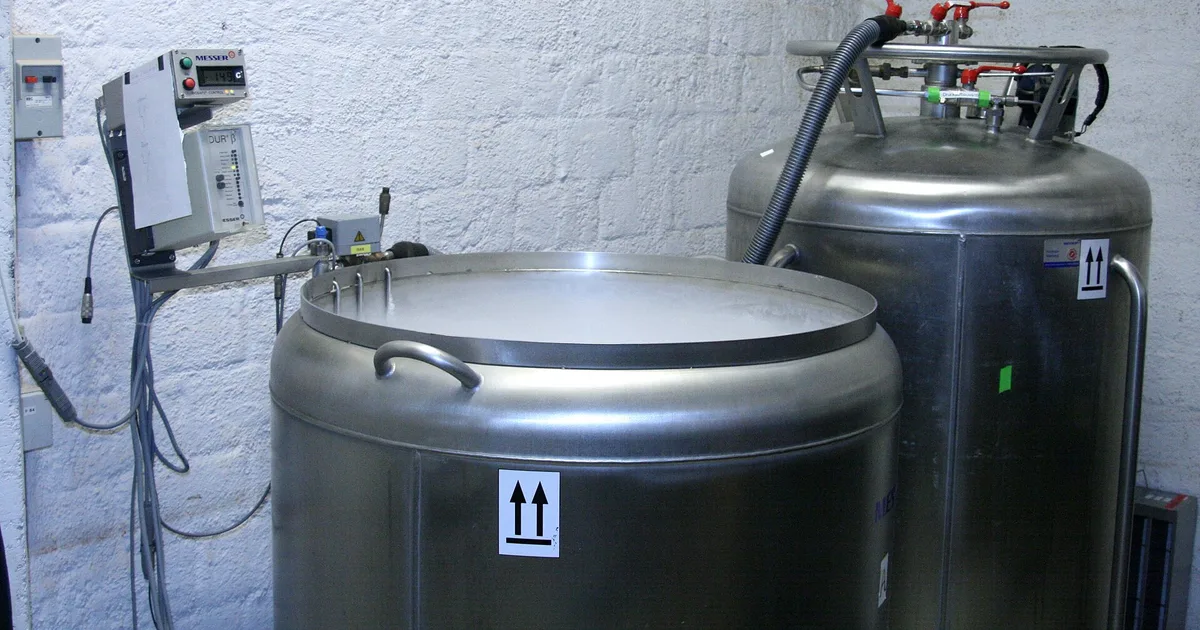
- The lab is in the building. Boston IVF’s largest IVF and embryology laboratory sits on this campus. Monitoring labs, semen analysis and embryo work all happen on the property, which is the operational difference between a flagship and a satellite. Our source gives laboratory headcount only for the network — 24 people in the Laboratory department across all offices — and publishes no Waltham-specific staffing figure or daily sample volume.
- Massachusetts policy is written here. Samuel Pauli, the network’s Massachusetts Medical Director, practices at Waltham. So does Alan Penzias, a Boston IVF co-founder, Regional Medical Director and Fellowship Director who chaired the ASRM Practice Committee for six years, joined the ASRM Board of Directors in 2021, and sat on the SART Executive Council. When the group changes a stimulation protocol or a lab procedure, the people who decided it are in this office.
- Surgery without a hospital referral. The Gynecological Surgery Practice, Boston IVF’s in-house minimally invasive gynecologic surgery service, operates out of the Surgery Center of Waltham, directed by Dr. Lauren Murphy. Fibroids, polyps, adhesions and tubal disease get addressed by the same group running your cycle rather than outsourced.
- New England’s only on-site fertility Wellness Center. Opened in 2006: licensed acupuncturists who time sessions around IUI and retrieval or transfer, therapists who specialize in miscarriage and failed cycles, donor conception and LGBTQ+ family building, and dietitians for PCOS, diabetes and nutrition around cancer treatment.
- A teaching practice, not a franchise branch. Waltham physicians hold Harvard Medical School appointments ranging from clinical instructor to associate professor, and Kim Thornton, who splits Waltham and Worcester, is Division Director of Reproductive Endocrinology and Infertility at Beth Israel Deaconess and an elected ASRM Board member. Boston IVF’s research group also draws on more than 35 years of accumulated treatment-cycle data to spot patterns in both routine and rare diagnoses; the network publishes no cycle count for that archive.
- Monitoring close to home. Boston IVF’s model lets stimulation scans and bloodwork happen at whichever office is nearest you. Ask, before you sign up, which site your retrieval and transfer will actually be scheduled at if you are registering as a Waltham patient.
- Nurse and PA coverage on site. A standing bench of nurse practitioners, physician assistants and third-party reproduction nurse coordinators works out of Waltham, so mid-cycle dosing questions on a scan day get answered by people in the building.
IVF & Fertility Services
- IVF: full cycle management, ovarian stimulation through embryo transfer
- ICSI: micromanipulation fertilization for male-factor cases
- IUI and ovulation induction: first-line treatment for unexplained infertility and ovulatory dysfunction
- PGT-A and PGT-M: embryo screening for chromosome number and for single-gene disease, with the results driving which embryo transfers
- Egg, sperm and embryo freezing: medical preservation before gonadotoxic treatment, and elective egg freezing. Our sources record no freeze-thaw survival figures for this network, so treat any survival percentage quoted elsewhere as unverified here.
- Donor egg, donor sperm and donor embryo programs, coordinated by dedicated third-party nurse coordinators on site
- Gestational carrier and surrogacy pathways for patients who cannot carry a pregnancy
- LGBTQ+ family building: single parents by choice, lesbian and gay male couples, and transgender patients pursuing family building, an area where this group has published landmark studies and runs a dedicated program
- Diagnostics on site: semen analysis, hormone panels, HSG, saline infusion sonography (SIS), and blood and ultrasound monitoring
- Minimally invasive gynecologic surgery: hysteroscopic and laparoscopic work through the Surgery Center of Waltham
- Conditions commonly managed here: PCOS, endometriosis, diminished ovarian reserve, recurrent pregnancy loss, male-factor infertility and unexplained infertility
- Wellness supports: acupuncture, individual and couples counseling, and nutritional counseling
Fees & Packages
There is no published price list. Boston IVF quotes per patient, the way most American clinics do, because the final number depends on protocol, medication dose, whether you add ICSI, PGT, freezing and storage, and which diagnosis you are being treated for. Get the estimate in writing and ask it to separate four lines: monitoring and retrieval, lab and embryology, anesthesia, and medications plus storage.
What the clinic does offer is help paying for it:
- Dedicated financial counselors who verify your benefits before the cycle starts and push for the maximum your plan allows
- Massachusetts insurance mandate leverage. Massachusetts passed one of the country’s first mandates requiring infertility coverage in 1990, and state law requires certain commercial plans to cover the diagnosis and treatment of infertility for up to six cycles. Our sources do not name the statute or list which plan types fall outside it, so confirm your own documents rather than assuming
- Financing and installment plans for patients paying out of pocket
- Free parking at the Waltham campus
Patient Journey
- Request the appointment, online or by phone. Massachusetts patients can open the chart with a telehealth visit instead of driving in, or book in person at Waltham
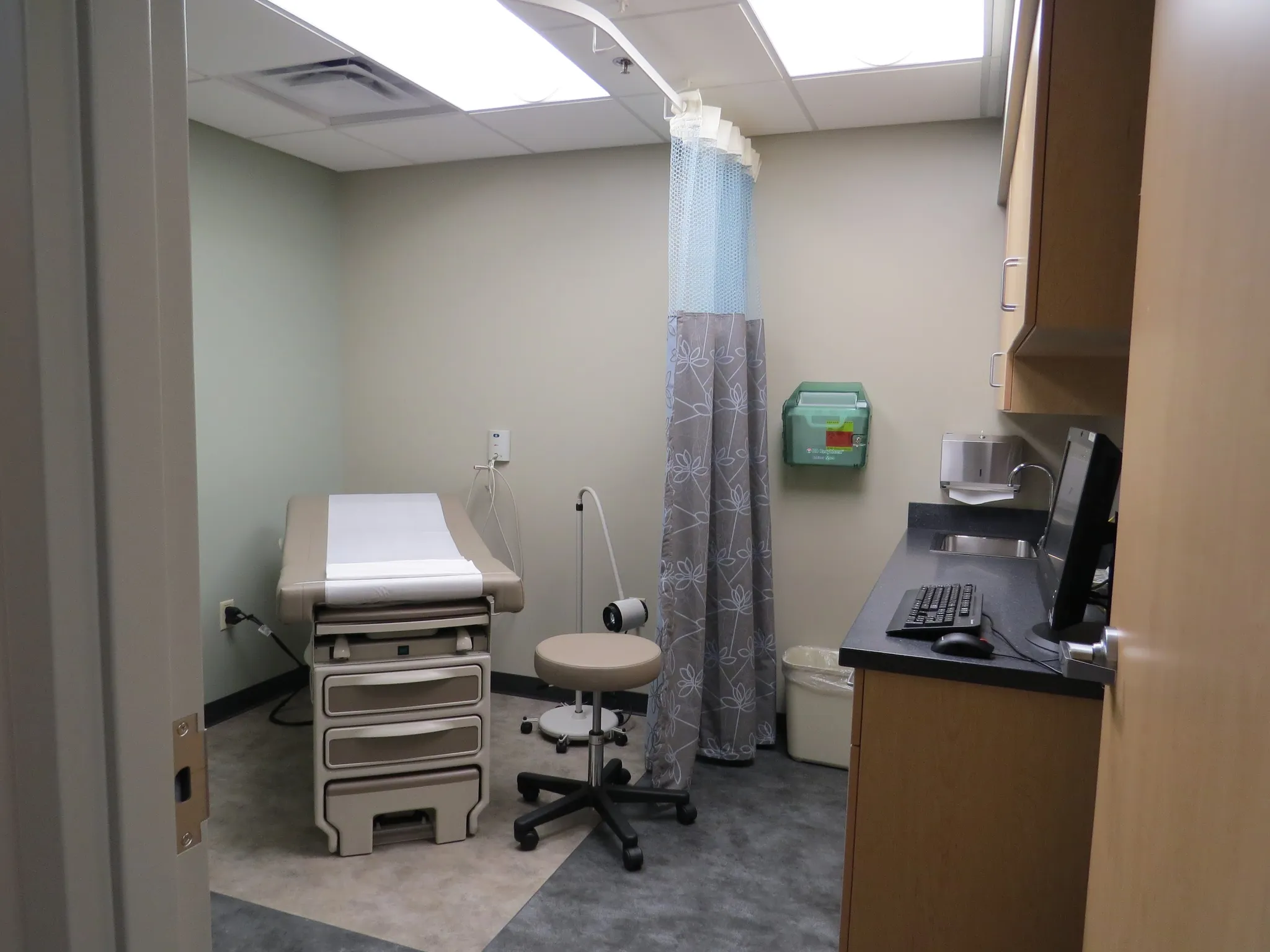
- Baseline testing: hormone panels and pelvic ultrasound, plus a semen analysis for the partner. Uterine cavity and tubal checks are done here too, either HSG or saline sonography, with bloodwork run through the on-site lab
- Plan visit, plus a money visit: your physician reviews findings and proposes a path (IUI, IVF, freezing, or a donor or gestational carrier program) while a financial coordinator verifies benefits in parallel, so you see the cost before the first injection
- Stimulation and monitoring: repeat bloodwork and scans as follicles grow, at Waltham or at whichever Boston IVF office is nearer your home
- Egg retrieval at Waltham, with ICSI where indicated, and embryos cultured to day 5-6 blastocyst. If you are doing PGT, the biopsy and the results drive the transfer decision; embryos you are not transferring yet are frozen and banked
- Transfer, fresh or frozen by protocol, with optional acupuncture sessions scheduled around the procedure through the Wellness Center, followed by the pregnancy blood test and a referral to obstetrics once a heartbeat is confirmed
- Third-party paths run on a separate track: donor egg, sperm or embryo recipients and gestational carrier matches work with dedicated nurse coordinators at this office, and surgical cases route to the Surgery Center of Waltham
Local Legal Framework
What our Massachusetts sources document is short, and it is worth reading as a floor rather than a map of the law. They name no statute numbers, no cases, and no court procedures, so anything below that goes beyond these bullets needs a lawyer’s read, not a clinic page.
- Insurance: Massachusetts passed one of the country’s first laws requiring infertility coverage in 1990. State law obliges certain commercial insurance plans to cover the diagnosis and treatment of infertility, for up to six cycles. Our sources do not identify the statute, the cycle-counting rules, or which plans are exempt
- Egg, sperm and embryo donation: legal, and done under a written donation agreement that sets out each party’s rights and obligations. Our sources document no statutory cap on donor compensation and no named parentage statute
- Gestational surrogacy: altruistic arrangements are permitted; the enforceability of commercial surrogacy contracts is unsettled. Our sources cite no statute or decision and do not describe how a parentage order is obtained. Independent legal counsel for intended parents and carriers is the standard precaution our material records
- Embryo legal status: Massachusetts law does not define an embryo as a legal person or as ordinary property. Disposition in a divorce or after a death follows the consents signed at freezing. Our sources do not name the case law behind that practice
- PGT: PGT-A and PGT-M carry no special state restriction. Patients sign cycle-specific consent covering the testing scope, embryo disposition and the fees
- LGBTQ+ family building: Massachusetts is documented in our sources as an LGBTQ+-friendly state for fertility care. Beyond that characterization our material does not describe state parentage rules, so two-parent recognition in an ART birth is a question for counsel, not for this page
- Embryo research and federal funding rules: our sources do not address either, and they identify no state statute on research on spare embryos
Location
- Address: 130 2nd Ave, Waltham, MA 02451
- Phone: (781) 434-6500