'%20d='m0%200%2016%2011h61%2061%2061%2061%2060L47%2037h61%2061%2060%2061L16%2063h61%2061%2061%2061%2060L47%2089h61%2061%2060%2061L16%20115h61%2061%2061%2061%2060L47%20141h61%2061%2060%2061L16%20166h61%2061%2061%2061%2060L47%20192h61%2061%2060%2061L16%20218h61%2061%2061%2061%2060z'/%3e%3c/svg%3e)
About
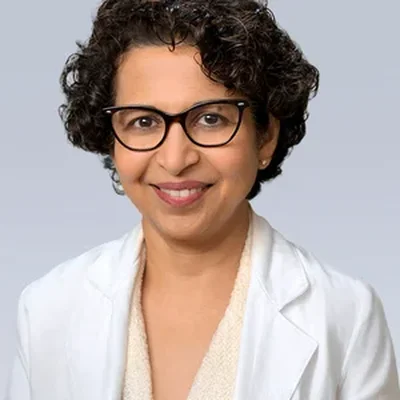
Anuja Dokras built the program that carries her subspecialty’s name. She directs the PCOS Center at Penn Fertility Care, and she helped write the international evidence-based PCOS guideline — the document other clinics train on — which is a rarer credential than a title: it means her own trial data and systematic reviews fed the recommendations. PubMed indexes 171 papers under her author name as of the 2026 data review, heavily weighted toward what makes PCOS dangerous rather than merely inconvenient: insulin resistance, cardiometabolic risk, and pregnancy complications. She remains an NIH-funded principal investigator on PCOS and reproductive aging, and she is one of the few reproductive endocrinologists who also holds a master’s in health science informatics alongside a PhD, which shows up in how she designs studies.
Her job list at Penn is unusually wide for a practicing clinician. Beyond the PCOS Center, she is Executive Director of the Center for Women’s Health Clinical Innovation, directs the preimplantation genetic diagnosis program, and serves as medical director of the reproductive surgery facility — the room where the division’s operative work happens. A patient referred to her for PCOS-related infertility can end up in a stimulated IVF cycle, a PGT cycle or a hysteroscopic procedure without leaving the division.
Training ran from an MD at the University of Bombay through residency at Seth G.S. Medical College in Mumbai and Yale-New Haven Hospital, then an REI fellowship at Yale-New Haven. She certified in obstetrics and gynecology in 2000 and in reproductive endocrinology and infertility in 2003, and joined the Penn faculty, where she was named Founder’s Professor in Women’s Health. She sees patients in English, Hindi and Gujarati.
Clinical Expertise
- PCOS across the whole lifespan — ovulation induction and IVF planning in one direction, metabolic and cardiovascular risk in the other, rather than treating the ovaries and ignoring the rest
- IVF and stimulation protocol design — with attention to ovarian hyperstimulation risk in high-responders, the group most often overstimulated in PCOS
- Preimplantation genetic testing — she directs the PGD program, so PGT-M for single-gene disease and PGT-A screening come through her oversight
- Reproductive surgery oversight — as medical director of the surgical facility, she sets the standards for the operative work that frequently precedes a transfer: polypectomy, adhesiolysis, tubal disease
- Perimenopause and menopause — hormone therapy decisions for patients whose endocrine history started with PCOS
- Recurrent pregnancy loss and amenorrhea — workup that includes thyroid, prolactin and pituitary causes, not just uterine imaging
Why Choose Dr. Dokras
Guideline author, not guideline follower. When a PCOS recommendation changes — how the syndrome is diagnosed, how weight and metabolic treatment fit into fertility care — she has been in the room that wrote it.
She treats the diagnosis, not just the cycle. Much of her published work is on what PCOS does to glucose, lipids and blood pressure during and after pregnancy. Patients who have been handed a Clomid prescription without a metabolic workup are her usual referral.
Research access while you are a patient. She runs NIH-funded studies inside the clinic, so enrolling in a protocol is a conversation you can have in a regular visit.
One stop for the genetic question. PGD program direction means patients with a known inherited condition are not shuffled to an outside genetics service for the counseling piece.
Her own center. The PCOS Center is a defined program with a named director, which usually means protocols, tracking and follow-up exist whether or not you are in the chair.
Professional Affiliations
American Society for Reproductive Medicine; American College of Obstetricians and Gynecologists; Society for Reproductive Endocrinology and Infertility; The Endocrine Society; American Gynecological and Obstetrical Society; Androgen Excess and PCOS Society; Society for Reproductive Investigation. Board-certified in Obstetrics and Gynecology (2000) and Reproductive Endocrinology and Infertility (2003). She practices inside a SART member clinic, so her cycle outcomes are published in the federal reporting tables rather than estimated by the clinic.
Suitable For
Patients with PCOS who want the metabolic picture handled. Irregular cycles plus insulin resistance, weight changes, prediabetes or a family history of type 2 diabetes is exactly the population the PCOS Center was created for.
Women with PCOS planning a pregnancy, where gestational diabetes and hypertensive risk should be discussed before the first injection rather than at the anatomy scan.
Families with a known genetic condition, who need PGT-M and a physician who directs that program.
Anyone who has been through two failed stimulation cycles without an explanation of why, or who wants the protocol argued from evidence.
Patients who prefer a Hindi or Gujarati consultation, and who would rather describe symptoms in the language they think in.