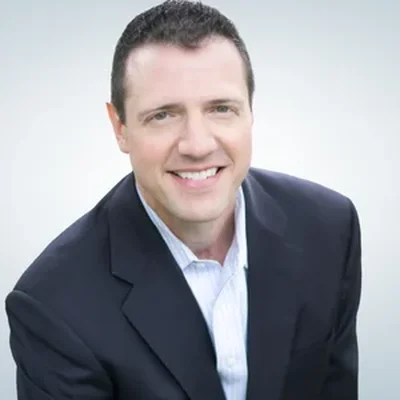

About
In 2012 Dr. Brian Berger launched Donor Egg Bank USA, which Boston IVF describes as the first and largest donor egg bank in New England. Before that, patients needing donor eggs in the region were routed through national banks and anonymous matching queues; a local bank changed the wait, the supply question and the logistics of a donor cycle. It is a typical move for him: he finds a bottleneck in fertility care and builds a structure around it. In 1999 he became the first physician in Massachusetts to perform elective partner-assisted reproduction — reciprocal IVF, where one partner provides the eggs retrieved through IVF and the other carries the pregnancy, with both women named as legal parents on the birth certificate.
He is double board-certified in Obstetrics and Gynecology and in Reproductive Endocrinology and Infertility, with REI fellowships at the University of California San Diego and at Weill Medical College of Cornell University. He serves as Medical Director of Boston IVF’s South Shore Center in Quincy, running that facility’s clinical direction and standards, and teaches at Harvard Medical School as a Clinical Instructor. Within Boston IVF he also started and directs the clinic’s Fertility Preservation and Egg Freezing Department and led its Donor Egg and Surrogacy Program for more than ten years. He lists his specific clinical interests as the patients IVF struggles most with: women with decreased ovarian function, unexplained infertility, recurrent miscarriage and donor egg cycles.
His self-described working rhythm — he says he works “tirelessly 7 days a week” to give patients the care they deserve — matters less as a slogan than as a fact of cycle management, since stimulation requires monitoring on weekends and holidays. He has lectured worldwide on diminished ovarian reserve, recurrent miscarriage, preimplantation genetic diagnosis and LGBT family building, and serves as a journal reviewer for Fertility and Sterility, Human Reproduction, Journal of Assisted Reproduction and Genetics and Reproductive Biomedicine Online. He practices in Massachusetts, where telehealth consults are open to patients anywhere in the state, at Boston IVF’s South Shore Center in Quincy; the Waltham listing on this page reflects his membership in the network rather than a Waltham consult schedule.
Clinical Expertise
- Donor egg IVF: Donor matching, cycle scheduling, legal documentation, transfer and pregnancy management, from the design side of a regional egg bank he created and directed for over a decade.
- Diminished ovarian reserve: He developed stimulation protocols for women with decreased ovarian function — patients for whom a standard protocol yields too few follicles to be worth continuing.
- Reciprocal IVF and LGBT family building: The first Massachusetts case in 1999, plus international lecturing on the medical and legal sequencing these families need.
- Fertility preservation and egg freezing: Founder and director of Boston IVF’s preservation department, covering oncology patients and elective banking.
- Recurrent miscarriage and unexplained infertility: Named interests, which in practice means luteal support, endometrial preparation and protocol decisions revisited cycle by cycle.
- OHSS management: He introduced the first outpatient vaginal paracentesis for ovarian hyperstimulation syndrome at Boston IVF, a procedure that lets severe cases drain fluid without admission.
- Trigger protocol innovation: He also pioneered the use of Lupron rather than hCG to trigger ovulation at Boston IVF, an approach that lowers OHSS risk in high responders.
Why Choose Dr. Brian Berger
He built the donor egg infrastructure he prescribes. Most physicians order from a bank; he started one. That distinction shows up in practical questions — how long a match takes, what vial quality means for a cycle, which legal steps must be signed before stimulation begins — that he has answered from the operations side for more than ten years.
Protocols for the patients other clinics write off. Decreased ovarian function is his first-named interest, and his research is specifically on developing new protocols for it, including work he has taught internationally. For a patient whose last cycle produced two eggs, protocol design is the entire decision.
A Massachusetts precedent in family building. The 1999 reciprocal IVF case, with both partners on the birth certificate, was the state’s first elective one. Lesbian couples weighing whose uterus carries and how parentage gets established are asking him about something he has handled since it had no standard route.
Academic teaching plus center-level responsibility. A Harvard Medical School instructorship and a medical directorship in the same career mean he is accountable both for how residents are trained and for the clinical standards of a whole center — the two roles that keep protocols from drifting.
Recognition that can be checked. Boston IVF’s awards list for him runs to Castle Connolly Top Doctor from 2012 through 2025, Boston Magazine Top Doctor in 2014-2017 and 2019-2025, an American Doctor Society Top Doctor award (2020) and Cape Cod Magazine Top Doctor (2015-2017), with features in Newsweek, The New York Times and The Boston Globe.
Professional Affiliations
Double board-certified by the American Board of Obstetrics and Gynecology in Obstetrics and Gynecology and in Reproductive Endocrinology and Infertility. Member of the American College of Obstetricians and Gynecologists, the American Society for Reproductive Medicine, the New England Fertility Society and the Massachusetts Medical Society. Peer reviewer for Fertility and Sterility, Human Reproduction, Journal of Assisted Reproduction and Genetics and Reproductive Biomedicine Online. He has held the Medical Directorship of Boston IVF’s South Shore Center and the directorship of its Donor Egg Bank and Fertility Preservation/Egg Freezing Department.
Suitable For
- Patients with low ovarian reserve or a short window, whose question is whether another protocol can still produce transferable embryos.
- Donor egg and surrogacy families, who get a physician that built a regional egg bank and ran the third-party reproduction program around it.
- Lesbian couples planning reciprocal IVF, including the legal and medical order of operations that determines whether both partners are recognized on the birth certificate.
- Egg freezers on a timeline, whether before cancer treatment or as a deliberate delay, since he founded the department that handles these cycles.
- Recurrent miscarriage and unexplained infertility patients, who need each cycle’s details revisited rather than repeated.
- South Shore and Quincy-area residents, since his clinical base is Boston IVF’s South Shore Center, with state-wide telehealth for the first visit.