'%20d='m0%200%2016%2011h61%2061%2061%2061%2060L47%2037h61%2061%2060%2061L16%2063h61%2061%2061%2061%2060L47%2089h61%2061%2060%2061L16%20115h61%2061%2061%2061%2060L47%20141h61%2061%2060%2061L16%20166h61%2061%2061%2061%2060L47%20192h61%2061%2060%2061L16%20218h61%2061%2061%2061%2060z'/%3e%3c/svg%3e)
About
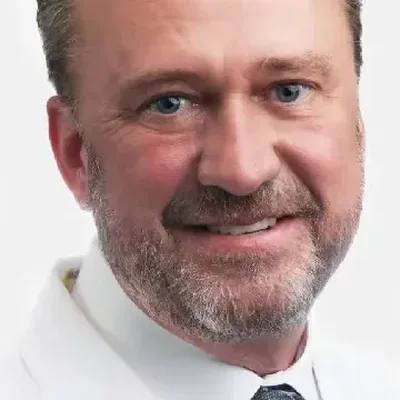
Daniel Potter’s résumé has one line most fertility physicians lack: before he ran IVF cycles, he ran a laboratory at Natera, the molecular genetics company whose tests are used for non-invasive prenatal screening and embryo genetic analysis. That is the vantage point of someone who has supervised the assay side of the technology he now prescribes — which is why embryo testing decisions in his clinic tend to be explained in terms of what the platform can and cannot resolve.
He is a USC product end to end: undergraduate, medical school and obstetrics and gynecology residency at Los Angeles County/USC Women’s Hospital, then a reproductive endocrinology and infertility fellowship at the University of Texas Health Science Center. He has practiced since 1997 and sees patients at HRC’s Newport Beach and Fullerton offices, covering the Orange County and Inland Empire corridors. His clinical emphasis is individualized stimulation designed around two numbers that usually trade off against each other — pregnancy rate per patient, and the multiple-gestation rate — which is why single embryo transfer and elective egg freezing are recurring themes in his work.
The public-advocacy half of his career is louder than most. He chairs the medical advisory board of the American Fertility Association and has argued openly for compensated egg donation, surrogacy, single parenting and same-sex parenting — the policy positions that determine whether donor-egg and gestational-carrier programs can function at all in a given state. That advocacy has come with media exposure on programs including 60 Minutes Australia, The Doctors, Today Show Australia, Flipping Out and Real Housewives, and he co-authored a consumer bestseller on what to do when conception does not occur. Recognition from peers and patients has been continuous: America’s Top Obstetricians and Gynecologists every year since 2005, Los Angeles Magazine Top Doctor for five straight years, U.S. News Inland Empire Best Doctor for 2012, and Vitals’ Compassionate Doctor of the Year and Patients’ Choice awards. He consults in English and Spanish.
Clinical Expertise
- IVF with individualized stimulation: protocol design aimed at maximizing each patient’s chance per retrieval while controlling hyperstimulation
- PGT-A and PGT-M: embryo genetic screening and single-gene diagnosis, with counseling informed by prior laboratory-director experience in molecular genetics
- Single embryo transfer (eSET): an explicit twin-risk-reduction position, supported by vitrified blastocyst strategies and freeze-all decisions when indicated
- Egg freezing and fertility preservation: elective banking for delayed childbearing and medical preservation before gonadotoxic therapy
- Donor eggs, donor sperm and gestational carriers: full third-party programs, including legal coordination and compensation frameworks he advocates for publicly
- LGBTQ+ family building: reciprocal IVF, donor-gamete cycles and gestational carrier paths under California parentage law
- Male factor infertility and ICSI: fertilization strategy for severe oligospermia and prior fertilization failure
- Sex selection for family balancing: offered within California’s permissive legal framework, with counseling on the limits of PGT
Why Choose Dr. Potter
He has directed the genetics lab, not just ordered from it. PGT reports are easy to over-read. A physician who previously ran a molecular diagnostics laboratory is likelier to tell you when a result is not actionable — and likelier to know which lab’s platform you should trust.
He argues the policy, publicly. Chairing the American Fertility Association’s medical advisory board and campaigning for compensated donation and surrogacy rights is not cosmetic; donor supply and carrier availability are the real constraints on third-party programs, and he works on both ends.
Thirty years of the same trade-off. His stated approach is maximizing pregnancy rate per case while driving the multiple-birth rate down — the two numbers that decide whether an IVF outcome is good or merely successful.
Recognition that repeats. Top-ob-gyn lists for nearly two decades (every year since 2005), five consecutive years in Los Angeles Magazine, and patient-voted Vitals awards are a different signal from a single year’s placement.
Bilingual visits in the two Orange County/Inland Empire offices. English and Spanish consultations, at Newport Beach and Fullerton, with HRC’s on-site embryology labs and Reproductive Surgical Associates center nearby.
Professional Affiliations
Double board-certified by the American Board of Obstetrics and Gynecology in Obstetrics and Gynecology and in Reproductive Endocrinology and Infertility; Fellow of the American College of Obstetricians and Gynecologists (FACOG). Chairman of the medical advisory board of the American Fertility Association, the patient-advocacy organization whose reproductive-access positions he has argued publicly. Author or co-author of dozens of peer-reviewed scientific articles. Awards include Vitals Compassionate Doctor of the Year and Patients’ Choice Award, U.S. News Inland Empire Best Doctor (2012), Los Angeles Magazine Top Doctor, and inclusion in Top Obstetricians and Gynecologists in America annually since 2005.
Suitable For
Patients planning PGT-A or PGT-M who want the test interrogated, not sold. Especially useful for families weighing whether embryo testing changes their decision at all.
Egg donation, surrogacy and LGBTQ+ family-building patients. A physician who publicly defends compensated donation and same-sex and single parenting, at a high-volume California program.
Anyone who should not have twins. An eSET advocate working in a network that lists single embryo transfer among its core IVF techniques.
Women freezing eggs for elective or medical reasons. Preservation cycles with a laboratory-literate physician supervising vitrification decisions.
Spanish-speaking patients in Orange County or the Inland Empire. Newport Beach and Fullerton offices, visits conducted in Spanish.