'%20d='m0%200%2016%2011h61%2061%2061%2061%2060L47%2037h61%2061%2060%2061L16%2063h61%2061%2061%2061%2060L47%2089h61%2061%2060%2061L16%20115h61%2061%2061%2061%2060L47%20141h61%2061%2060%2061L16%20166h61%2061%2061%2061%2060L47%20192h61%2061%2060%2061L16%20218h61%2061%2061%2061%2060z'/%3e%3c/svg%3e)
About
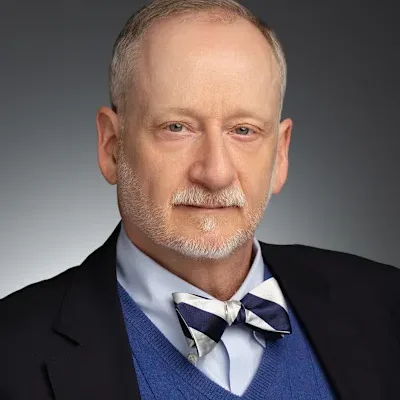
Twenty years as a university IVF program medical director is the shortest summary of David Frankfurter’s career, and the longest explanation of what he does with patients. He built and ran the reproductive endocrinology division at George Washington University from 2003 to 2023, and before that directed Brown University’s egg donation program from 1995 to 2003 — a decade and a half of deciding, at the program level, how donor cycles get matched, how a failed transfer gets worked up, and when a patient’s own eggs stop being the right variable to fight over. He returned in 2023 to the institution where he trained, as professor of obstetrics, gynecology and reproductive sciences at Yale School of Medicine.
His clinical writing follows those two jobs. He has published on embryo transfer technique, on assessing oocyte maturity, on PGT-A, and on racial disparity in assisted reproduction, and with David Seifer on whether women over 42 can still achieve a cumulative live birth using their own eggs — a paper that shapes how an honest over-40 consultation is conducted. His review of endometrial biology appeared in the journal Obstetrics and Gynecology Clinics, and the uterine lining is where much of his practice sits: repeated implantation failure gets evaluated as a cavity and endometrium problem before it gets re-attributed to embryo quality.
His training path starts unusually for a reproductive endocrinologist: a psychology degree at Syracuse in 1986, then an MD at Yale Medical School in 1991, residency at Yale New Haven Hospital, and Harvard-affiliated fellowship training in REI at Beth Israel Deaconess Medical Center. He has been certified by the American Board of Obstetrics and Gynecology in obstetrics and gynecology since 2000, renewed 2010, and in reproductive endocrinology and infertility since 2002, renewed 2013. He is listed as practicing at the Orange campus with no telehealth option and requires a patient or physician referral; his Yale profile records he/him pronouns.
Clinical Expertise
Donor egg cycles — matching, recipient preparation and transfer decisions, from someone who ran a university egg donation program for eight years.
Repeated implantation failure — systematic assessment of the endometrium and uterine cavity, and of transfer technique, before a further cycle is committed.
Fertility after 40 with own eggs versus donor eggs — including the cumulative-live-birth evidence he co-authored for patients over 42.
PCOS and ovulation disorders, stimulation protocol design and PGT-A counselling.
Egg and embryo freezing for planned or medical fertility preservation.
Why Choose Dr. Frankfurter
Program-runner’s perspective. A patient asking “how does this clinic decide things” is asking someone who set those decisions for two university programs, including who gets accepted into a donor queue and how a failed transfer is investigated.
He works on the lining, not just the embryo. His review publications and clinical focus sit on endometrial biology, which is the under-investigated side of most implantation failure narratives.
Board certified in both halves of the specialty. American Board of Obstetrics and Gynecology certification in obstetrics and gynecology since 2000 and in reproductive endocrinology and infertility since 2002, with renewals recorded in 2010 and 2013, on top of Harvard-affiliated fellowship training.
He publishes on the numbers patients actually want. The over-42 own-egg cumulative live birth work with David Seifer is the kind of finding that decides whether to continue or pivot — and he is the physician to explain what it means for you specifically.
A communications-first training path. A psychology degree before medical school is not a clinical credential, but it explains a practice built around the consultation patients over 40 and donor-egg patients most need.
Professional Affiliations
American Board of Obstetrics and Gynecology — obstetrics and gynecology (2000, renewed 2010) and reproductive endocrinology and infertility (2002, renewed 2013). He directed the IVF program and REI division at George Washington University from 2003 to 2023, and ran Brown University’s egg donation program from 1995 to 2003. Faculty, Department of Obstetrics, Gynecology and Reproductive Sciences, Yale School of Medicine, since 2023. His Yale profile records board certification; society memberships are not itemised there, so confirm current ASRM and SART status with the clinic.
Suitable For
- Patients with two or more failed transfers of good-looking embryos who want the cavity and endometrium assessed properly
- Women over 40 weighing their own eggs against donor eggs, including over 42, where the published cumulative data is candid
- Donor egg families — a physician who has run a donor program from the other side
- PCOS patients with ovulation failure who need a stimulation plan rather than a standard protocol
- Patients who want the consultation, not the brochure — he is listed without telehealth, so the visit is the visit