'%20d='m0%200%2016%2011h61%2061%2061%2061%2060L47%2037h61%2061%2060%2061L16%2063h61%2061%2061%2061%2060L47%2089h61%2061%2060%2061L16%20115h61%2061%2061%2061%2060L47%20141h61%2061%2060%2061L16%20166h61%2061%2061%2061%2060L47%20192h61%2061%2060%2061L16%20218h61%2061%2061%2061%2060z'/%3e%3c/svg%3e)
About
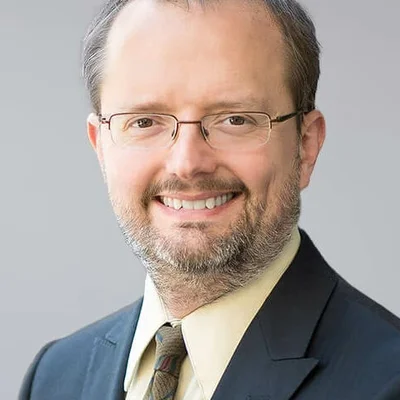
Alan Shindel has been the Editor in Chief of Sexual Medicine twice — the inaugural holder of the post from 2012 to 2015, then re-appointed in 2020. That is an unusual résumé line for a practicing urologist, and it explains what he spends his time on: the research literature on men’s sexual and reproductive health passes across his desk for publication, and his own clinic runs on it.
His training route is the classic UCSF andrology path. He earned his medical degree at Washington University in Saint Louis in 2002, finished urology residency at Barnes-Jewish Hospital in 2007, then stayed in Saint Louis no further: he came to UCSF for a three-year clinical and research fellowship in andrology under Drs. Tom Lue and Ira Sharlip, the two physicians who built the modern men’s reproductive health service on that campus. He went to UC Davis as faculty in 2010, ran the medical student urology rotations there and served on its admissions committee, and took a master’s in clinical research at Davis in 2013.
In 2015 he left academia for two years as a Medical Director at Genomic Health, the company that makes a genomic classifier test for prostate cancer — industry experience in diagnostics that he brought back with him in 2017, when UCSF rehired him as an Associate Professor and promoted him to Professor in 2021. At the Center for Reproductive Health he is one of three reproductive urologists, which means the male partner in a couples’ infertility workup is seen by a surgeon rather than handed a lab slip.
Clinical Expertise
- Male factor infertility and andrology: evaluation of low count, motility and morphology problems, sexual and ejaculatory dysfunction that prevents at-home or IUI conception, and hormonal causes of impaired spermatogenesis
- Sexual dysfunction in men: erectile dysfunction care in a fertility context, where treatment choices have to account for a timed cycle rather than only for the patient’s own health
- Lower urinary tract symptoms and benign prostatic hyperplasia: diagnosis and management, including therapy selection that preserves ejaculatory function for men still trying to conceive
- Chronic pelvic pain syndromes: a named specialty interest from his UC Davis practice onward
- Clinical research methodology: an MAS in clinical research plus a decade of authoring and editing peer-reviewed sexual medicine literature
Why Choose Dr. Alan Shindel
He edits the journal your question would be answered in. Two terms as Editor in Chief of Sexual Medicine means he tracks the evidence on men’s sexual health as a field, not as a side interest — and he sat on the board of the Sexual Medicine Society of North America from 2013 to 2015.
He is productively bilingual between academic and commercial medicine. Two years as a Genomic Health medical director gave him a working knowledge of genomic diagnostic testing, the category that increasingly touches prostate and reproductive cancer risk decisions.
He came up through the UCSF andrology program itself, trained by Lue and Sharlip, so his referral network inside the center — reproductive endocrinologists, embryology lab, male reproductive health center — is his own department.
He handles the whole man, not just a semen analysis. Urinary, prostate, pain and sexual complaints get managed in the same visits as the fertility workup.
Professional Affiliations
Board certified in urology by the American Board of Urology. Editor in Chief of Sexual Medicine, the open-access journal of the International Society for Sexual Medicine (2012-2015 and from 2020). Board member of the Sexual Medicine Society of North America, 2013-2015. Professor of Urology at UCSF; previously on the urology faculty at UC Davis from 2010, directing medical student rotations and serving on the school’s admissions committee. Appointments for his male reproductive health clinic run through the UCSF Urology department at the Center for Reproductive Health.
Suitable For
- Couples with a male-factor or sexual-function barrier: this is the patient Dr. Shindel sees most, and the reason the center staffs reproductive urology rather than outsourcing it
- Men whose erectile or ejaculatory treatment must fit a conception timeline: options that impair ejaculation are weighed against a stimulated cycle already in progress
- Patients with urinary or prostate symptoms who are still family-building: therapy selection that keeps fertility in the decision
- Chronic pelvic pain: a long-standing clinical and research focus rather than an occasional case
- Men referred for a second opinion after an abnormal semen analysis at an outside lab