'%20d='m0%200%2016%2011h61%2061%2061%2061%2060L47%2037h61%2061%2060%2061L16%2063h61%2061%2061%2061%2060L47%2089h61%2061%2060%2061L16%20115h61%2061%2061%2061%2060L47%20141h61%2061%2060%2061L16%20166h61%2061%2061%2061%2060L47%20192h61%2061%2060%2061L16%20218h61%2061%2061%2061%2060z'/%3e%3c/svg%3e)
About
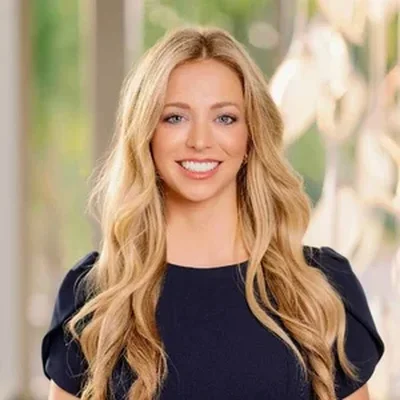
Dr. Bryn Willson went through fertility preservation herself. The clinic states plainly that this personal experience is what shaped both her research direction and her clinical focus — which is an unusual thing to find written on a physician’s page, and it is the reason she is the natural consult for a patient weighing whether to freeze eggs or embryos before something happens to their health.
Her training path crossed the country and came back: undergraduate studies at Santa Clara University, where the clinic says she built her science foundation, then Creighton University School of Medicine for her medical degree, a program the clinic describes as emphasizing whole-person care. UC Davis Medical Center took her obstetrics and gynecology residency, where she was elected chief administrative resident in her final year. She finished with a reproductive endocrinology and infertility fellowship at Cedars-Sinai Medical Center in Los Angeles.
Her research sits at the intersection of toxicology and reproduction — how environmental exposures affect reproductive outcomes — with work published in Fertility and Sterility and Reproductive Toxicology, the second of those journals being the natural outlet for exactly that question. She has collected research and teaching recognition along the way: the UC Davis resident research award, the UC Davis Class of 2021 Golden Apple teaching award, the ASRM Central Member Council in-training award, and a Creighton dean’s Magis scholarship. She mentored medical students and residents through training and does advocacy work at local and national level aimed at widening access to fertility care.
Clinical Expertise
- Fertility preservation and egg freezing: the area she works in personally and professionally, including vitrification of mature eggs after 10-14 days of stimulation and later thaw, fertilization and transfer
- Medical preservation referrals: cancer patients and others facing gonadotoxic treatment; SDFC takes direct calls from treating physicians and oncologists
- Environmental and occupational exposures: guidance on what genuinely affects reproductive outcomes, from a researcher who published in Reproductive Toxicology on the subject
- IVF cycle management: stimulation, monitoring, ICSI fertilization, blastocyst culture and transfer at San Diego Fertility Center’s CAP-accredited laboratory
- PGT-A: embryo genetic screening decisions, including which patients benefit — the clinic biopsies at day 5-6 and sends samples to a PGT laboratory for analysis
- Patient education: injection teaching, cycle calendars and explanation of why each monitoring visit exists
Why Choose Dr. Bryn Willson
She has sat on the patient’s side of the consent form. The clinic’s own biography says her fertility preservation experience “opened her eyes” to the emotional and physical load of reproductive treatment. For a patient considering egg freezing — often an elective decision made under time pressure — a physician who has personally made that trade-off is a different kind of consultant.
A research niche with real clinical use. Environmental effects on fertility is the question patients ask constantly and most specialists answer vaguely. Willson published on it in two journals, one of them a toxicology title, and holds a research award from her residency program.
Chief resident is an administrative election. UC Davis chose her as chief administrative resident in her final year, which means the residents under her picked her to run scheduling and escalation. That tends to correlate with a practice that stays organized when your cycle is moving.
Teaching recognition from two directions. A Golden Apple teaching award from the Class of 2021 at UC Davis and the ASRM Central Member Council in-training award, plus years of mentoring students and residents — useful if you want your protocol explained at the level of mechanism, not just instruction.
Professional Affiliations
Reproductive endocrinology and infertility fellowship at Cedars-Sinai Medical Center; obstetrics and gynecology residency at UC Davis Medical Center, where she served as chief administrative resident; medical degree from Creighton University School of Medicine; undergraduate work at Santa Clara University. Recognized by the American Society for Reproductive Medicine with a Central Member Council in-training award during fellowship. Her research appears in Fertility and Sterility and Reproductive Toxicology. She works on fertility access advocacy locally and nationally.
Suitable For
- Egg freezing, elective or medical: her declared focus, backed by published work and personal experience of the process
- Patients facing chemotherapy or surgery that threatens fertility: preservation coordinated with the treating physician, often on a short timeline
- Anyone asking how exposures affect fertility: workplace chemicals, lifestyle and environmental questions answered from the literature rather than from generalities
- First-time fertility patients: a chief-resident background in teaching shows up as a consultation that explains the calendar and the reasoning
- Patients who want their protocol justified: she is explicit about the evidence behind a stimulation or screening choice