
About
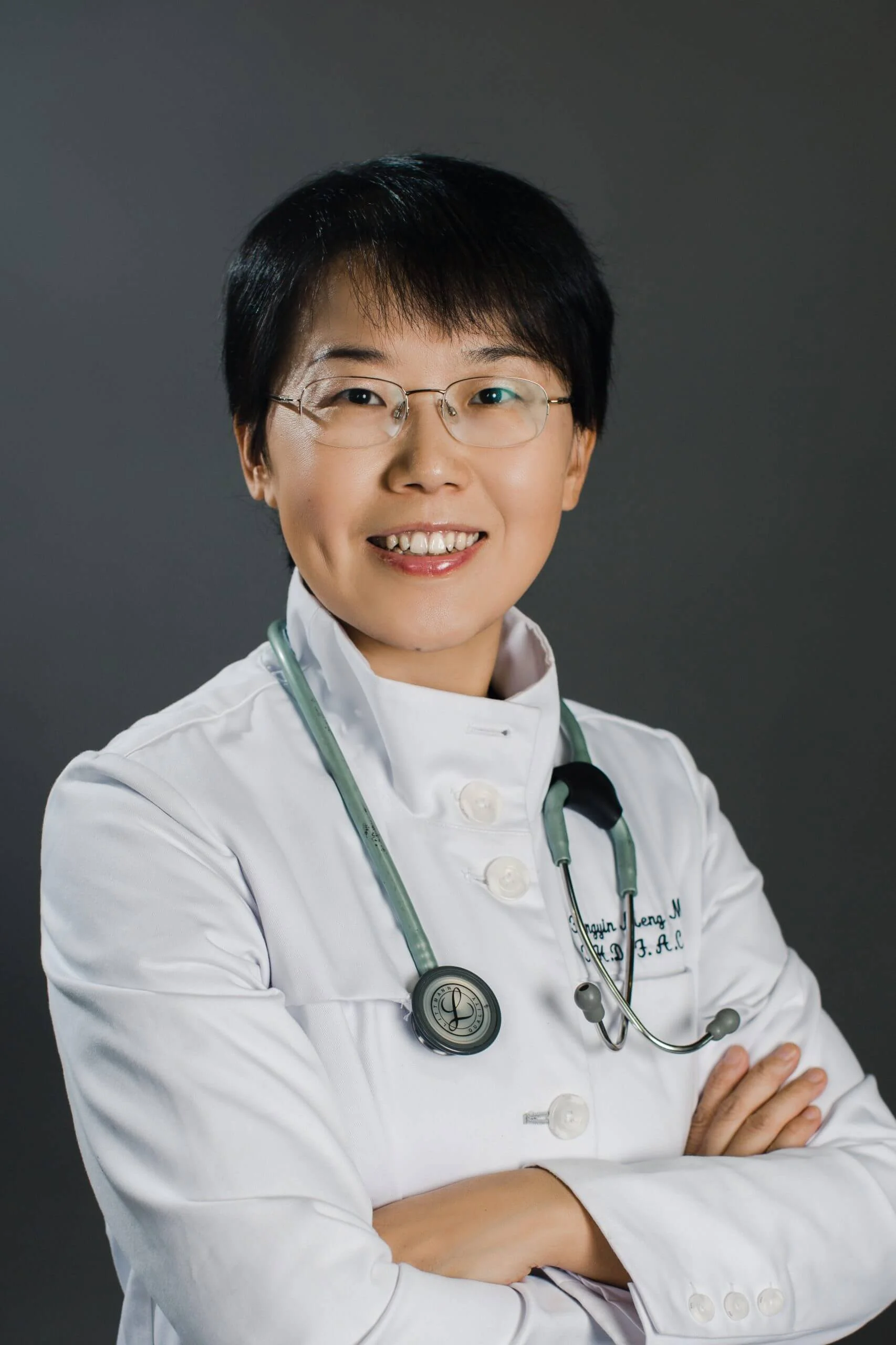
Dr. Fangyin Meng is the founder and only physician at California Dream Fertility Center in Aliso Viejo, Orange County — a practice where consultation, stimulation monitoring, retrieval, and transfer all stay with one doctor. A physician profile for her is also maintained at South Coast Fertility Specialists in the same region.
Her training is unusually genetics-heavy for an IVF physician. She earned both an MD and a PhD at Peking University Medical School as an honored student, with doctoral work in human embryo genetics, then completed OB/GYN residency training at Peking University First Hospital and at Bronx-Lebanon Hospital Center, affiliated with Albert Einstein College of Medicine, where she graduated with the Best Resident Award and the Surgical Skill Award. She finished a three-year reproductive endocrinology and infertility fellowship at Albert Einstein College of Medicine / Montefiore Medical Center, and holds ABOG board certification in Obstetrics and Gynecology, ECFMG certification, and FACOG fellowship.
Her clinical and research interests sit on three axes: human embryo genetics, endometrial receptivity, and cryobiology. She began preimplantation genetic testing, egg cryopreservation, and endometrial receptivity window research in the early 2000s and has presented data at national and international meetings for two decades. She treats recurrent implantation failure as a diagnostic problem rather than a dead end, working through genetic, hormonal, immunological, and uterine factors in sequence, and has published on endometrial receptivity — the implantation variable that sits beside embryo quality. PCOS and other conditions with a genetic and epigenetic component are a standing interest, and she frames treatment around both the inherited predisposition and the environmental contributors, which is why her plans incorporate lifestyle, psychological, and cultural context alongside the medical protocol.
Clinical Expertise
- IVF: full-cycle management from protocol design through transfer, with stimulation dosing adjusted to age, ovarian reserve, and prior response
- Mini-stim and natural-cycle IVF: low-dose injectables paired with oral medications — the route for diminished reserve or poor responders
- ICSI: micromanipulation fertilization for male factor infertility or prior fertilization failure
- PGT-A and PGT-M: embryo screening for chromosome number and testing for single-gene disease, interpreted with an embryology genetics background
- Recurrent implantation failure: four-axis evaluation of genetics, hormones, immune factors, and the uterine cavity, with receptivity window assessment
- Egg freezing and fertility preservation: vitrification for age-related or medically indicated preservation
- PCOS management: stimulation strategies that account for metabolic and genetic contributors and reduce hyperstimulation risk
- LGBTQ+ family building and single-parent paths: reciprocal IVF, donor sperm and donor egg programs, and gestational surrogacy coordination
Why Choose Dr. Fangyin Meng
A geneticist who runs IVF cycles. The PhD is in human embryo genetics, not a general biomedical field. That background changes how a PGT report, a carrier screen, or a repeated implantation failure gets read — the interpretation is done by the physician who orders the test rather than deferred to a laboratory summary.
Two decades on the same three problems. Endometrial receptivity, embryo genetics, and cryobiology have been her continuous focus since the early 2000s, when PGT and egg freezing were still emerging techniques. Multiple publications and conference abstracts cover endometrial receptivity specifically, which is the least standardized part of a failed-cycle workup.
Recurrent failure gets a structured workup. Rather than repeating the protocol that failed, the evaluation moves through genetic, hormonal, immunological, and uterine causes in turn, and she has taken on difficult repeat-failure cases through that path.
Research aimed at lowering cost and risk, not headline rates. She is co-corresponding author of a randomized clinical trial comparing a simplified oral hormone protocol with conventional injectable stimulation; pregnancy rates were comparable while cost and risk were lower. That is a reasonable signal of how she approaches protocol selection.
Care in two languages. Dr. Meng consults fluently in Mandarin, and the practice runs a dedicated Chinese-language appointment line. International patients can complete an initial consultation remotely and in their own language before booking travel, which removes the interpretation layer from the most consequential conversation of the cycle.
Professional Affiliations
Fellow of the American College of Obstetricians and Gynecologists (FACOG). Board certified in Obstetrics and Gynecology by the American Board of Obstetrics and Gynecology, with ECFMG certification and three years of subspecialty reproductive endocrinology and infertility training at Albert Einstein College of Medicine / Montefiore Medical Center. Residency training concluded with both the Best Resident Award and the Surgical Skill Award.
Suitable For
- Patients over 38, and anyone with repeated transfer failures: this is the population where a receptivity and cavity workup changes the plan, and where mini-stim or personalized protocols matter more than standard high-dose stimulation
- Chinese-speaking patients: the entire pathway — initial televisit, consent discussion, and cycle planning — can be conducted in Mandarin, avoiding the information loss that comes from interpreting a treatment plan through a third party
- LGBTQ+ couples and single parents: reciprocal IVF for two mothers, donor sperm or donor egg programs through Fairfax Cryobank and Fairfax Egg Bank, and gestational surrogacy coordinated with Center for Surrogate Parenting, all within California’s pre-birth order framework