'%20d='m0%200%2016%2011h61%2061%2061%2061%2060L47%2037h61%2061%2060%2061L16%2063h61%2061%2061%2061%2060L47%2089h61%2061%2060%2061L16%20115h61%2061%2061%2061%2060L47%20141h61%2061%2060%2061L16%20166h61%2061%2061%2061%2060L47%20192h61%2061%2060%2061L16%20218h61%2061%2061%2061%2060z'/%3e%3c/svg%3e)
About
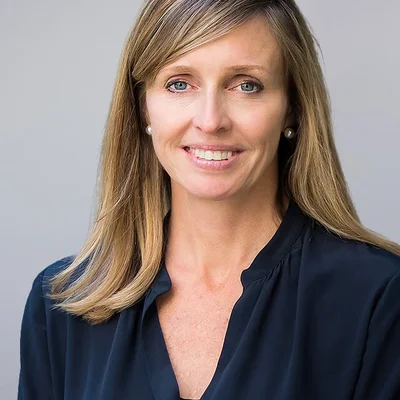
Heather Huddleston holds a job title that most IVF practices never bother to create: director of a PCOS clinic, with a research program attached to it. She oversees multiple studies designed to improve the medical understanding of polycystic ovary syndrome at UCSF, which means patients with the syndrome are seen in a program that is measuring its own results rather than a subgroup of a general infertility panel. The center’s patient education has followed the same track — including coverage of the proposed renaming of PCOS, the shift in how the condition is defined away from ovarian symptoms alone.
She trained on the Boston side of Harvard. She earned her medical degree at Harvard Medical School in 1998, completed obstetrics and gynecology residency at Brigham and Women’s Hospital and Massachusetts General Hospital, and finished a reproductive endocrinology and infertility fellowship at Brigham and Women’s in 2005. She is now a professor at UCSF.
Her second and third clinical interests are the ones that overlap: recurrent pregnancy loss and uterine disorders, including Asherman’s syndrome, the intrauterine scar tissue that can follow curettage or infection and that is frequently missed on ultrasound. Her answer to a suspected uterine cause is to look — hysteroscopy passes a thin lighted scope through the cervix to inspect the cavity directly and treat what it finds. She conducts research on treatment approaches for uterine factor infertility, presents her findings at meetings around the country, and publishes in the peer-reviewed literature.
Clinical Expertise
- PCOS: ovulation induction, metabolic and endocrine management, and long-term health monitoring, delivered through the dedicated clinic she directs
- Recurrent pregnancy loss: evaluation of genetic, anatomic, endocrine and immunologic contributors, supported by her own research program on the subject
- Asherman’s syndrome and intrauterine adhesions: hysteroscopic diagnosis and adhesiolysis, with attention to preventing reformation
- Complex uterine factor infertility: cavity assessment and treatment of structural causes that block implantation
- Hysteroscopy: office and operative evaluation of the cervix and uterine interior
- General reproductive endocrinology: infertility in women, menstrual disorders and hormonal dysfunction
Why Choose Dr. Heather Huddleston
She runs the PCOS program. Directorship of both the clinic and the research arm means the metabolic, menstrual and fertility dimensions of the syndrome get managed by the same physician who is studying them — and it is the reason referrals for difficult PCOS cases reach her desk.
She looks inside the uterus instead of guessing. Asherman’s syndrome and other cavity pathology are common causes of secondary infertility and repeat loss and are easily missed; hysteroscopy is diagnostic and therapeutic in the same sitting.
Loss is a research line, not a footnote. Her published and presented work on recurrent pregnancy loss and uterine factor infertility sits behind the evaluation she offers a patient after a third loss.
Twenty years of the same questions — Harvard medical school in 1998, Brigham and Women’s fellowship in 2005, UCSF professor since — in two subspecialty niches rather than a rotating general panel.
Professional Affiliations
Professor, University of California San Francisco, and Director of the UCSF PCOS Clinic. Board certified in obstetrics and gynecology by the American Board of Obstetrics and Gynecology. Member of the American Society for Reproductive Medicine and the American College of Obstetricians and Gynecologists. Harvard Medical School, 1998; Brigham and Women’s Hospital and Massachusetts General Hospital residency; Brigham and Women’s Hospital REI fellowship, 2005. Research presented nationally and published in scientific journals.
Suitable For
- PCOS patients whose cycles, metabolic markers and fertility goals need one coordinating physician
- Patients with two or more pregnancy losses who want an evaluation rather than another attempt
- Suspected or confirmed Asherman’s syndrome, including after D&C, fibroid surgery or infection
- Abnormal uterine cavities on imaging, where the answer requires direct visualization
- Women with long-standing menstrual irregularity and anovulation who have been told to keep trying
- Patients who want to know what PCOS is being renamed, and why — a conversation the clinic she directs has taken up publicly