'%20d='m0%200%2016%2011h61%2061%2061%2061%2060L47%2037h61%2061%2060%2061L16%2063h61%2061%2061%2061%2060L47%2089h61%2061%2060%2061L16%20115h61%2061%2061%2061%2060L47%20141h61%2061%2060%2061L16%20166h61%2061%2061%2061%2060L47%20192h61%2061%2060%2061L16%20218h61%2061%2061%2061%2060z'/%3e%3c/svg%3e)
About
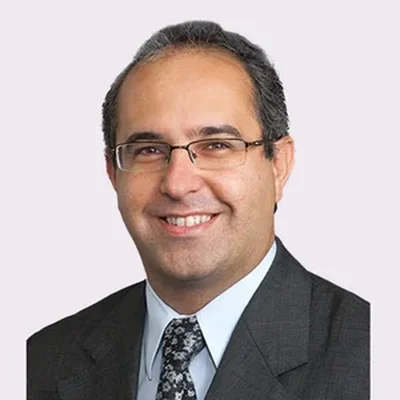
Most fertility evaluations start with the woman. Hooman Sadri exists on the Carolinas Fertility Institute roster so that the other half of the equation gets examined by someone who studies it for a living. He holds an MD and a PhD, works as an andrologist — the male-reproductive-medicine counterpart to a reproductive endocrinologist — and directs the male fertility research program at Wake Forest, while also seeing patients through CFI.
The clearest single item on his CV is infrastructure he built: a spermatogonia stem cell bank that preserves fertility potential for boys and men judged at high risk of losing it, which the practice describes as among the largest biobanking systems of its kind in the world. Stem-cell banking is a research-grade answer to a practical problem — a prepubertal boy facing chemotherapy has no sperm to freeze today — and it sits alongside a working surgical practice rather than replacing it.
His listed clinical range covers electro-ejaculation, vasectomy reversal and microsurgical testicular sperm extraction, with named expertise in Klinefelter syndrome and other genetic causes of hypogonadism, and in infertility following spinal cord injury. He also serves as MD director on the board of directors of the American Society of Andrology. Our sources establish his Wake Forest role as director of the male fertility research program and his clinical practice at the university; they do not state a faculty rank, department appointments or a publication record, so none of that is claimed on this page.
Clinical Expertise
- Microsurgical testicular sperm extraction (micro-TESE): surgical sperm retrieval for men with no sperm in the ejaculate or severely reduced counts, with tissue examined under the microscope to find focal sperm-bearing areas
- Vasectomy reversal: microsurgical reconnection, the alternative to moving a couple straight to IVF with retrieval
- Electro-ejaculation: semen recovery for men who cannot ejaculate, most often after spinal cord injury
- Klinefelter syndrome (47,XXY): the chromosomal condition behind a large share of non-descended sperm counts, managed together with the hormonal and genetic problems that travel with it
- Genetic causes of hypogonadism: evaluation of inherited and endocrine reasons for low testosterone and impaired sperm production
- Spinal cord injury infertility: the mechanical and neurological side of male fertility, where retrieval technique matters as much as diagnosis
- Spermatogonia stem cell banking: collection and cryopreservation for fertility preservation in high-risk boys and men, the program he founded and directs
- Coordination with the IVF laboratory: a retrieved or banked sperm source is only useful if it arrives in time for ICSI, which is why male evaluation is scheduled into the cycle rather than run alongside it
Why Choose Dr. Sadri
The male side of the workup has its own specialist. Many practices route male factor infertility through the same reproductive endocrinologist who manages stimulation, or send it out to a general urologist. Here it sits with an andrologist who runs a research program in the same subject.
He handles the diagnoses that end conversations. No sperm found on testing, Klinefelter syndrome, infertility after a spinal cord injury — these are the cases where patients are frequently told there is no path. Surgical retrieval and the conditions that require it are named areas of his expertise.
He runs a biobank that most centers cannot offer. The spermatogonia stem cell bank he established is aimed at boys and men whose fertility is threatened before sperm can be produced or collected, a category that ordinary egg-and-sperm freezing programs do not cover.
A seat on the national andrology board. He serves as MD director of the American Society of Andrology’s board of directors, which is where specialty standards and training pathways get argued over, not merely attended.
Laboratory research and operating-room practice in the same person. The MD, PhD combination shows up in how his profile reads: stem cell banking programs on one side, microsurgical procedures on the other. His clinical evaluation therefore does not stop at a semen analysis number.
Connected to an academic center while practicing in a private clinic. He directs the Wake Forest male fertility research program and appears in that institution’s provider listings, and treats CFI patients at the practice’s own offices — which is how a couple can be worked up in Winston-Salem and still reach an academic research program when the case needs one.
Professional Affiliations
American Society of Andrology, where he holds the position of MD director on the board of directors. He directs the male fertility research program at Wake Forest, and his practice affiliation with that institution is listed alongside his role at Carolinas Fertility Institute. No additional society memberships, board certifications or fellowship appointments are documented in our sources for this physician, and none are asserted here — a note that matters because andrology is not the same credential path as reproductive endocrinology and infertility, and he is the male-reproductive-medicine specialist on this team rather than an IVF physician.
Suitable For
- Men with no sperm in the ejaculate or a very low count, where the question is whether surgical retrieval can find sperm for ICSI
- Klinefelter syndrome and other genetic or chromosomal causes of impaired sperm production, including the hormonal management that has to happen before and after retrieval
- Infertility after spinal cord injury, including the need for electro-ejaculation or procedural sperm recovery
- Ejaculatory dysfunction that blocks a natural or IUI path
- Men considering vasectomy reversal, whether as an alternative to IVF or after a change in family plans
- Boys and men facing treatment likely to destroy fertility, whose families need preservation options that go beyond sperm cryopreservation, which is the population his stem cell bank was built for
- Couples mid-treatment with an unexplained or unresolved male factor, where a second opinion from an andrologist rather than another general review is the useful next step