'%20d='m0%200%2016%2011h61%2061%2061%2061%2060L47%2037h61%2061%2060%2061L16%2063h61%2061%2061%2061%2060L47%2089h61%2061%2060%2061L16%20115h61%2061%2061%2061%2060L47%20141h61%2061%2060%2061L16%20166h61%2061%2061%2061%2060L47%20192h61%2061%2060%2061L16%20218h61%2061%2061%2061%2060z'/%3e%3c/svg%3e)
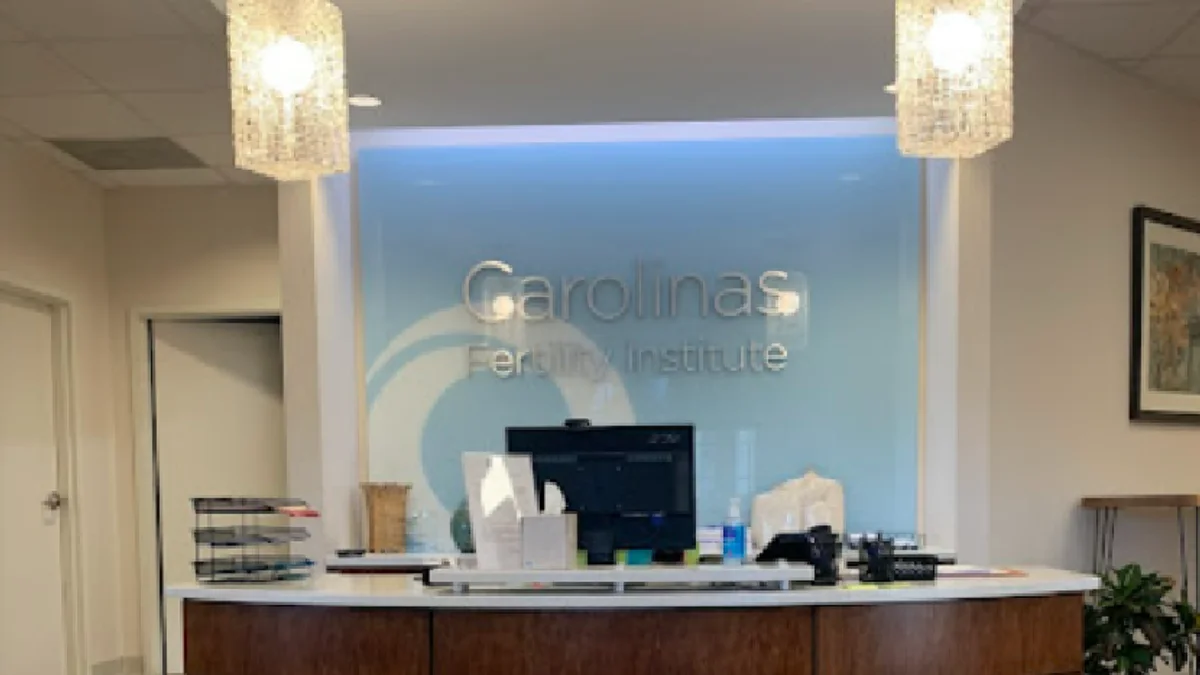


About Carolinas Fertility Institute
Winston-Salem is the home base of a founder-led North Carolina fertility practice whose founding physician still sits in the exam chair. Tamer Yalcinkaya did his obstetrics and gynecology residency at Columbia University’s College of Physicians and Surgeons at Harlem Hospital Center, then his reproductive endocrinology and infertility fellowship at the University of California, San Francisco. He went on to start two IVF programs at West Virginia University Health Sciences in Charleston and served nine years as Director of Reproductive Endocrinology and Infertility at Wake Forest Baptist Health. His own profile credits him with more than 24 years in REI and with training more than 100 specialists in obstetrics and gynecology. The 2015 founding date shown on this page comes from our practice record; the clinic’s published pages do not name a year.
The pitch here is cost and continuity rather than marble floors. The clinic states that it works “to price our services fairly, and take pride in being equal to or less costly than the average fees in our region,” and attributes its results to “the combination of talent, experience and the latest laboratory technology.” Its careers page describes the operating style: physicians and staff hand out direct phone numbers to patients, and a patient’s own cycle is allowed to dictate the schedule instead of a batch start list.
Eight offices appear on the clinic’s locations page — Winston-Salem, Greensboro, two Charlotte sites, Asheville, Wilmington, Mooresville and Cary — with the Triad number (336) 448-9100 and the Charlotte number (980) 256-2233 as the two front doors. The About page uses older wording, describing three locations in central North Carolina plus affiliate arrangements in West Virginia, Virginia and eastern and western North Carolina; the careers page names Roanoke, Asheville and Charleston (WV) as affiliate agreements. Treat it as a Triad-and-Charlotte core with affiliated coverage further out, not eight equally equipped branches.
One thing to settle before reading any number: CFI’s cycles are filed with SART under a single registration, ClinicPKID 2000036, that covers the practice group. Our data contains no separate Winston-Salem row, and no per-office split of cycles, retrievals or transfers. In that group record, the 2024 preliminary extract stored on this page shows 2,695 cycles, with live birth rates of 63.2% under 35, 49.2% at 35-37, 32.0% at 38-40 and 11.0% over 40. Our extract does not name the denominator behind those percentages — live birth per intended retrieval is not the same measure as live birth per transfer — and the fresh-IVF and frozen-transfer rows on this page are empty, so we cannot quote a fresh or frozen specific rate for this practice.
The national row plotted under those figures is a different reporting year: it carries SART’s 2023 national summary (53.2 / 39.9 / 26.2 / 9.4), while the clinic row is 2024 preliminary. Both source fields on this page also point at registry home pages rather than at a specific report document. That means the obvious subtraction — 63.2 against 53.2 — is not a like-for-like comparison, and we are not going to present it as one. Read the two rows as “this group, 2024 preliminary” and “the nation, 2023 final,” and check the clinic’s own record yourself in the SART public reports before you build a plan on any of it. The same caution applies to volume: 2,695 group cycles is genuinely high-volume care, but the national per-clinic average field on this page (870) is carried inconsistently across our US pages and mixes reporting years, so we will not turn it into a multiple-of-the-average claim.
The laboratory is where the clinic makes its strongest distinct claim. CFI says it was the first practice in the Carolinas to run the EmbryoScope time-lapse system, an incubator that photographs developing embryos at set intervals without taking them out of culture, so the embryologist reviews a growth sequence rather than single spot checks when choosing an embryo for transfer. The clinic’s own page adds that the system was developed after nine years of research and has been used in more than 300,000 patient treatments nationwide since 2009 — figures about the device rather than about CFI. A 2025 item on the clinic’s news page states that CFI is one of the only clinics in its region running both EmbryoScope and the TMRW automated platform for managing and storing frozen eggs and embryos; the practice file also lists a LifeAire air-handling system in the laboratory. We found no support for the wider claim, sometimes repeated in listings, that CFI is one of only two clinics in the country equipped with this combination — the regional claim is what the sources carry.
Accreditations & Awards
- SART member clinic under one group registration, ClinicPKID 2000036, which is what makes the outcome data on this page independently checkable
- Newsweek “America’s Best Fertility Clinics”: ranked 9th nationally for 2026, announced on the clinic’s own blog in June 2026, following an 8th-place listing for 2025. The clinic describes the ranking as built on physician and reproductive-professional feedback, quality and accreditation measures, performance data and patient satisfaction
- Castle Connolly Top Doctor: applied to Dr. Yalcinkaya on the practice’s physician pages, and separately to Dr. Tolga Mesen and Dr. Audrey Garneau. The designation, as the clinic quotes it, marks a physician in the top 7 percent of US doctors, chosen by peer nomination
- AIUM ultrasound accreditation appears in this clinic’s practice record; our crawl of the website did not find the accreditation displayed, so treat it as recorded rather than verified
- Communications awards, not clinical ones: five national Aster Awards (June 2025), six Wallie and Golden Tusk marketing awards (November 2025), and three Gold plus one Platinum Viddy Award for patient-story video (June 2026). These recognize the clinic’s marketing and video work
- What our sources do not support: CAP laboratory accreditation and JCI accreditation. The clinic’s pages do not display either mark, so neither is claimed here
Why Choose Carolinas Fertility Institute
- Time-lapse embryo selection as standard equipment: the EmbryoScope imaging suite is described on the clinic’s IVF pages, with a photo tour of the lab showing microinjection work, culture dishes and live embryo monitoring screens
- A refund program with unusually wide eligibility: the CFI Promise Program gives eligible patients one fresh IVF cycle plus the option to transfer all resulting frozen embryos, and refunds up to 50 percent of the cost if there is no live birth. The clinic states that more than 60 percent of its patients qualify, which it attributes to a personalized prediction model rather than age-only screening
- Free risk modeling: the same program’s prediction system weighs age, body mass index, ovarian reserve results, semen analysis and clinical diagnosis to estimate IVF success odds, and the clinic says it provides that assessment at no extra cost during the consultation
- Reproductive surgery most IVF-only clinics refer out: da Vinci robotic procedures are performed at Novant Health and Cone Health hospitals, and the published surgical list runs well past routine laparoscopy — robot-assisted myomectomy and endometriosis excision, transabdominal cerclage for cervical insufficiency, tubo-tubal anastomosis for sterilization reversal, hysteroscopic lysis of Asherman adhesions and hysteroscopic metroplasty for a septate uterus, the robot-assisted Strassman procedure for bicornuate uterus, the laparoscopic Vecchietti procedure for MRKH syndrome, uterovaginal anastomosis for cervical agenesis, fluoroscopic tubal recanalization, and laparoscopic harvesting and cryopreservation of ovarian cortex
- An andrologist on the roster: Hooman Sadri covers the male side — microsurgical testicular sperm extraction, vasectomy reversal, electro-ejaculation, Klinefelter syndrome and other genetic causes of hypogonadism, and infertility after spinal cord injury
- Third-party reproduction handled in house: an egg donor program that the clinic says draws on hundreds of donors annually, donor sperm cycles coordinated with national sperm banks, an embryo adoption program using embryos donated by former CFI patients, and a gestational carrier team with its own screening criteria
- Statewide monitoring: eight offices plus affiliates mean stimulation scans and bloodwork can happen near home, and the practice runs an out-of-town patient track for people who travel for care
- Price as a stated strategy: the clinic’s own fee positioning is at or below the average fees in its region, backed by named financing partners
IVF & Fertility Services
- In Vitro Fertilization (IVF): the clinic’s core service line, with embryo development observed on the EmbryoScope time-lapse system and a lab photo tour documenting the work end to end
- ICSI: microinjection is shown and described in the clinic’s IVF laboratory materials
- Ovulation induction: clomiphene citrate, aromatase inhibitors for PCOS, insulin-sensitizing agents such as metformin where prediabetes or diabetes is present, and gonadotropins with closer monitoring; positioned as the first, least invasive and least expensive option
- IUI and artificial insemination: washed sperm placed directly in the uterus; the clinic states the prerequisites plainly — working ovaries, viable eggs, open tubes, and 5-10 million motile sperm after processing
- FemaSeed intratubal insemination: balloon-guided delivery of sperm directly into the fallopian tube at ovulation, done in the office; the clinic’s page cites a clinical trial figure of about one in four participants becoming pregnant, which is a device-maker result repeated by the practice rather than a CFI outcome
- PGT-A: embryo chromosome screening is carried on this clinic’s service record; the crawled pages do not document the testing platform, the lab partner, or whether biopsies are done in house, and the clinic’s IVF pages do not break out genetically tested cycles separately
- Egg freezing, sperm freezing and embryo freezing: cryopreservation for elective family timing and for oncology patients before chemotherapy; the preservation page describes procedures performed at three office locations with storage handled by the practice rather than shipped off site
- Donor eggs: recruited through CFI’s own program — healthy women aged 21-32, screened by interview, medical history, antral follicle count and AMH, physical examination, Pap smear, sexually transmitted infection testing each cycle, a genetic carrier panel including cystic fibrosis, blood testing for communicable disease, and a psychological consultation; retrieval is done as an outpatient under monitored anesthesia, and the clinic caps donors at six retrievals per ASRM guidance
- Donor sperm: cycles coordinated with banks the clinic names — Seattle Sperm Bank, Fairfax Cryobank, Midwest Sperm Bank — with a preparation checklist of transvaginal ultrasound, CMV IgG, carrier screening for 274 disorders, and HSG or saline sonohysterogram as needed; known donors are accepted only if the sample is processed and quarantined at an approved facility
- Donor embryo adoption: embryos donated by former CFI patients who completed their families, run as the clinic’s lower-cost third-party path
- Gestational carrier program: intended-parent work through a dedicated third-party reproduction team, with carrier criteria (age 21-40, at least one full-term uncomplicated pregnancy, no more than five total pregnancies or three cesarean deliveries, BMI under 35, no history of preterm labor, gestational diabetes or preeclampsia, non-smoker, US citizen, at least 12 months since the most recent delivery) and FDA-required clearance and screening for intended parents
- Male reproductive medicine: andrology evaluation and surgical sperm retrieval, vasectomy reversal, and fertility preservation banking through Dr. Sadri
- Da Vinci robotic and other reproductive surgery: the surgical list above, performed at partner hospitals
- Counseling: the clinic refers to partnered counselors for one-on-one support, including for patients considering third-party reproduction, and lists several independent practices in the Greensboro and Charlotte areas
- Condition-specific care: endometriosis, PCOS, menstrual disorders, hormonal imbalance, fibroids, congenital anomalies of the reproductive tract, and uterine septum — the last diagnosed by ultrasound, saline sonogram or MRI and treated by hysteroscopic resection
Fees & Packages
There is no published price list. Neither the treatment pages nor the resources section carries a cycle fee, medication cost, monitoring charge or storage fee. Ask the billing office for a written, cycle-specific quote and confirm what the quote excludes.
Two things are published. The first is the CFI Promise Program: eligible patients get one fresh IVF cycle with the option to use every resulting frozen embryo, and if no live birth follows, CFI refunds up to 50 percent of the cost. The clinic says the program is open to more than 60 percent of its patients, a much larger share than typical refund programs, because eligibility is set by its own predictive model rather than by age cutoffs alone. The second is a published donor figure rather than a treatment price: egg donors are compensated starting at 5,500 US dollars for a completed donation, and recipients are not quoted a package price anywhere on the site.
Financing is where the clinic is unusually specific. Its financing page names PatientFi (no hard credit check, monthly payments, terms up to 84 months), Future Family (0 percent APR for qualifying patients, funding up to 50,000 dollars, no prepayment penalties), and Lending Club, with worked examples of 181 dollars a month on a 10,000-dollar plan at 8.99 percent APR over 72 months and 834 dollars a month on a 50,000-dollar plan at 9.99 percent APR over 84 months. Two North Carolina credit unions are listed as well: Allegacy Federal Credit Union’s Lifestyle Loan (up to 10,000 dollars for scores of 680 or above, no collateral) and Truliant’s personal convenience loan (500 to 35,000 dollars, fixed rates from 8.50 percent APR, first payment deferrable up to 90 days). The clinic also links to Compassionate Care Fertility and IVF Greenlight for medication assistance.
What is not documented in our sources is insurance: which plans CFI contracts with, how much it bills a payer before treatment, or which diagnosis codes it pursues for coverage. Nothing in our source set establishes what North Carolina requires a plan to cover, so verify benefits directly with your carrier before you start medications.
Patient Journey
- Paperwork first: CFI asks that records from other providers be sent ahead, and offers pre-completed patient registration and medical history forms; the practice runs on the Artisan electronic medical record system with a patient portal for messages
- Request the appointment: the online request form is not a booking — the office follows up within 48 business hours to schedule. Out-of-town patients are handled on a separate track, and many travel for care because of the price positioning
- Evaluation and a plan: the first visit reviews your specific situation and lays out the available options, after which testing, office visits and treatment are organized as one sequence
- Risk and cost modeling: for IVF candidates this is where the Promise Program assessment is discussed — the predicted chance of success and whether the refund program applies
- Cycle start and monitoring: report the first day of your cycle so the clinic can time the schedule; stimulation is monitored with scans and bloodwork, and the practice says it lets patients’ natural cycles drive scheduling rather than forcing batch starts
- Retrieval and fertilization: egg retrieval is performed as an outpatient procedure under monitored anesthesia, with insemination or microinjection in the same laboratory and embryos cultured under EmbryoScope time-lapse observation
- Transfer and confirmation: a fresh transfer, or a frozen transfer once embryos are banked, followed by pregnancy testing
- After the birth: the clinic holds baby reunions, inviting former patients back to meet the team and other families built through the practice, and lists a CFI Moms and Supporters group among its patient resources
Local Legal Framework
North Carolina permits IVF, ICSI, preimplantation genetic testing, egg donation and sperm donation. This practice documents IVF, ICSI, donor eggs, donor sperm, donor embryos and gestational carrier work in its own treatment pages; PGT is carried on its service record here rather than described in the pages our sources captured. Same-sex couples and single patients build families through the donor egg, donor sperm and gestational carrier programs.
Egg donation is legal and is run on the clinic’s own protocol: donors aged 21-32, full medical, genetic and psychological screening, testing repeated each cycle, compensation from 5,500 dollars per completed donation, and a hard ceiling of six retrievals per donor, which the clinic ties to ASRM recommendations rather than to state law. Parental rights for the donor are settled through the consent documents patients sign; our sources do not name a North Carolina statute on that point.
Gestational carrier arrangements are the least legislated part of this. The clinic’s program materials require FDA clearance and an FDA-specific physical examination and questionnaire for intended parents, plus IVF and carrier consents, before a transfer — federal screening requirements listed by the practice, not North Carolina law. Our source set cites no North Carolina surrogacy statute of any kind, which is exactly why the practice’s own guidance tells intended parents to put detailed legal agreements in place before treatment and to work with a lawyer who handles assisted reproduction in the state. If you are coming from another state, your parentage order and birth certificate path depend on where you give birth and where you live, not on the absence of a North Carolina statute.
Our source set does not cite any North Carolina ART reporting statute or clinic licensing requirement, so none is named here. Ask the clinic for its state license and inspection documentation if you want that verified rather than assumed.
Location
- Address: 3821 Forrestgate Dr, Winston-Salem, NC 27103, United States
- Phone: (336) 448-9100