'%20d='m0%200%2016%2011h61%2061%2061%2061%2060L47%2037h61%2061%2060%2061L16%2063h61%2061%2061%2061%2060L47%2089h61%2061%2060%2061L16%20115h61%2061%2061%2061%2060L47%20141h61%2061%2060%2061L16%20166h61%2061%2061%2061%2060L47%20192h61%2061%2060%2061L16%20218h61%2061%2061%2061%2060z'/%3e%3c/svg%3e)
About
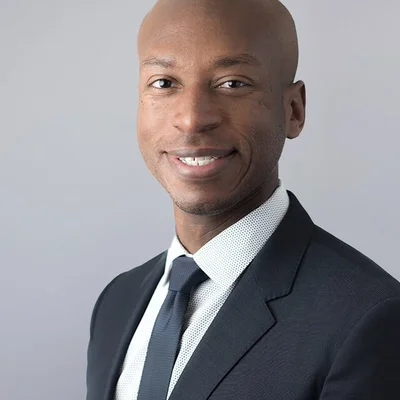
An operations research engineer who became a urologist is a rare combination, and John Lindsey II carries both credentials — an MEng from Cornell in operations research and engineering plus biomedical engineering, then a medical degree from the University of Florida College of Medicine. The engineering half shows up in where he trained next: a Stanford Biodesign fellowship, the program that takes residents through identifying a clinical problem and building a device or technology against it, completed during his UCSF urology residency.
He finished the surgical subspecialty the long way around. In 2022 he moved to Texas for a fellowship in Male Reproductive Medicine and Surgery at Baylor College of Medicine, one of the programs that trains the small population of urologists who do microsurgical reconstruction for a living, then came back to UCSF to practice at the Center for Reproductive Health as one of its three reproductive urologists.
His research question is the one most fertility workups skip: what lives in the genitourinary tract, and what does it do to sperm production, hormonal function and chronic pain? He studies the microbiology of that tract — an area where the standard semen analysis is silent and where infection, inflammation and microbiome composition plausibly shape outcomes. Patients notice a different line of his first, though. “When caring for patients,” he says, “I try to imagine myself on the examination table.”
Clinical Expertise
- Male infertility evaluation: hormonal and genetic workup, semen analysis interpretation, and decisions about which problems are surgically fixable versus which route to ICSI
- Microsurgical vasectomy reversal: reconstruction with patency and pregnancy planning around the length of the interval since vasectomy
- Varicocele repair: microsurgical approaches where enlarged scrotal veins are affecting parameters or causing pain
- Sperm retrieval: recovery of sperm in azoospermic men for use with the center’s own ICSI program
- Hormonal therapy: treatment of hypogonadism and ovulation-induction-equivalent endocrine therapy for men trying to conceive, avoiding agents that suppress sperm production
- Penile prosthesis implantation: surgical management of erectile dysfunction
- Acute and chronic male pain: scrotal, pelvic and post-vasectomy pain syndromes, an area linked directly to his microbiome research interest
Why Choose Dr. John Lindsey II
Three fellowship-grade trainings that point in different useful directions: Stanford Biodesign for technology, Baylor for male reproductive microsurgery, UCSF for urology itself. Few urologists in the country hold all three.
He researches an under-asked question. The microbial environment of the genitourinary tract is not on a standard infertility panel, and he is building a program around whether it belongs there — relevant to men with recurrent infection, inflammation or pain alongside subfertility.
The reconstruction and the cycle are in the same building. Retrieved sperm, ICSI and the embryology lab are handled by the same center that employs him, so a surgical plan and an ART plan get made in one conversation.
He treats pain as a specialty, not as a reassurance conversation, which matters for men whose fertility concerns and chronic scrotal or pelvic symptoms arrived together.
Professional Affiliations
Reproductive urologist at the UCSF Center for Reproductive Health. Cornell University MEng in operations research and engineering and biomedical engineering; University of Florida College of Medicine MD; urology residency at UCSF; Stanford Biodesign fellowship; fellowship in Male Reproductive Medicine and Surgery at Baylor College of Medicine, 2022. Active in the American Urological Association and the American Society for Reproductive Medicine. New-patient appointments run through the center’s urology scheduling line.
Suitable For
- Men told their semen analysis is abnormal and no one explained why: endocrine, anatomic and infectious contributors evaluated together
- Post-vasectomy men seeking reversal, including those whose partner’s age makes timing urgent
- Varicocele findings where repair could avoid or improve an ART cycle
- Azoospermia: retrieval planned against the center’s ICSI schedule
- Chronic male pelvic, scrotal or post-vasectomy pain, particularly where inflammation or prior infection is part of the history
- Couples where the male partner wants his own physician rather than a lab referral