'%20d='m0%200%2016%2011h61%2061%2061%2061%2060L47%2037h61%2061%2060%2061L16%2063h61%2061%2061%2061%2060L47%2089h61%2061%2060%2061L16%20115h61%2061%2061%2061%2060L47%20141h61%2061%2060%2061L16%20166h61%2061%2061%2061%2060L47%20192h61%2061%2060%2061L16%20218h61%2061%2061%2061%2060z'/%3e%3c/svg%3e)
About
Lynn Davis built the fertility preservation program at this Seattle clinic — the service that banks eggs, embryos and ovarian tissue for patients about to start chemotherapy or radiation — and still directs it. She joined the practice (then Seattle Reproductive Medicine) in 2008 and grew preservation from a side interest into a defined program, which is a different kind of credential than a job title: it means she has run the clock against an oncologist’s timeline many times.
Her training is academic. She earned her medical degree at the University of Colorado School of Medicine, completed obstetrics and gynecology residency at Harvard-affiliated Brigham and Women’s Hospital, and did her reproductive endocrinology and infertility fellowship plus postdoctoral research at Stanford. She holds a master’s degree in medical decision analysis — quantitative training she applies to weighing treatment options for patients facing a trade-off between cancer care and future fertility.
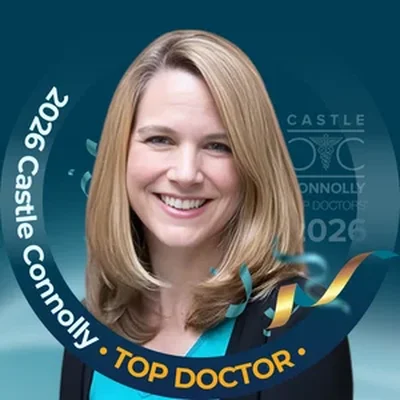
Her research was funded by an NIH Ruth L. Kirschstein National Research Service Award, and she won a Harvard Medical School teaching award three years running. She is a Fellow of the American College of Obstetricians and Gynecologists (FACOG), a Seattle Metropolitan Top Doctor 2018-2021, and a member of ASRM and SREI.
Clinical Expertise
- Oncofertility: egg, embryo and ovarian tissue banking coordinated so preservation does not delay cancer treatment
- Elective egg freezing: stimulation and vitrification for patients planning family timing
- Medical decision analysis: structured, quantitative framing of trade-offs in complex fertility choices
- IVF and general reproductive endocrinology as medical director
Why Choose Dr. Davis
She created the program she runs. The fertility preservation service here exists because Davis built it — continuity most patients get only from a program’s founder.
A cancer-clock discipline. Preservation for oncology patients is a scheduling problem as much as a medical one; she works to bank eggs or tissue without pushing back chemotherapy or radiation.
Quantitative decision training. Her master’s in medical decision analysis shows up when the “right” choice depends on probabilities a patient should see laid out, not guessed.
Academy-grade background. Stanford fellowship and postdoctoral research, an NIH research award, and three consecutive Harvard teaching awards.
Professional Affiliations
Fellow of the American College of Obstetricians and Gynecologists (FACOG). Member of the American Society for Reproductive Medicine and the Society for Reproductive Endocrinology and Infertility. NIH Ruth L. Kirschstein National Research Service Award recipient. Stanford-trained reproductive endocrinologist with postdoctoral research experience.
Suitable For
- Patients about to start chemotherapy or radiation who want to preserve fertility first
- Women planning elective egg freezing
- Anyone facing a treatment trade-off best resolved with explicit probabilities
- IVF patients who want a medical director as their physician