'%20d='m0%200%2016%2011h61%2061%2061%2061%2060L47%2037h61%2061%2060%2061L16%2063h61%2061%2061%2061%2060L47%2089h61%2061%2060%2061L16%20115h61%2061%2061%2061%2060L47%20141h61%2061%2060%2061L16%20166h61%2061%2061%2061%2060L47%20192h61%2061%2060%2061L16%20218h61%2061%2061%2061%2060z'/%3e%3c/svg%3e)

About Pinnacle Fertility Seattle
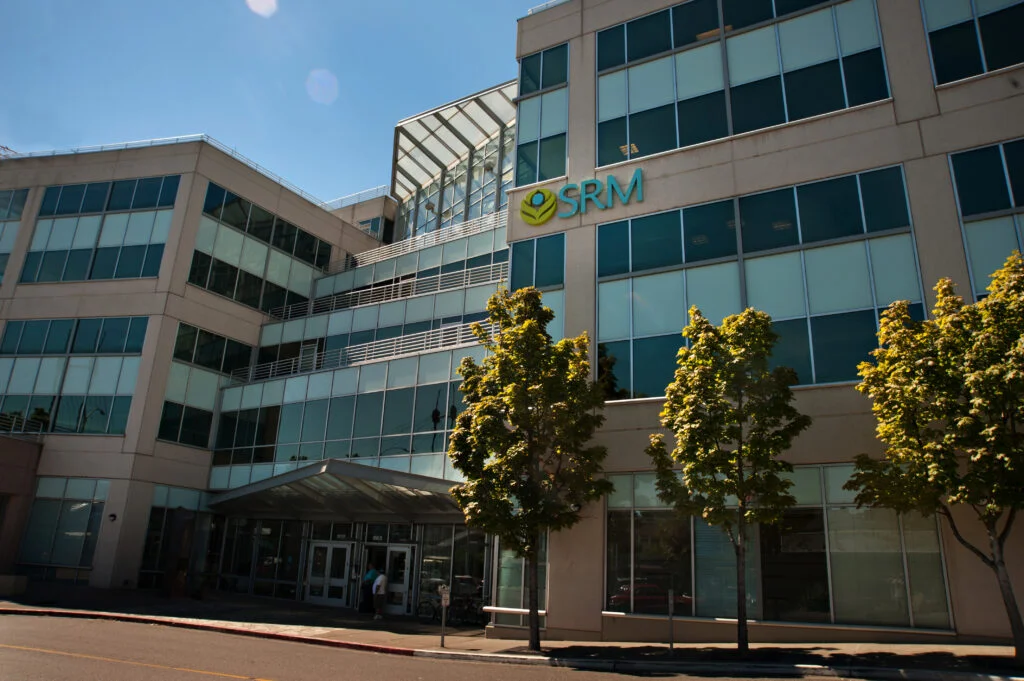
This clinic opened as Seattle Reproductive Medicine (SRM) in 2004 and practices at 1505 Westlake Avenue North, suite 400, on Seattle’s north edge near South Lake Union. It now presents itself as part of Pinnacle Fertility — the Seattle page still leads with the line “Formerly Seattle Reproductive Medicine” — and our sources do not date the change. Everything described here belongs to this one Seattle registration, clinic ID 2393; the other Pinnacle offices are outside these numbers.
The practice offers the full assisted reproduction lineup — IVF with ICSI, IUI, egg and embryo freezing, PGT-A, PGT-M and PGT-SR genetic testing, donor eggs through the Pinnacle Egg Bank, gestational carrier programs and family building for LGBTQ+ patients — plus reproductive surgery and in-house male fertility care.
Outcomes, and exactly what they cover. SART reports results by clinic registration. These figures come from the 2022 SART Final Clinic Summary for this Seattle registration (clinic ID 2393), which the CDC also carries under the name Seattle Reproductive Medicine (ART clinic ID 50, medical director Paul C. Lin). The measure is live birth per intended egg retrieval, counting all embryo transfers from a retrieval, for patients using their own eggs: 54.7% under 35 (680 cycles), 40.0% at 35-37 (457 cycles), 24.7% at 38-40 (453 cycles), 10.5% at 41-42 (172 cycles) and 7.3% over 42 (110 cycles). The 9.3% shown in the chart for 41 and over is those last two age bands weighted together.
Set against SART’s own 2022 national summary for the same registry and year — 53.5% under 35, 39.8% at 35-37, 25.6% at 38-40, 12.0% over 40 — Seattle is a little above the country under 38 (54.7% and 40.0%), roughly level to slightly below at 38-40, and clearly below for patients over 40. One sourcing note you should know about: the national row in the data table on this page carries a link to this clinic’s own SART report rather than to SART’s national summary, and the values it displays do not match the published 2022 national figures. We therefore quote the national summary values above and flag the mismatch instead of smoothing it over. This is an honest reading of the data, not a top-decile program in every band.
The 2023 SART report is still preliminary and runs lower (44.8% under 35) because cycles started late in the year have not yet reported their outcomes; the 2022 final data is used here for that reason. Two reporting notes from the same summary matter when you compare clinics: a high share of cycles here use elective single embryo transfer and preimplantation genetic testing, and Washington’s insurance picture means a larger fraction of the patients seeking care are those with harder diagnoses or prior failed treatment elsewhere. Both affect how raw percentages look.
Cycle volume is the practice’s clearest objective claim: 4,656 cycles in the 2022 report, all filed under this one registration. We deliberately do not express that as a multiple of a national per-clinic average — the per-clinic average recorded across our own US data extracts is not one consistent figure, so any such ratio would be arithmetic on mixed denominators rather than a fact about this clinic. The aggregate Google rating for this office is 3.5 across 247 ratings, which reflects front-desk and scheduling experience more than clinical programs.
Accreditations & Awards
- CAP-accredited embryology laboratory (per the clinic’s own accreditation list) — the accreditation that governs how eggs, sperm and embryos are handled, cultured, frozen and biopsied. Our sources capture this as the clinic’s statement; we did not verify it against CAP’s registry
- AAAHC accreditation for ambulatory procedural care, covering retrievals done under sedation at this site
- SART member clinic, filing every cycle to SART and the CDC under registration ID 2393; that reporting is why the age-band numbers above exist publicly and can be pulled independently
- ASRM affiliation and FDA registration, both as listed by the clinic — read the wording carefully: ASRM does not certify clinics, so the “ASRM Certification” line on the clinic’s own awards list is the clinic’s phrasing, not an accreditation
- Elective single embryo transfer discipline: 97.3% of births under 35 were singletons in the 2022 SART report, so twin and higher-order risk is kept low by design
- Newsweek “America’s Best Fertility Clinics”: ranked #26 in 2024 and #27 in 2023. This is a commercial ranking posted by the clinic, not an accreditation, and its methodology differs from the lab and facility accreditations above
- The practice also cites an internal Nursing Center of Excellence designation and one of its physicians, Paul C. Lin, serves as SART’s president — recognitions of individuals and staff programs rather than of the facility’s regulatory standing
Why Choose Pinnacle Fertility Seattle
- Volume you can check: 4,656 reported cycles in the 2022 SART report, all under one public registration. We do not state that against a national per-clinic average — see the note above on mixed denominators.
- The outcome data is this clinic’s own: one Seattle site, one registration (ID 2393), no blending with a national network. Ask any multi-office clinic whether a quoted rate is the office you will actually attend.
- Genetic testing done in the same building: PGT-A, PGT-M and PGT-SR run through the clinic’s own laboratory, which it lists as CAP-accredited, rather than couriered out, so biopsy and results stay inside one chain of custody.
- Fewer twins by default: 97.3% singleton births under 35 (2022 SART). Twin risk is the most underrated line on an IVF quote.
- Male factor handled inside the practice, not referred away: the team lists a male reproduction endocrinologist (Jeremy Choy, MD) and a male reproductive and sexual medicine specialist (Tom Walsh, MD, MS) next to the IVF physicians. Which procedures each of them performs is not published in our sources.
- A named fertility preservation program: Lynn B. Davis, MD, MS, FACOG is listed as the practice’s fertility preservation program director alongside her role as a medical director. The program covers egg and embryo freezing; our sources do not document ovarian tissue freezing.
- Leadership in the field: one physician, Paul C. Lin, is listed as SART’s president — the body that sets the ART reporting standards behind the numbers on this page.
- Weekend monitoring access: the posted hours run from 7:30 am on weekdays and 7:30 am to 3:30 pm on Saturday and Sunday by appointment, the window that actually matters during a stimulation cycle.
- What is not published here: no per-physician outcome breakdown, no fresh-versus-frozen split for 2022, no self-pay price list, and no stated cycle-start wait time. Treat these as questions to ask, not facts to assume.
IVF & Fertility Services
- In Vitro Fertilization (IVF): injectable stimulation monitored by ultrasound and bloodwork, sedated transvaginal egg retrieval, embryo culture to the blastocyst stage, and transfer or freezing
- ICSI (Intracytoplasmic Sperm Injection): single-sperm injection used routinely for male factor infertility or prior fertilization failure
- IUI (intrauterine insemination): in natural or medicated cycles, with partner or donor sperm
- PGT-A, PGT-M and PGT-SR: screening embryos for chromosome number, testing for known single-gene conditions, and structural rearrangement testing — done through the in-house CAP-accredited lab
- Egg, embryo and sperm freezing: vitrification for elective preservation and for fertility preservation before cancer treatment
- Fertility preservation for oncology patients: coordinated with treating oncologists so banking does not delay chemotherapy or radiation
- Donor egg IVF: matched donors through the Pinnacle Egg Bank, with single embryo transfer into the person carrying the pregnancy
- Gestational carrier programs: screening and coordination for patients who need a carrier, under Washington’s parentage statute
- LGBTQ+ family building: the clinic names this among its flagship programs; donor eggs and gestational carrier paths sit on the same service list. Which specific routes are offered to which family structures is not itemized in our sources
- Reproductive surgery: laparoscopy appears on the clinic’s service list. No further surgical detail — procedures, indications or who operates — is documented in our sources
- Male infertility care: semen analysis is a listed service, and the practice keeps male-factor care in house through its own male reproduction and sexual medicine specialists rather than referring it out
- Fertility testing: AMH and hormone panels, antral follicle count, uterine imaging, carrier screening and infectious disease testing under FDA requirements
- Counseling and support: mental-health counseling integrated into treatment, including third-party reproduction and loss
Fees & Packages
There is no published price list. The clinic commits to transparent, itemized pricing and financial counseling, but specific cycle, medication and add-on costs are quoted after a consultation rather than posted online.
- PatientFi offers third-party installment financing for treatment
- Insurance navigation: a financial team helps patients check and use benefits, though coverage depends on the individual plan. Google reviews for this office include complaints about benefits coordination with Maven and Progeny, so get an authorization or denial in writing before medications start
- Donor-egg and gestational-carrier programs carry agency and legal costs billed separately from the clinic’s own fees
Because Washington has no general mandate that settles IVF coverage clinic by clinic, ask your own carrier what is covered and record the representative’s name before a cycle begins.
Patient Journey
- Book a consultation, in person or by telehealth, with a physician. Bring prior cycle records, labs, imaging and operative notes if you are transferring care from another clinic
- Testing, done on site: hormone panels and AMH, antral follicle ultrasound, uterine imaging, and semen analysis where a partner is involved
- Diagnosis and plan: results reviewed together and a treatment path chosen — IUI, IVF, preservation, donor eggs or surgery. This is the visit to ask about cycle-start wait and where you will be monitored
- Stimulation and monitoring: injectable medications tracked by bloodwork and ultrasound, with early-morning weekday slots and weekend hours so scans fit around work. Our sources do not publish how many days stimulation runs here
- Retrieval and fertilization: sedated transvaginal aspiration once follicles are mature, then ICSI or conventional insemination in the clinic’s own lab, with embryos grown to blastocyst
- Genetic testing (optional): trophectoderm biopsy at the blastocyst stage if PGT is elected, run through the in-house lab
- Transfer: a single embryo transferred in a fresh or, more often, a later frozen cycle, consistent with the practice’s high eSET rate
- Pregnancy test and follow-up: a blood pregnancy test at the clinic, then early-pregnancy monitoring and obstetric referral once a pregnancy is confirmed. The timing of that first test is not published in our sources
Local Legal Framework
Washington governs assisted reproduction mainly through its parentage chapter, Chapter 26.26A RCW (the Uniform Parentage Act), plus the relationship-recognition provision at RCW 26.04.010. A few practical points, drawn only from what is documented here.
Egg and sperm donation are lawful and performed at this clinic. Under RCW 26.26A.100 a donor is not a parent of a child resulting from the donation; the process runs on written informed consent, and anonymity can no longer be assumed because of direct-to-consumer DNA testing. Ask what information a future child can access and put it in the agreement.
Gestational carriers (surrogacy) are addressed by RCW 26.26A.600, which sets out when a gestational carrier agreement is enforceable and how intended parents establish parentage. Written agreements, independent legal counsel for each party, and a parentage order — the statute, not a brochure — determine who is a legal parent. If you use a carrier, retain Washington reproductive-law counsel before scheduling a cycle.
Genetic testing: PGT-A, PGT-M and PGT-SR are available without additional state restriction beyond informed consent and CLIA laboratory standards.
LGBTQ+ families: RCW 26.04.010 recognizes and protects same-sex relationships, and Washington’s parentage statute lets intended parents — including single parents by choice and same-sex couples — establish legal parentage. For a non-genetic or non-gestational partner, parentage still has to be documented properly at the time of conception rather than assumed from the birth certificate.
Stored embryos: Washington law does not treat an embryo as a legal person. The disposition consent you sign when embryos are created controls what happens to them — storage, transfer, donation or destruction — so read that document before signing and update it when your circumstances change.
Location
- Address: 1505 Westlake Avenue N, #400, Seattle, WA 98109
- Phone: +1 206-301-5000