'%20d='m0%200%2016%2011h61%2061%2061%2061%2060L47%2037h61%2061%2060%2061L16%2063h61%2061%2061%2061%2060L47%2089h61%2061%2060%2061L16%20115h61%2061%2061%2061%2060L47%20141h61%2061%2060%2061L16%20166h61%2061%2061%2061%2060L47%20192h61%2061%2060%2061L16%20218h61%2061%2061%2061%2060z'/%3e%3c/svg%3e)
About
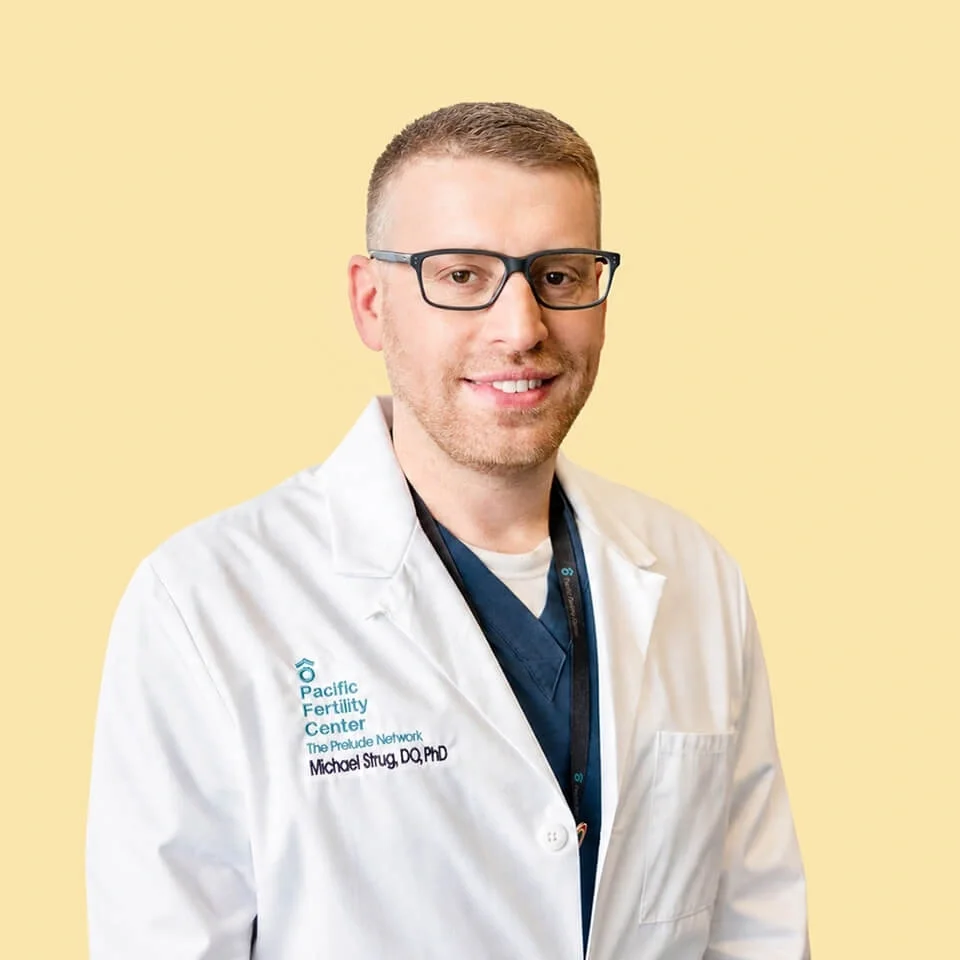
Michael Strug, DO PhD holds two doctorates from Michigan State — a medical degree in osteopathic medicine and a PhD in pharmacology and toxicology — and finished his clinical training with an REI fellowship at Stanford University School of Medicine. That combination is rare on purpose: he describes himself as a physician-scientist, and his research record (peer-reviewed publications, presentations at national meetings with research awards, and a National Institutes of Health National Research Service Award F30 fellowship grant earned during training) sits behind the clinical niche he chose.
The niche is the patient who keeps failing. Strug’s stated clinical expertise covers recurrent pregnancy loss, recurrent implantation failure, and endometrial disorders such as endometriosis — the three situations where a standard IVF template stops answering questions. He also teaches: he is an Adjunct Clinical Assistant Professor in Stanford’s Department of Obstetrics & Gynecology, and his name appears on the Pacific Fertility Center team recognized by Newsweek’s America’s Best Fertility Clinics in 2024.
Clinical Expertise
- Recurrent pregnancy loss: systematic evaluation of the genetic, anatomic, endocrine, and immune factors behind repeated miscarriage, followed by an individualized next-cycle plan
- Recurrent implantation failure: reassessment of embryos, uterus, and protocol after transfers of good-quality embryos fail to establish a pregnancy
- Endometrial disorders: management of endometriosis and endometrial-factor infertility, informed by his pharmacology/toxicology doctorate — how drugs and the uterine environment interact
- IVF and fertility preservation: full-cycle care from stimulation design through transfer, with genetic testing of embryos where indicated
Why Choose Dr. Strug
A pharmacology PhD who reads your medication list differently. The toxicology training is directly relevant to fertility care — ovarian stimulation drugs, hormone exposure, and the uterine environment are his doctoral subject matter, not a later add-on.
NIH-funded training is a filter. The NRSA F30 is awarded to a small number of medical students for research training; Strug held one. His publication and award record at national meetings backs the physician-scientist label.
He holds Stanford faculty status in the specialty he practices. As Adjunct Clinical Assistant Professor in Stanford’s OB/GYN department, he stays inside the academic loop that sets recurrent-loss and implantation-failure protocols.
Professional Affiliations
Board-certified in Reproductive Endocrinology and Infertility by the American Board of Obstetrics and Gynecology. Adjunct Clinical Assistant Professor, Department of Obstetrics & Gynecology, Stanford University. National Research Service Award F30 grantee, National Institutes of Health. Physician at Pacific Fertility Center, San Francisco.
Suitable For
- Patients with recurrent miscarriages who have been handed a generic protocol instead of a workup
- Anyone with repeated implantation failure after transferring apparently good embryos
- Endometriosis patients whose uterine factor needs managing alongside IVF
- Second-opinion seekers who want a physician-scientist reviewing prior cycle data