'%20transform='translate(88%20-32)'%3e%3cpath%20fill='%23fff'%20d='M-128%2032h720v480h-720z'/%3e%3ccircle%20cx='523.1'%20cy='344.1'%20r='194.9'%20fill='%23bc002d'%20transform='translate(-168.4%208.6)scale(.76554)'/%3e%3c/g%3e%3c/svg%3e)
About
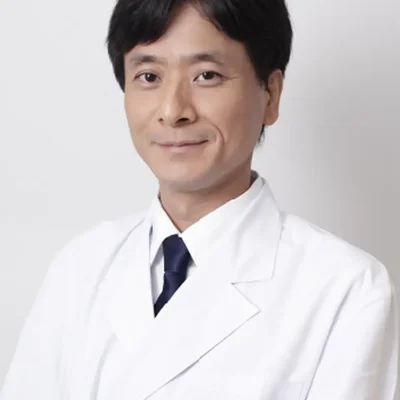
Dr. Kazuto Morozumi founded Morozumi Ladies Clinic in Ginza, Tokyo in July 2012 after a career built around the science of fertilization. He earned his MD (1998) and PhD (2005) at Fukushima Medical University, joined its obstetrics and gynecology department, and in 2004 moved to the University of Hawaii School of Medicine’s Department of Anatomy and Reproductive Biology for two and a half years of ICSI basic research under Professor Ryuzo Yanagimachi — the pioneer of mammalian IVF and a Kyoto Prize laureate.
His two papers from that work, published in the Proceedings of the National Academy of Sciences (PNAS, 2005 and 2006), showed that the sperm acrosome carried into the egg during ICSI can be hazardous to embryo development, and that removing the sperm plasma membrane and acrosome before injection improves oocyte activation and embryonic development. The findings remain standard references in the ICSI literature and shaped his clinical rule: use ICSI when it truly helps, not by default — the clinic prioritizes conventional insemination (“sprinkling”) whenever parameters allow.
After returning to Japan he served as assistant professor at Fukushima Medical University (2007) and then practiced reproductive medicine at Sano Hospital’s Reproduction Center in Tokyo (from 2008) before opening his own clinic. In the 14 years since, he has personally overseen more than 10,000 egg retrievals and more than 10,000 embryo transfers (source: clinic official website), with particular depth in advanced-age care.
Clinical Expertise
- IVF full-cycle management: individualized stimulation through transfer, with conventional IVF insemination preferred over unnecessary ICSI
- ICSI and micromanipulation: Piezo ICSI applied to all injection cases for over 12 years to minimize physical stress on the oocyte, combined with IMSI high-magnification sperm selection
- Advanced-age protocols: his signature “reduce egg and embryo stress” strategy — fresh and cleavage-stage transfers where suitable, double OPU (Duo Stim) to bank embryos early, time-lapse culture with embryos kept in the incubator throughout
- Recurrent implantation failure: integrates tacrolimus immunomodulation, ERA/EMMA/ALICE endometrial testing and transfer-support packages for patients aged 40-42
- PGT-A indication judgment: as a JSOG-accredited PGT-A facility, testing is offered strictly by indication rather than routinely
Why Choose Dr. Kazuto Morozumi
He helped write the basic science behind the procedure he performs. Few practicing fertility physicians can claim two PNAS first-sphere publications on ICSI mechanisms, supervised by the field’s foundational figure, Professor Yanagimachi. That research background translates into concrete clinical positions — restrained use of ICSI, piezo-driven injection to protect the egg, and culture conditions engineered around stress minimization.
Scale plus transparency. Ten thousand retrievals and ten thousand transfers in 14 years place him among Tokyo’s most experienced operators, while the clinic publishes its cumulative frozen-transfer outcomes online, stratified by age and embryo grade — outcomes he is willing to show rather than summarize.
Designed for older patients. His protocol set — Duo Stim double retrieval, fresh cleavage-stage transfer options, natural-cycle FET preference supported by one of Japan’s largest single-clinic PGT-A datasets (839 patients, 1,932 embryos) — reflects an explicit philosophy that the ovaries and embryos of advanced-age patients tolerate less intervention, not more.
Human transparency in the room: he allows the husband to witness embryo transfer in the operating theatre, a policy the clinic adopted to make treatment verifiable and shared.
Professional Affiliations
- Specialist, Japan Board of Obstetrics and Gynecology (JBOG) certification system
- Reproductive Medicine Specialist and Instructor, Japan Society for Reproductive Medicine (JSRM)
- Councillor, Japan Society of Obstetrics and Gynecology for Reproductive Medicine (fertilization and implantation); congress secretary, The Japanese Society of Mammalian Eggs; councillor, The Japan IVF Association
- Member, American Society for Reproductive Medicine (ASRM) and European Society of Human Reproduction and Embryology (ESHRE)
- Registered physician of St. Luke’s International Hospital; long-standing collaboration with Sano Hospital and referral ties to University of Tokyo, Keio and Nippon Medical School hospitals
Suitable For
- Women of advanced reproductive age: protocols deliberately built to reduce egg and embryo stress, backed by the clinic’s age-stratified published outcomes
- Recurrent implantation failure patients: combined immunological (tacrolimus), endometrial (ERA/EMMA/ALICE) and embryo-selection work-ups under one roof
- Couples needing ICSI: a micromanipulation researcher-clinician who applies piezo ICSI universally yet withholds ICSI when conventional insemination suffices
- Patients who weigh scientific credentials: PNAS authorship and direct Yanagimachi-lineage training are rare verifiable evidence of laboratory-science depth
- Couples seeking individualized planning: the clinic’s stated creed is to use advanced techniques fully when needed — and to avoid intervention beyond what the case requires