'%20d='m0%200%2016%2011h61%2061%2061%2061%2060L47%2037h61%2061%2060%2061L16%2063h61%2061%2061%2061%2060L47%2089h61%2061%2060%2061L16%20115h61%2061%2061%2061%2060L47%20141h61%2061%2060%2061L16%20166h61%2061%2061%2061%2060L47%20192h61%2061%2060%2061L16%20218h61%2061%2061%2061%2060z'/%3e%3c/svg%3e)
About
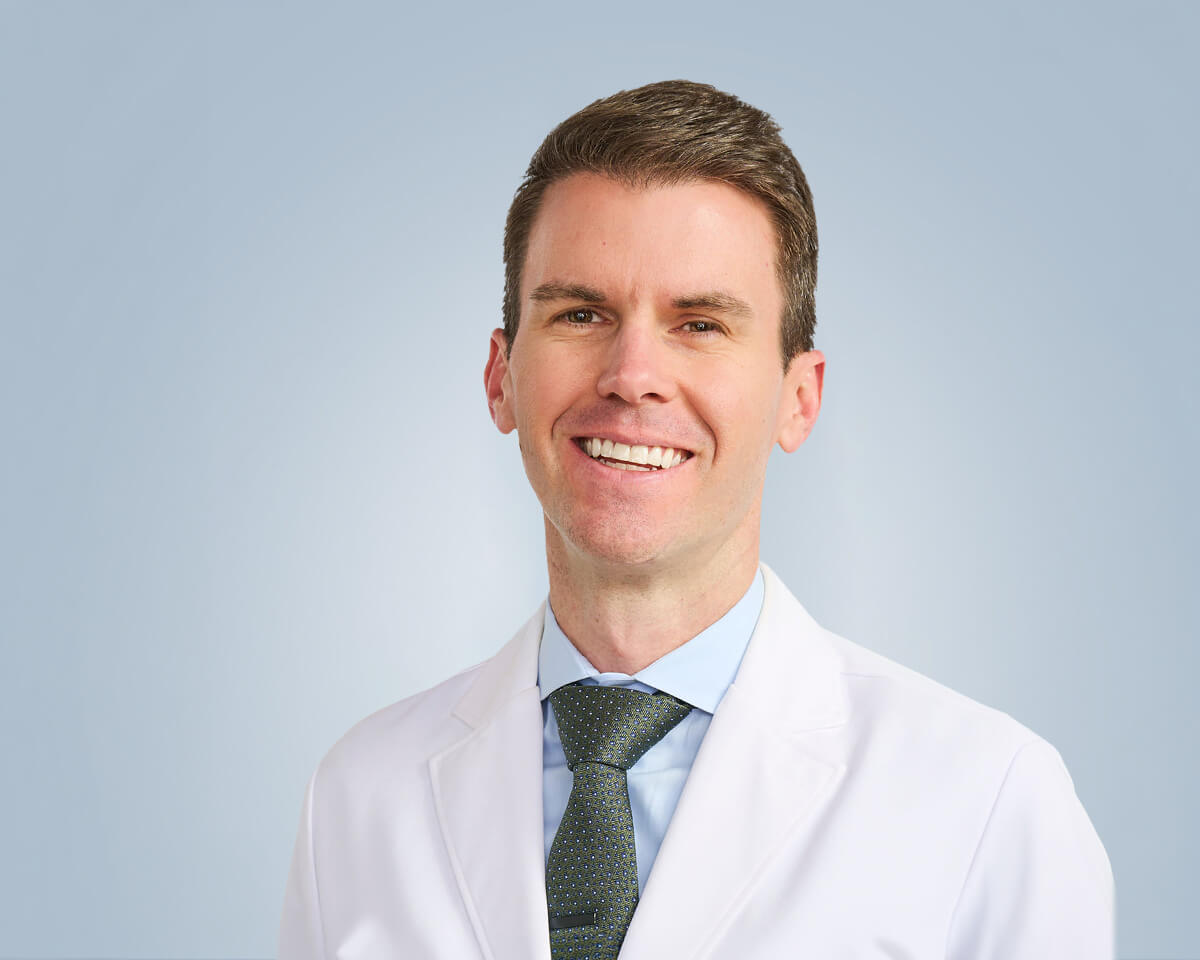
Phillip Romanski holds the research job across the network, not just at this office: he is Associate Research Director for US Fertility, the group RMA of New York belongs to, with more than 60 peer-reviewed publications behind the title. His fellowship years ran on two tracks at once — reproductive endocrinology training at Weill Cornell Medical Center/NewYork-Presbyterian and a concurrent Master of Science in clinical and translational investigation at Weill Cornell’s graduate school, completed 2020, taken deliberately so he could design the studies rather than only recruit for them.
The clinical throughline is uterine anatomy. His award-recognized work at the American Society for Reproductive Medicine concerns the classification of Müllerian anomalies — the structural variants, from septate uterus to uterine didelphys, that change both how a cycle is managed and whether a transfer can succeed. Patients with a mullerian anomaly, or with a Müllerian anomaly nobody named, are a group he sees specifically.
He trained at Harvard first: OB/GYN residency at Brigham and Women’s Hospital and Massachusetts General Hospital, completed 2015, after a medical degree at the University of Central Florida College of Medicine where he was elected to Alpha Omega Alpha. He sits on the board of directors of the Pacific Coast Reproductive Society and was named a New York Super Doctors Rising Star for 2023.
Clinical Expertise
- Müllerian anomalies and uterine factor infertility: classification work recognized by ASRM; diagnosis that reshapes a treatment plan
- IVF after previous failure: his stated patient group, handled as a workup problem before an escalation problem
- Third-party reproduction: donor egg, donor sperm, donor embryo and gestational carrier pathways
- Egg and embryo freezing: preservation as a listed service line
- Network-level research direction: Associate Research Director for US Fertility, with 60+ publications
Why Choose Dr. Romanski
He sets research agenda for the whole network, not one clinic — and still takes patients at the East Side office.
A structural diagnosis he has actually studied. Müllerian anomaly classification is the work ASRM recognized, and it is the finding that decides whether standard IVF protocol applies at all.
Harvard residency, Cornell fellowship, plus a research degree. Brigham and Women’s/Massachusetts General training, then a concurrent MSc in clinical and translational investigation — an unusual combination for a practicing REI physician.
Peer recognition from both directions: Super Doctors Rising Star (2023) and a top-10% peer reviewer citation in obstetrics and gynecology journals.
Professional Affiliations
Member of the American Society for Reproductive Medicine, whose honors recorded for him include a First Prize Video Research Award and first-prize recognition for his classification work on Müllerian anomalies, and an “excellent peer review” citation placing him in the top decile of reviewers for obstetrics and gynecology literature. He sits on the board of directors of the Pacific Coast Reproductive Society, holds an Alpha Omega Alpha election from medical school, and was named a 2023 New York Super Doctors Rising Star.
Suitable For
- Patients with a septate or otherwise anomalous uterus: the anatomical question is his research area
- Anyone with two or more failed cycles elsewhere: his listed focus, worked up rather than repeated
- Donor egg, donor embryo or surrogacy families: third-party reproduction is one of his three services
- Diminished ovarian reserve and age-related infertility: the group he names for himself
- Patients who ask how a recommendation was studied: he directs the research that produces the answers