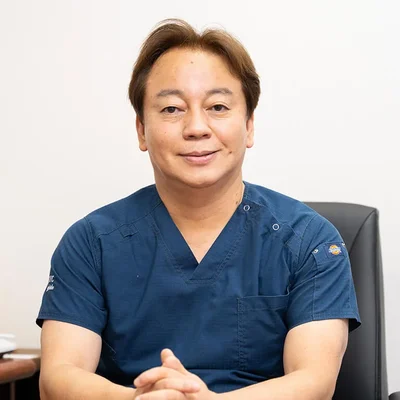

About
Dr. Masato Yoshida has been vice director of Yume Clinic since 2014, but the earlier half of his career was spent running fertility clinics rather than working under a founder. He took the director’s chair at Aiku Ladies Clinic in 2003 and became vice director of Yahata Women’s Clinic in 2012, so the scheduling, staffing and protocol decisions that decide whether a retrieval happens on the right morning are work he has done at institutional level, not just at the operating table.
His training began at Yamagata University School of Medicine (MD 1993), where he joined the Department of Obstetrics and Gynecology and completed clinical postings at Yamagata Sosei Hospital, Yamagata Prefectural Kahoku Hospital and Tendo Municipal Hospital — general and regional hospital work that covers labour, gynaecological emergencies and comorbidity. He returned to the university department as an assistant in 1999 and took his PhD in 2001.
Two things set his credential profile apart inside a fertility clinic. He qualified as an anti-aging medicine specialist of the Japanese Society of Anti-Aging Medicine in 2016 and as a reproductive medicine specialist of the Japanese Society for Reproductive Medicine in 2017 — an unusual pair that he applies to patients whose ovarian reserve, endocrine status and general condition have to be weighed together. Under the clinic’s 2025 schedule revision he handles Monday retrievals and transfers, Monday and Saturday outpatient sessions, and a share of first visits, which makes him the clinic’s main weekend surgeon.
Clinical Expertise
- IVF — performs both egg retrieval and embryo transfer, timing the trigger from hormone assays and follicle monitoring.
- ICSI — for severe male factor and for cycles with prior fertilisation failure.
- Intrauterine insemination (IUI) — washed, concentrated sperm placed in the uterus as the low-intervention first step, with conversion to IVF after 1–5 unsuccessful cycles.
- First-visit assessment and treatment stratification — reads the hormone panel, AMH, antral follicle count and the partner’s semen analysis together to set the starting protocol.
- Ovarian reserve and age-related management — selects natural-cycle or estrogen-supplemented protocols for patients with low reserve, informed by his anti-aging medicine background.
- Weekend and holiday coverage — operates on Saturday mornings, when the clinic runs a 09:30–13:00 session only.
Why Choose Dr. Yoshida
Two board credentials that rarely sit together. Reproductive medicine certification plus anti-aging medicine certification means the whole endocrine and metabolic picture gets read into the stimulation decision, not only the reproductive axis numbers. For a patient whose AMH is low, thyroid values are borderline or sleep and weight have shifted, that is a different conversation from one built purely on follicle counts.
Regional hospital practice before fertility subspeciality. His early years in Yamagata’s general and prefectural hospitals involved obstetric and gynaecologic emergency work. That background is useful when an infertility patient also carries fibroids, endometriosis or a medical comorbidity, because the question of what to treat first gets answered from wider clinical experience.
He has run the clinic he now operates in. Serving as a clinic director and then vice director at two institutions means cycle scheduling, staffing and laboratory coordination are decisions he has made himself. In practice this shows up as dependable surgical slots — he is the clinic’s principal surgeon for Monday and Saturday morning retrievals and transfers, the two windows working patients find easiest to attend.
Professional Affiliations
Dr. Yoshida holds an MD and PhD from Yamagata University and is board-certified in obstetrics and gynaecology by the Japan Society of Obstetrics and Gynecology (1998), in anti-aging medicine by the Japanese Society of Anti-Aging Medicine (2016) and in reproductive medicine by the Japanese Society for Reproductive Medicine (2017). He is a member of JSOG, the Japanese Society for Reproductive Medicine, the Japan Society for Fertilization and Implantation, the Japanese Society of Ova and Embryo, the Japanese Society of Anti-Aging Medicine and the Japanese Society of Human Genetics.
Suitable For
- Patients who need Monday or weekend surgical slots. Retrievals and transfers he performs fall on Mondays and Saturday mornings, which suits patients who cannot take weekday leave.
- Low ovarian reserve with a complicated endocrine picture. He is the physician most likely to factor general metabolic and hormonal status into protocol choice rather than reading AMH alone.
- Patients at the assessment stage. He carries a share of first visits, so the starting protocol and realistic expectations can be settled at the initial appointment.
- Moderate to severe infertility requiring IVF. He covers the full chain — retrieval, fertilisation, transfer — and can continue into frozen embryo transfer and add-on testing without changing physicians mid-cycle.