'%20d='m0%200%2016%2011h61%2061%2061%2061%2060L47%2037h61%2061%2060%2061L16%2063h61%2061%2061%2061%2060L47%2089h61%2061%2060%2061L16%20115h61%2061%2061%2061%2060L47%20141h61%2061%2060%2061L16%20166h61%2061%2061%2061%2060L47%20192h61%2061%2060%2061L16%20218h61%2061%2061%2061%2060z'/%3e%3c/svg%3e)
About
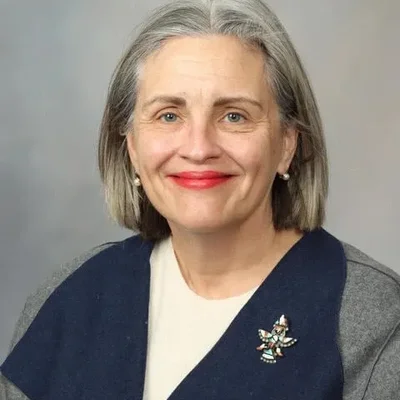
Dr. Elizabeth A. (“Ebbie”) Stewart holds perhaps the widest academic appointment in Mayo Clinic’s fertility division: professor of obstetrics and gynecology with joint appointments in physiology and biomedical engineering, in the division of endocrinology inside the department of medicine, and in surgery. That spread is not decoration. It maps onto a three-decade research program on the conditions that sit at the seam of fertility and uterine disease — alternatives to hysterectomy, innovative treatments for endometriosis and uterine fibroids, and the long-term consequences of hysterectomy itself.
She trained entirely inside the Harvard world that produces much of that literature: ob/gyn residency at Brigham and Women’s Hospital and Massachusetts General Hospital (1989), reproductive endocrinology fellowship at Brigham and Women’s (1992). The American Board of Obstetrics and Gynecology certified her in ob/gyn in 1993 and in the REI subspecialty in 1995 — the longest-standing board certification on Mayo’s Rochester fertility team.
The output matches the appointment. Her profile credits over 220 peer-reviewed publications, two books, and multiple book chapters and presentations. She has served as a guest editor for the New England Journal of Medicine, reviewed for a 2024 National Academies of Sciences, Engineering, and Medicine report, delivered the 2025 Georgeanna Seegar Jones and Howard W. Jones Jr. invited lecture at Johns Hopkins School of Medicine, and she trains residents and fellows while caring for infertility patients and helping build families of all kinds — single individuals, the LGBTQ community, and couples facing infertility or pregnancy loss are named in her profile.
Clinical Expertise
- Infertility evaluation and management: her core clinical line — assisted reproductive technology and in vitro fertilization are her listed interests.
- Uterine fibroids: the subject of her career’s research program, informing treatment choices for patients who want to keep their uterus and their options.
- Endometriosis and adenomyosis: innovation in treatment is a named research focus; she sits on the international consensus panel for adenomyosis.
- Hysterectomy alternatives and long-term outcomes: research and practice aimed at what to do before — and instead of — removing the uterus.
- Reproductive endocrine conditions: primary ovarian insufficiency, diminished ovarian reserve, thyroid and prolactin disorders, uterine anomalies and recurrent miscarriage on her treated list.
- ART procedures: ovulation induction, superovulation, IUI, IVF, egg and embryo freezing, egg retrieval, preimplantation genetic screening, 3D ultrasound and sonohysterography.
Why Choose Dr. Stewart
A researcher who owns the question you are asking. If your situation is “fibroids, and I do not want a hysterectomy” or “what does losing my uterus do to me at 55,” you are reading the abstract of her work sitting across the exam table — over 220 papers and two books of it.
Three-decade board record. Certified in REI by the ABOG since 1995, the senior certification on this team, on a Brigham-and-Women’s/Harvard training line.
International standard-setting. She represents the American side on the European Society of Human Reproduction and Embryology’s consensus panel on adenomyosis and serves on the Society of Endometriosis and Uterine Disorders’ abnormal uterine bleeding task force.
Invited everywhere, still seeing patients. The 2025 Jones Lectureship at Johns Hopkins and a National Academies review assignment sit alongside an active infertility practice and family building for patients of all configurations.
Professional Affiliations
Representative, European Society of Human Reproduction and Embryology (ESHRE) Consensus Panel on Adenomyosis (2022-present). Abnormal Uterine Bleeding Task Force member, Society of Endometriosis and Uterine Disorders (2020-present). Reviewer for a National Academies of Sciences, Engineering, and Medicine report (2024) and a New England Journal of Medicine guest editor.
Suitable For
- Fibroid patients weighing surgery: the person whose career questions are your questions — alternatives to hysterectomy and what removal does long-term.
- Endometriosis and adenomyosis: treatment innovation is her stated research target, and she helps write the international consensus on adenomyosis.
- Infertility with a uterine factor: fibroids, septate or double uterus, adhesions — where reproductive endocrinology meets uterine pathology.
- Second opinions with citations: patients who want recommendations traceable to published evidence, not clinic brochures.
- Recurrent miscarriage and ovarian insufficiency: standing entries on her conditions-treated list.