'%20d='m0%200%2016%2011h61%2061%2061%2061%2060L47%2037h61%2061%2060%2061L16%2063h61%2061%2061%2061%2060L47%2089h61%2061%2060%2061L16%20115h61%2061%2061%2061%2060L47%20141h61%2061%2060%2061L16%20166h61%2061%2061%2061%2060L47%20192h61%2061%2060%2061L16%20218h61%2061%2061%2061%2060z'/%3e%3c/svg%3e)
About
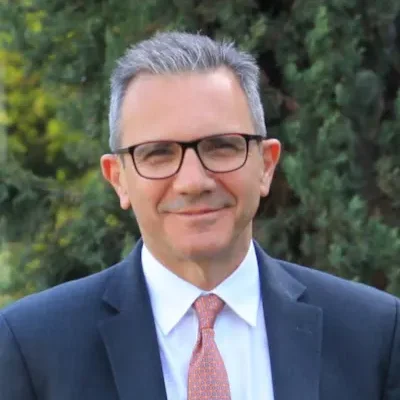
Which embryo in the incubator will become a baby is the question Emre Seli’s lab is built around, and it is a harder question than the marketing of embryo selection suggests. His group published FORTUNE, a machine-learning classifier that estimates the probability an IVF patient will produce an euploid blastocyst, in Human Reproduction in 2025, and the surrounding work covers mitochondrial function and reproductive aging, why embryos arrest before day five, and endometrial receptivity. He directs the IVF program at Yale Medicine Fertility Center, which means the laboratory and clinical decisions that produce those outcomes are his operational responsibility, not only his research interest. His stated position on the field is that in three years practice will look different from today — which is either reassuring or alarming depending on whether you are mid-cycle.
His clinical panel sits where IVF is hardest: complex and multi-factor infertility, patients whose own eggs have not worked and need donor oocytes, gestational carriers, and LGBTQ+ family building for same-sex couples and single patients. His Yale profile shows him practicing at both the Orange main campus and the Westport site. The program’s own materials reported a 78% live birth rate among patients using donor eggs in 2015; that is a clinic-published figure for one treatment category from a decade ago, not a SART age-band rate, and it should not be compared with the per-retrieval numbers on the center page.
He trained at Yale end to end — residency in 2001, REI fellowship in 2004 — after an MD at the University of Istanbul in 1992, and has published more than 200 peer-reviewed papers. Awards recorded on his Yale listing include the ASRM SART Prize Paper awards, the Society for Reproductive Investigation President’s Achievement Award (2016), the ESHRE basic science award (2008), the ASRM Ira and Ester Rosenwaks New Investigator Award (2009), an APGO and Yale teaching award (2013), ASRM Star Physician and Best Doctors listings for 2015-2019. He collaborates with reproductive scientists internationally and participates in trials including ovarian platelet-rich plasma infusion for poor responders. He is one of the few physicians on this panel who consults in French and Turkish as well as English. His clinical specialty training route at Yale is documented; board certification is not stated in the material we hold for him, so verify it with the clinic if it affects your choice.
Clinical Expertise
Embryo selection: which blastocyst to transfer, what morphokinetics can and cannot tell you, and where PGT-A still adds information his model does not replace.
Donor egg cycles — the pathway he reports program-level outcomes for, including matching, recipient preparation and the transfer decision.
Gestational carrier and third-party reproduction planning, coordinated with agency and legal steps the program requires.
Ovarian aging and poor response, including mitochondrial mechanisms and trial options such as PRP infusion.
Recurrent IVF failure workups, where the problem may be the embryo, the lining, or both.
Why Choose Dr. Seli
He runs the IVF program. Protocol defaults, laboratory practice and transfer policy at Yale Medicine pass through this role, so answers about how cycles are run come from the person who sets them.
Named model, named journal, named year. FORTUNE was published in Human Reproduction in 2025 — you can read what it predicts, on what data, and how well, instead of taking an “AI-driven” label on faith.
Twenty-plus years in one system. Istanbul MD in 1992, Yale residency and fellowship, then a Yale faculty career; his training record is a single contiguous lineage in one academic department.
Languages that change the visit. Consults in English, French and Turkish. For a patient whose history is long and whose third language is a medical textbook, that is a practical difference in what gets said.
Award record from research societies, not magazines. SRI’s President’s Achievement Award, ESHRE’s basic science prize and ASRM’s Rosenwaks new-investigator award are given by the research bodies in his field.
Professional Affiliations
American Society for Reproductive Medicine, including SART Prize Paper awards and the Rosenwaks New Investigator Award (2009), with Star Physician and Best Doctors listings recorded for 2015-2019. Society for Reproductive Investigation, President’s Achievement Award 2016. European Society of Human Reproduction and Embryology, basic science award 2008. Association of Professors of Gynecology and Obstetrics and Yale departmental teaching award (2013). Training: University of Istanbul MD (1992), Yale University School of Medicine residency (2001) and REI fellowship (2004). Reproductive endocrinology and infertility board certification is not stated in the program material reviewed.
Suitable For
- Patients who have failed treatment elsewhere and want the reasons adjudicated rather than repeated
- Donor egg families, where the outcome data he can point to is program-level and dated
- Gay male couples and lesbian partners building a family through donor gametes, IVF or a gestational carrier
- International patients who prefer a consultation in French or Turkish
- Patients who want the embryo-selection question answered honestly, including where the technology is still uncertain