'%20d='m0%200%2016%2011h61%2061%2061%2061%2060L47%2037h61%2061%2060%2061L16%2063h61%2061%2061%2061%2060L47%2089h61%2061%2060%2061L16%20115h61%2061%2061%2061%2060L47%20141h61%2061%2060%2061L16%20166h61%2061%2061%2061%2060L47%20192h61%2061%2060%2061L16%20218h61%2061%2061%2061%2060z'/%3e%3c/svg%3e)
About
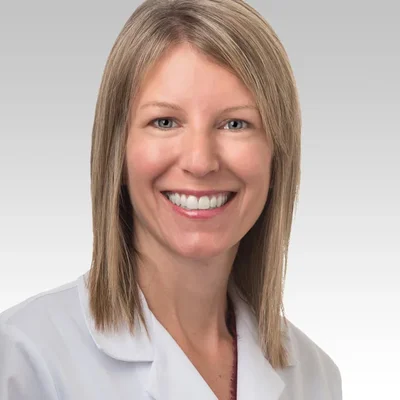
Two of the organizations that shape American reproductive medicine have Eve Feinberg on their executive committees. She sits in ASRM — the reproductive society that writes most of the practice guidance IVF clinics follow — and in ACOG, the obstetricians’ college, and she has held the presidency of the Society for Reproductive Endocrinology and Infertility (SREI). She also chairs ASRM’s special interest group on access to care, the committee that spends its time on the least clinical question in the field: who can actually afford treatment.
The training was Chicago and Bethesda. BS in biology at Emory in 1996, MD at Rush Medical College in 2000, OB/GYN residency at Northwestern University Feinberg School of Medicine in 2004, then a reproductive endocrinology and infertility fellowship at the National Institutes of Health in 2007 — training that shaped how she reads a protocol rather than which brand of gonadotropin she prefers. Nineteen years on, she is a professor at Northwestern and directs the same REI fellowship program she once would have matched into.
Her other job is geographic. Northwestern Medicine’s fertility practice runs four sites — Chicago on E. Erie Street plus Geneva, Highland Park and Oakbrook Terrace — and Feinberg serves as medical director of the network’s North Region.
Clinical Expertise
- IVF in patients over 38 — protocol selection against diminished reserve, cumulative-yield planning across retrievals, counseling on when donor eggs become the statistically better answer
- Complex and previously failed treatment — failed stimulation, thin lining, repeated negative pregnancy tests after transfer
- Fertility preservation — egg and embryo banking alongside the division’s oncofertility service
- PGT-A and ICSI ordered for indication rather than routine
- Reproductive hormone disorders — ovulatory dysfunction and endocrine conditions that mimic infertility
- Coverage and access strategy — precertification paths, plan exclusions, and what an appeal has to contain
Why Choose Dr. Eve Feinberg
- Governance. Executive committees of ASRM and ACOG, plus the SREI presidency — three of the bodies whose language ends up in a Chicago clinic’s consent forms and stimulation protocols.
- Coverage advocacy as a second specialty. Few practicing IVF physicians chair a national access-to-care group, and it shows in how a denial is handled. At this center, precertification typically runs 7-21 days, 29 insurance plans are accepted, and Northwestern’s own specialty pharmacy works the medication benefits.
- She directs the fellowship. The REI trainees learning protocols under her — three clinical fellows on the division’s current roster — are being taught the version of care she helps set.
- Nineteen years inside academic medicine. Emory biology, Rush medical school, Northwestern residency, NIH fellowship, then faculty at the same school, now a professor and medical director of the network’s North Region.
Professional Affiliations
President, Society for Reproductive Endocrinology and Infertility. Executive committee member of the American Society for Reproductive Medicine and of the American College of Obstetricians and Gynecologists, and chair of ASRM’s Access to Care special interest group. She is a professor at Northwestern University Feinberg School of Medicine and directs the school’s REI fellowship program; board certification in Reproductive Endocrinology and Infertility sits on top of residency at Northwestern and fellowship training at the National Institutes of Health.
Suitable For
Women in their late thirties and forties, where the plan has to be built around remaining years and remaining eggs at the same time, and where a second opinion from a division’s most senior REI physician changes what the next cycle looks like.
Patients whose treatment has already stalled — three failed IUIs, a poor responder, a transfer that did not take — who need someone willing to change direction rather than repeat it.
Fertility preservation with a medical deadline, coordinated with the center’s oncofertility program.
Anyone appealing a coverage decision. The center’s financial counselors do the paperwork; Feinberg has the committee history to know which arguments a payer will accept.