'%20d='m0%200%2016%2011h61%2061%2061%2061%2060L47%2037h61%2061%2060%2061L16%2063h61%2061%2061%2061%2060L47%2089h61%2061%2060%2061L16%20115h61%2061%2061%2061%2060L47%20141h61%2061%2060%2061L16%20166h61%2061%2061%2061%2060L47%20192h61%2061%2060%2061L16%20218h61%2061%2061%2061%2060z'/%3e%3c/svg%3e)
About
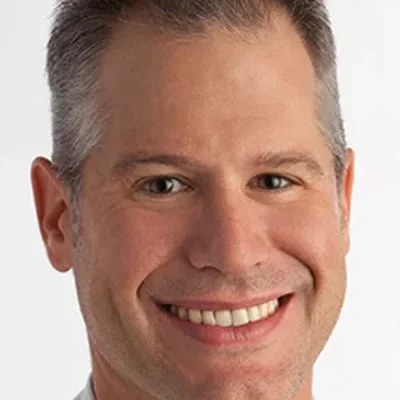
Whether an IVF cycle works often stops being a question about medications the moment the eggs leave the procedure room. From that point on it is culture media, incubator stability, air filtration, the hands doing the injection, and the grading call about which embryo to transfer — and at Pacific Fertility Center Los Angeles the person accountable for that is Gerard Celia, the laboratory director. He is listed on the clinic’s physician and staff pages with an MBA, a PhD, HCLD and CC credentials; he is not a medical doctor and does not prescribe or perform retrievals. If you are choosing a doctor to run your cycle, this is not that profile. If you want to know who owns the laboratory half of your cycle, it is.
His HCLD designation — high-complexity laboratory director — and his CC (clinical consultant) credential come from the American Association of Bioanalysts, the certifying body that qualifies scientists to direct high-complexity clinical testing laboratories under federal CLIA rules. His doctorate is in molecular physiology and biophysics from the University of Vermont College of Medicine, followed by postdoctoral work in that university’s obstetrics and gynecology department, with an undergraduate degree in animal science from the University of Connecticut. Later he added a business degree from William & Mary’s Mason School of Business, which he has described as directly relevant to running a laboratory as an operating unit rather than only as a science bench.
The rest of his record is laboratory science and laboratory governance. His research addresses embryo implantation and the physiological adaptations a mother’s body makes during pregnancy, and he has published in reproductive science journals. He has served as president of the Society for Reproductive Biology and as president of the Society for Reproductive Biologists and Technologists, sits on the board of directors of the American Society for Reproductive Medicine, and has taught at universities including Brown and in the Mid-Atlantic region. He has worked in reproductive science for more than twenty years.
Clinical Expertise
- Embryology laboratory direction: oversight of insemination and ICSI, embryo culture to blastocyst, grading, and the transfer decision support the physicians rely on
- High-complexity laboratory compliance: CLIA-relevant quality systems, documentation, and proficiency standards for a CAP-accredited facility
- Cryostorage and vitrification: freezing and storage protocols for eggs, sperm, and embryos, including the chain-of-custody and tank-monitoring practices patients should ask about
- Quality control and protocol validation: how culture conditions, air handling, and media lots are monitored and changed
- Fertilization failure and embryo arrest: laboratory-side review of cycles that fertilized poorly or stopped developing, which is where lab technique rather than medication is usually the variable
- Reproductive science research: implantation biology and maternal physiological adaptation, with peer-reviewed publications
- Laboratory operations and strategy: the business-management degree applied to staffing, capital planning, and process control in a clinical lab
Why Choose Gerard Celia
He is the reason the lab has a named owner. On the clinic’s records, laboratory direction sits with one credentialed individual rather than being distributed across embryologists, which is what patients asking “who is responsible if something goes wrong in the incubator” usually want to hear.
Society leadership in lab science, not clinical marketing. Presidencies of the Society for Reproductive Biology and the Society for Reproductive Biologists and Technologists are elected positions inside the scientific community that sets embryology standards.
A seat on ASRM’s board. The American Society for Reproductive Medicine’s board of directors is where practice guidance for US fertility clinics is written; a laboratory scientist on that board is unusual and useful.
Twenty-plus years of publishable work. Implantation biology and maternal adaptation research, teaching appointments, and awards from physiology and perinatology societies appear in his biography as a research record rather than a patient-recruitment claim.
Read the credential letters correctly. HCLD and CC are laboratory-director credentials. They are rigorous and they are not a medical license, and patients are better off knowing which one they are looking at.
Professional Affiliations
American Association of Bioanalysts certification as a high-complexity laboratory director (HCLD) and clinical consultant (CC), with technical director responsibilities. Board of Directors, American Society for Reproductive Medicine. Past president, Society for Reproductive Biology. Past president, Society for Reproductive Biologists and Technologists. Society for Gynecologic Investigation, perinatal and physiology society awards, and peer-reviewed publications in reproductive science. Faculty appointments at universities including Brown and in the Mid-Atlantic region.
Suitable For
- Patients auditing laboratory quality: the person to ask about culture systems, incubator monitoring, air filtration, and blastocyst culture rates
- Cycles with fertilization failure or arrested embryo development: where the explanation is usually in the laboratory record
- Egg, embryo, or sperm freezing: cryostorage protocols, storage fees, and chain-of-custody questions
- Anyone comparing clinics on embryology standards rather than marketing numbers
- Note for patients booking care: he does not conduct consultations, write prescriptions, or manage cycles. Those go to the practice’s reproductive endocrinologists.