'%20d='m0%200%2016%2011h61%2061%2061%2061%2060L47%2037h61%2061%2060%2061L16%2063h61%2061%2061%2061%2060L47%2089h61%2061%2060%2061L16%20115h61%2061%2061%2061%2060L47%20141h61%2061%2060%2061L16%20166h61%2061%2061%2061%2060L47%20192h61%2061%2060%2061L16%20218h61%2061%2061%2061%2060z'/%3e%3c/svg%3e)

About Pacific Fertility Center Los Angeles
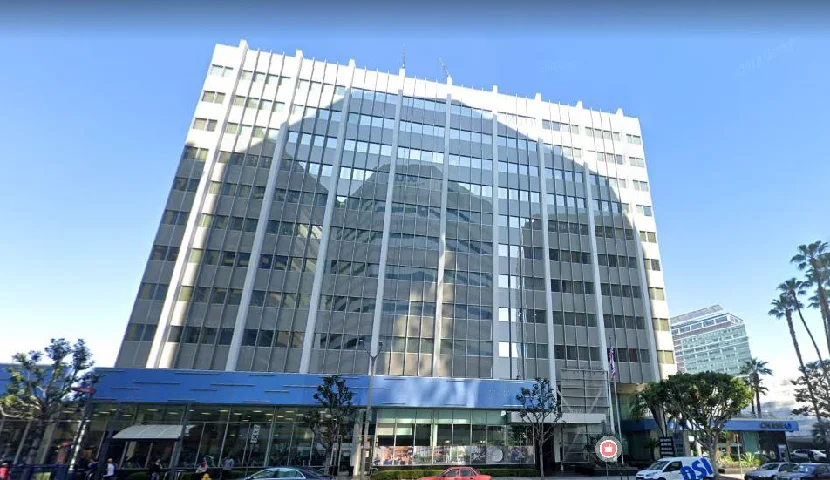
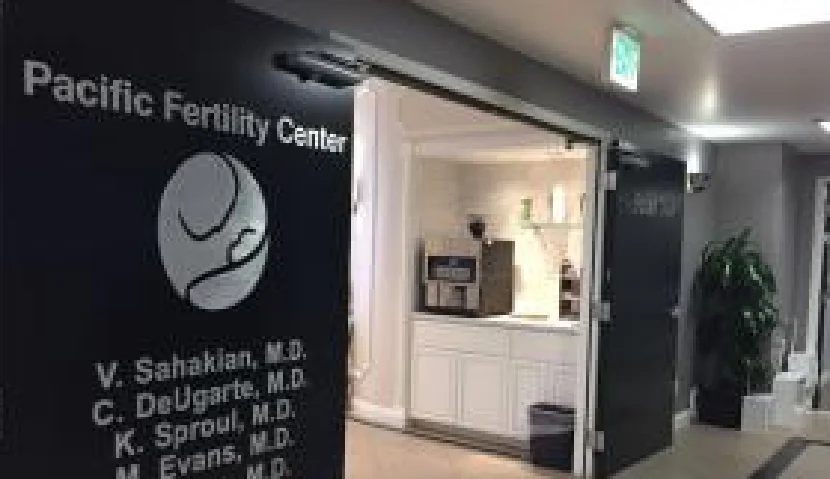
Pacific Fertility Center Los Angeles has been doing assisted reproduction in this city since 1991, which puts it among the older private fertility practices in Southern California. It runs two offices — the main center at 10880 Wilshire Boulevard in Westwood, and a second site at 1818 Verdugo Boulevard in Glendale — with one medical team and one laboratory. Five reproductive endocrinologists are listed on the practice’s physician pages, along with a laboratory director who holds high-complexity clinical laboratory credentials rather than a medical degree.
Cycles are reported to SART as a single registered unit, ClinicPKID 2001091, under the name Pacific Fertility Centers of Los Angeles. There is no separate outcome report for Westwood versus Glendale, so any published rate here covers both offices combined. The 2024 preliminary report lists 1,865 cycles, roughly double the 932-cycle national per-clinic average used on this page — that benchmark is SART’s 2023 reporting year, not the 2024 preliminary year, so read the ratio as an order-of-magnitude comparison rather than a same-year one.
Volume claims on the clinic’s own website are cumulative and self-reported, not audited: more than 13,500 babies delivered, more than 20,000 IVF cycles performed since opening, and patients from what the clinic describes as 75 countries. Read those as company figures. They also are not comparable with the SART numbers below, which cover one calendar year of reporting.
What the outcome record here can actually carry. The SART capture for this registration is thin, and this page will not pretend otherwise. Our file records the cycle total and one outcome line: live births per intended egg retrieval, counting all embryo transfers from that retrieval, for patients under 35 — 41.0% overall, with 31.3% on fresh cycles and 41.8% on frozen transfers in the same band. The registry page was read with its detail sections collapsed and never re-opened, so the 35-37, 38-40 and over-40 bands were not captured from the report. Where this site’s data record, and the comparison chart on this page, show numbers for those older ages, they are not figures we can source-check; the under-35 line is the only outcome number here that traces to the registry.
No national comparison is drawn on this page. Our research file for PFCLA holds no national SART row for this clinic’s reporting year, and the national figures stored against this record are not a single row from one year — the under-35 value comes from the 2024 preliminary national summary while the older-band values are SART 2023 national figures. A 2024 clinic number cannot be set bar-for-bar against a 2023 national one, and a preliminary reporting year is undercounted by design, since late-delivered cycles land in the final data. Ask for the age band, the denominator and the reporting year before you compare anything.
The clinic’s own website puts a different number forward — a birth rate per embryo transfer “40%+ higher than the national average” — without naming a year, an age bracket, or a denominator, and per-transfer rates are a different measure from the per-retrieval figure above. That claim cannot be reconciled with the SART record shown here, so treat it as the clinic’s own marketing comparison rather than as a verified outcome.
Accreditations & Awards
- SART member clinic, ClinicPKID 2001091, with 2024 preliminary cycle data publicly reportable through the SART/CDC registry
- CAP-accredited embryology laboratory (College of American Pathologists), listed in the clinic’s profile
- California-licensed clinic operation — SART membership and CAP laboratory accreditation above are the independently checkable items; ask the clinic for its state license number if you want the third one verified
- Great Place to Work certification — an employer culture award, not a clinical accreditation
- Thirty-plus years of continuous practice at the same Los Angeles market since 1991
- Physician board certification: the practice’s published biographies describe their physicians as board-certified in both Obstetrics and Gynecology and Reproductive Endocrinology and Infertility
Why Choose Pacific Fertility Center Los Angeles
- Two Los Angeles locations, one lab. Monitoring and transfers can happen in Westwood or Glendale, while embryology sits in one CAP-accredited laboratory rather than being split between sites.
- Third-party reproduction is built in, not referred out. Egg donation, gestational carrier work, and donor sperm are listed service lines. The clinic says it runs its own donor and gestational-carrier matching arm, Hatch, and that donor applicants are screened selectively — figures on acceptance rates come from the clinic, not an independent registry.
- LGBTQ+ family building is a named program. “LGBTQ+ IVF” appears on the clinic’s own services list, and two of the practice’s physicians describe LGBTQ+ patients as a focus of their practices.
- Consistency of leadership. Dr. Vicken Sahakian is the medical director named both on the SART report and on the clinic’s own pages. Our sources give no start date for his role here, so this page makes no tenure claim.
- International patient logistics. The practice lists multilingual patient support (English, Chinese, Spanish, Arabic, French), telehealth consults, and coordination of cross-border medication and specimen shipping — relevant if you are treatment-traveling to Los Angeles. The “75 countries” figure is the clinic’s own.
- Surgical option alongside IVF. Tubal reversal appears on the clinic’s service list, so patients considering sterilization reversal are not automatically pushed toward IVF.
IVF & Fertility Services
- IVF: stimulation, monitoring, retrieval, fertilization, blastocyst culture, and transfer
- ICSI: intracytoplasmic sperm injection for male factor infertility or prior fertilization problems
- Donor egg programs: anonymous and known donation, matched through the clinic’s own donor program
- Gestational carrier (surrogacy): intended-parent programs with carrier screening, coordinated in California’s legal framework
- Egg and embryo freezing: vitrification for elective and medical fertility preservation; the clinic states that the first year of storage is included with a freezing cycle — confirm this in writing
- PGT-A and PGT-M: embryo chromosome screening and single-gene testing, with gender selection by PGT listed as an option
- IUI and ovulation induction: intrauterine insemination, donor insemination, and medicated cycle stimulation
- LGBTQ+ family building: reciprocal IVF, donor sperm or egg paths, and gestational carrier arrangements
- Fertility testing: ovarian reserve and hormone workup, semen analysis, uterine cavity assessment
- Tubal reversal: surgical restoration of fertility
- Condition-specific care: PCOS management, endometriosis-related infertility, recurrent pregnancy loss, and diminished ovarian reserve
- International patient coordination: remote initial consults, medication and specimen logistics, treatment-calendar planning for patients traveling to Los Angeles
Fees & Packages
There is no published price list. PFCLA does not post cycle fees, medication estimates, or package pricing, so the numbers have to be collected directly. Ask for three specific quotes before you commit:
- The all-in cycle price versus the itemized one. Which of these are inside the quoted fee — monitoring visits and ultrasounds, anesthesia for the retrieval, embryology services including ICSI, blastocyst culture, assisted hatching, and the transfer itself — and which bill separately?
- Genetic testing and freezing costs, per unit. For PGT-A, whether biopsy, the testing fee per embryo, and shipping to the genetics lab are quoted together or separately; for egg or embryo freezing, what the storage fee becomes after the first year the clinic says is included.
- Donor and gestational carrier totals. Screening and compensation for a donor or carrier, legal fees for the parentage order, agency coordination charges, and how many match attempts are covered if the first cycle does not produce a transfer.
Also ask what your insurer will pay for. What a plan covers for IVF itself, for medications, and for donor egg or gestational carrier programs varies widely, and many plans carve one of those three out; request a written benefits check from the clinic’s financial coordinator before you start medications. Financing options and installment plans are not published either — ask whether they exist.
Patient Journey
- Consultation: an in-person or telehealth first visit to review history and decide on a workup — the telehealth option matters for out-of-state and international patients
- Evaluation: hormone and ovarian reserve testing, pelvic ultrasound, semen analysis, and uterine cavity assessment; the physician also assesses whether donor eggs or a gestational carrier is likely to be needed
- Plan: a written stimulation protocol with monitoring frequency, expected calendar, and cost estimate; donor or carrier matching runs through the clinic’s own program in parallel
- Stimulation and monitoring: injectable stimulation with blood work and ultrasound tracking, done at whichever of the two Los Angeles sites you are enrolled in
- Retrieval and fertilization: transvaginal retrieval under sedation, then ICSI or conventional insemination in the clinic’s own laboratory
- Culture, testing, and transfer: embryos grown to the blastocyst stage, biopsied for PGT where applicable, then frozen or transferred; a blood pregnancy test follows the transfer, and monitoring continues into early pregnancy
Our PFCLA sources do not document a cycle timeline. Days of stimulation, how long the retrieval takes, which culture day embryos are transferred on, and how long you wait before the pregnancy test are not stated in the material we hold for this clinic, so get that calendar from the coordinator in writing rather than from a generic IVF article.
Local Legal Framework
California is the most permissive large state for assisted reproduction, which is why it anchors so many US family-building programs:
- Surrogacy: gestational carrier agreements are enforceable under the Family Code (§7960-7962, within the parentage framework of Section 7600 et seq.), and California courts routinely issue pre-birth orders naming the intended parents. Same-sex couples build families here through the same statutes that govern other intended parents.
- Egg, sperm, and embryo donation: California sets no statutory ban on donated gametes or embryos, and the practice runs donation on written informed consent. One caution about the statute listed against this topic on this page: Health and Safety Code §125355 limits payments for oocytes procured for research; it is not the rule that governs clinical egg donation, and no California statute governing clinical donation appears in our sources. Donors are not intended to carry parental rights — that is what the donation agreement and the parentage order handle, so have your own counsel read the consent before any cycle.
- PGT: no state-level restriction on PGT-A or PGT-M beyond ordinary medical consent. What a given clinic will perform, including non-medical sex selection, is a matter of clinic policy and laboratory practice rather than California statute.
- Embryo status: California does not treat embryos as legal persons. Disposition — storage duration, donation, research use, discard — follows the agreements patients sign, so read those forms before, not after, a cycle changes your situation.
- What to confirm with the clinic: how carrier contracts and parentage orders are handled for out-of-state and international intended parents, and what happens to stored embryos if you leave California.
Location
- Westwood (main center): 10880 Wilshire Blvd, Ste 300, Los Angeles, CA 90024 — Phone: +1 310-919-2669
- Glendale center: 1818 Verdugo Blvd, Ste 402, Glendale, CA 91208 — Phone: +1 310-919-2669