'%20d='m0%200%2016%2011h61%2061%2061%2061%2060L47%2037h61%2061%2060%2061L16%2063h61%2061%2061%2061%2060L47%2089h61%2061%2060%2061L16%20115h61%2061%2061%2061%2060L47%20141h61%2061%2060%2061L16%20166h61%2061%2061%2061%2060L47%20192h61%2061%2060%2061L16%20218h61%2061%2061%2061%2060z'/%3e%3c/svg%3e)
About
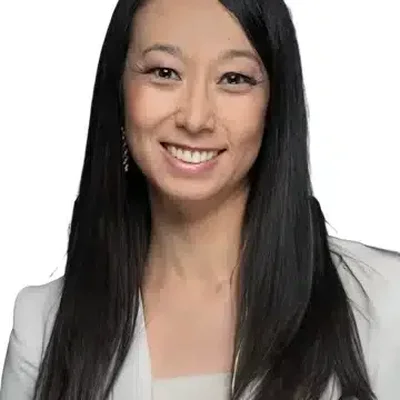
October 2026 is the date to plan around: that is when Jacqueline Maher starts seeing patients at HRC’s Pasadena office on South Lake Avenue. She arrives from a pair of posts no one else on this roster holds — staff clinician and associate research physician at the Eunice Kennedy Shriver National Institute of Child Health and Human Development, and attending physician at Children’s National Hospital. The first is a federal research job, where clinical work is conducted as a study: protocol-defined, consented, audited. The second means her patients included children and teenagers, the group most IVF practices never see and the one where fertility-threatening treatment often arrives before family-building has begun.
She took her biology degree at UC San Diego, minor in drama and dance, then medical school at Boston University, obstetrics and gynecology residency at Mount Sinai Beth Israel in New York, and a reproductive endocrinology and infertility fellowship at Johns Hopkins. She holds ABOG certification in both the general specialty and the subspecialty and is a Fellow of the American College of Obstetricians and Gynecologists. She has published peer-reviewed papers and book chapters and presented nationally in the areas she practices in — cancer-related fertility loss, diminished ovarian reserve, premature ovarian insufficiency.
The through-line is time pressure. Fertility preservation is the one corner of reproductive medicine where the deadline is set by someone else: a chemotherapy start date, a pelvic radiation plan, a surgery already booked. Her most recent named role was Director of Female Fertility Preservation, and her stated research interests sit in the same area — including AYA patients, adolescents and young adults, where pubertal stage, gonadotoxic regimen and the consent conversation all have to be handled at once. Note the calendar when planning: she begins practice in Pasadena in October 2026, so appointments open on a new schedule rather than a backlog.
Clinical Expertise
- Oncofertility: egg, embryo and — where the timing and surgical pathway allow — ovarian tissue banking before chemotherapy, radiation or pelvic surgery, sequenced around oncology dates
- Female fertility preservation: stimulated and natural-cycle monitoring for elective egg freezing, with realistic yield expectations by age and reserve
- Diminished ovarian reserve: reserve testing, protocol reasoning and counseling about what a given response predicts, rather than a single AMH number treated as a verdict
- Premature ovarian insufficiency: evaluation of causes, hormone management, and family-building options when own-egg cycles are unlikely to succeed
- Adolescent and young adult reproductive health: pubertal assessment, gonadotoxicity counseling and preservation consent involving minors and their parents
- Müllerian anomalies: congenital uterine differences assessed for their effect on pregnancy carrying, not only on conception
Why Choose Dr. Maher
Fertility preservation was her job title. Director of Female Fertility Preservation is a named leadership role in the exact service most patients need on short notice — banking eggs or embryos before medical treatment — and it comes with having written the pathway, not just followed one.
Federal clinical research training. Time as an NICHD staff clinician and associate research physician means cycles designed as protocols with endpoints and safety monitoring. Patients who want to know why a dose was chosen, and what the evidence for it actually is, tend to get a straight answer from that background.
She treats adolescents and young adults. An attending at Children’s National Hospital, she works with the age group where fertility-threatening illness arrives before family-building has begun — a consultation that most clinic rosters have no one designated for.
Johns Hopkins fellowship, dual boards. Hopkins REI training plus ABOG certification in obstetrics and gynecology and in reproductive endocrinology and infertility, with FACOG fellowship.
A new schedule. Joining in October 2026 means first-available appointments, which in a preservation case where the oncology clock is running is a clinical advantage, not an inconvenience.
Professional Affiliations
Board-certified by the American Board of Obstetrics and Gynecology in Obstetrics and Gynecology and in Reproductive Endocrinology and Infertility; Fellow of the American College of Obstetricians and Gynecologists (FACOG). Formerly a staff clinician and associate research physician at the Eunice Kennedy Shriver National Institute of Child Health and Human Development, part of the National Institutes of Health, and attending physician at Children’s National Hospital. Author of peer-reviewed publications, book chapters and national presentations on oncofertility, diminished ovarian reserve and reproductive care for adolescents and young adults. Practices in English; HRC’s Pasadena patient staff also work in Spanish and Chinese.
Suitable For
Patients with a cancer treatment date already on the calendar. Oncofertility is time-critical, and a physician whose recent role was directing a preservation service is the right first call.
Poor responders and anyone told their AMH is low. Reserve-focused assessment and protocol reasoning for diminished ovarian reserve and premature ovarian insufficiency.
Families of an adolescent facing gonadotoxic therapy. Preservation counseling for minors, where pubertal stage, technique choice and consent all need explaining in the same visit.
Elective egg freezing with a career or timeline decision pending. Straightforward yield and survival expectations before committing money to a cycle.
Patients who read their own labs. A former institute clinician is a better match for a consult where you want the evidence base stated, including where it is thin.