'%20d='m0%200%2016%2011h61%2061%2061%2061%2060L47%2037h61%2061%2060%2061L16%2063h61%2061%2061%2061%2060L47%2089h61%2061%2060%2061L16%20115h61%2061%2061%2061%2060L47%20141h61%2061%2060%2061L16%20166h61%2061%2061%2061%2060L47%20192h61%2061%2060%2061L16%20218h61%2061%2061%2061%2060z'/%3e%3c/svg%3e)
About
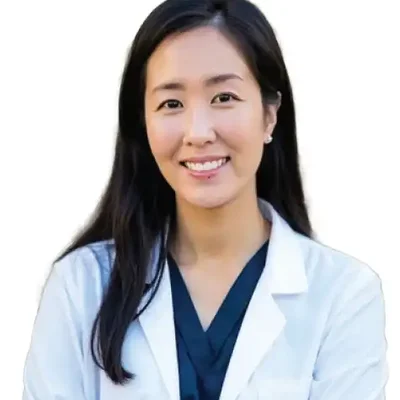
Jennifer Chae-Kim arrived at the Plano office in November 2025, the most recent physician hire announced by this practice, and she brings an uncommon training path in North Texas: a reproductive endocrinology and infertility fellowship completed at the National Institutes of Health and Walter Reed National Military Medical Center, where the patient population and the research infrastructure are both federal. She is board-certified in obstetrics and gynecology and subspecialty-trained in REI; board certification in the subspecialty is not stated in the sources reviewed here, so verify it with the clinic or the ABMS registry if that credential matters to your choice.
She also came to medicine sideways. She studied philosophy at New York University and intended to go into law, then switched to women’s health, taking her MD at the Medical College of Georgia and residency at Baylor Scott & White Health in Temple. A philosophy background is visible in the way she practices: her published work is concentrated on IVF outcomes, fertility preservation, PCOS and health disparities in reproduction — questions about who gets treated, who is left out, and what informed consent actually means when the decision is about a future child. That research has appeared in Fertility and Sterility and presented at national meetings.
The last fact on her profile is the one patients mention most. Chae-Kim has been through infertility and IVF treatment herself. She is on the short list of physicians who can describe a negative pregnancy test after a transfer from both sides of the table, and she chose reproductive medicine after that experience rather than before it.
Clinical Expertise
- IVF cycle management: stimulation, monitoring, retrieval and transfer, with protocol choices explained in terms of the evidence behind them
- Fertility preservation: egg and embryo freezing for medical indications and for elective delay, and counseling on what freezing does and does not buy
- PCOS and ovulatory dysfunction: from metabolic and lifestyle management through oral agents to IVF, with hyperstimulation risk managed
- PGT-A: patient selection and interpretation, including when screening removes options rather than adding them
- Health disparities in reproductive care: a named research focus, and a practical one in a Dallas clinic where access, insurance coverage and cost shape treatment
- LGBTQ+ family building: donor sperm IUI and IVF, and paths for female couples and single patients
Why Choose Dr. Jennifer Chae-Kim
A fellowship at NIH and Walter Reed, pairing a clinical reproductive endocrinology program with federal research infrastructure — a training route rarely found outside academic departments.
She has published on the questions her patients ask: IVF outcomes, preservation, PCOS and who gets left out of fertility care, in Fertility and Sterility and at national meetings.
An informed-consent physician. A philosophy degree from NYU, a career deliberately switched from law to women’s health, and a research interest in disparities — she is the doctor to see if you want the reasoning behind a protocol, not only the prescription.
She has been the patient. Infertility and IVF in her own history, which she discusses openly on her profile.
Professional Affiliations
Board-certified in obstetrics and gynecology, with subspecialty fellowship training in reproductive endocrinology and infertility at the NIH and Walter Reed National Military Medical Center; residency at Baylor Scott & White Health, MD from the Medical College of Georgia, BA in philosophy from New York University. Author and co-author of peer-reviewed work on IVF outcomes, fertility preservation, PCOS and reproductive health disparities, published in Fertility and Sterility and presented at national meetings. Reproductive endocrinology and infertility board certification is not stated in the sources reviewed here.
Suitable For
- Patients who want a physician who has personally completed IVF, and will explain each step rather than rush it
- Egg and embryo freezing, medical or elective, including the timeline and success-rate conversation
- PCOS patients whose prior treatment focused on forcing ovulation instead of managing the condition
- LGBTQ+ patients and single parents by choice, using donor sperm or donor eggs