'%20d='m0%200%2016%2011h61%2061%2061%2061%2060L47%2037h61%2061%2060%2061L16%2063h61%2061%2061%2061%2060L47%2089h61%2061%2060%2061L16%20115h61%2061%2061%2061%2060L47%20141h61%2061%2060%2061L16%20166h61%2061%2061%2061%2060L47%20192h61%2061%2060%2061L16%20218h61%2061%2061%2061%2060z'/%3e%3c/svg%3e)
About Dallas-Fort Worth Fertility Associates
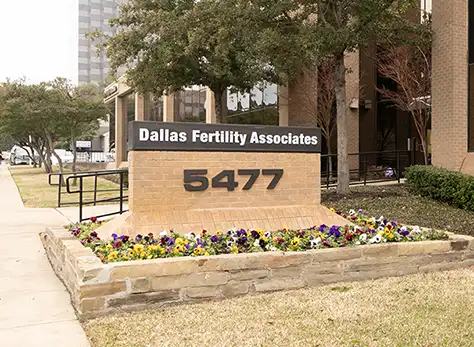
Dallas-Fort Worth Fertility Associates (the practice calls itself DFW Fertility) has been treating infertility in North Texas since 1999. It runs five offices: Glen Lakes in south Dallas, which is the main site and the address on this page; Baylor Medical Pavilion and Medical City Dallas in north Dallas; Southlake, west of the city; and Plano to the north. Each office has its own physicians and phone number, so a Southlake patient is not automatically scheduled with the Glen Lakes team. The practice grew out of the ARTS program at Presbyterian Hospital, which Child magazine named one of the ten best fertility centers in the United States in 2005.
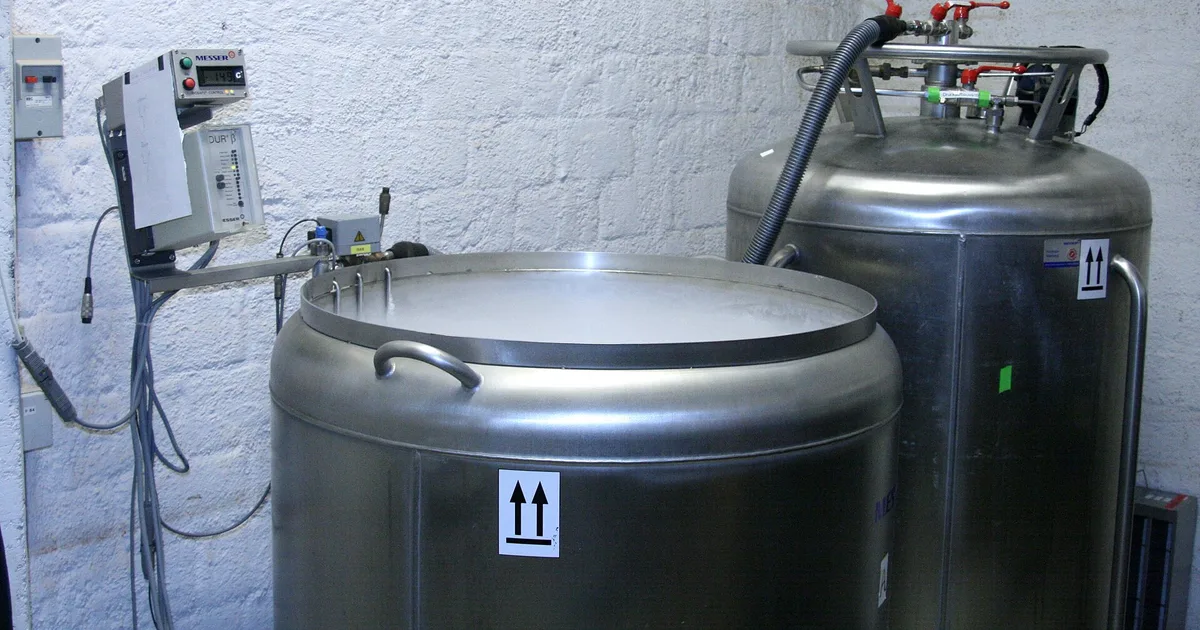
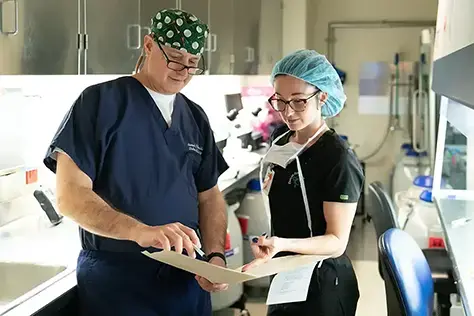
Two IVF laboratories sit inside the practice rather than at an outside company. The Glen Lakes lab opened in July 2010; a second laboratory was added in 2021 at Texas Health Presbyterian Hospital in Plano. Both are run under laboratory director Oscar Perez, and the practice reports time-lapse embryo culture in EmbryoScope incubators. That arrangement matters in a cycle: your eggs, your sperm and your embryos are handled, watched and frozen in the same building where you had your retrieval, and nobody outside the practice takes custody of them between those steps.
What the 2023 numbers say. SART publishes results for one registration covering this practice (clinic ID 2437). The agency does not break those results out by office, so every figure below is program-wide across the five North Texas locations, and no office-level comparison is possible from public data. For patients under 35, SART’s 2023 final report records a 55.1% cumulative live birth rate across all transfers from a retrieval, based on 381 cycles; 41.2% of patients under 35 had a live birth from the first transfer alone. The decline with age is steep and normal: 38.6% cumulative at 35-37 (249 cycles), 21.2% at 38-40 (260), 11.3% at 41-42 (124) and 4.3% over 42 (46). Embryos from the same retrieval did better on later transfer — 42.5% under 35, and 48.8% at 41-42 — which is what you would expect once only survivable embryos make it through freezing.
Two cautions on comparing these figures. First, the national averages on this page (53.2% under 35 in the SART 2023 national summary) are per-transfer rates, while the 55.1% here is cumulative across all transfers from a retrieval. Different denominators, so the page does not claim the practice beats the country. Second, the volume figure — 2,944 cycles in the 2023 report against a national per-clinic average of about 932 — includes egg and embryo freezing cycles, not only treatment cycles that ended in an attempt at pregnancy. It is still a large program; it is not 2,944 IVF transfers.
On the practical side, the practice reports a 95.9% elective single embryo transfer rate for patients under 35 and a 91.0% cryopreservation rate in the same age band, meaning roughly nine in ten under-35 cycles produced embryos banked for later. The practice’s own patient materials state that 85% of people who see a fertility specialist eventually achieve a pregnancy. Treat that as a statement about infertility treatment overall, not as this clinic’s IVF success rate. And the Google rating displayed here (4.0 from 111 ratings) reflects front-office experience, not clinical outcomes; the SART report is the number worth reading.
Accreditations & Awards
- SART member practice, reporting every cycle to SART and the CDC under clinic ID 2437 — the reason the age-band results above can be checked independently
- CLIA-certified laboratory, the federal standard governing how diagnostic and embryology work is performed
- Newsweek/Statistica 2023 Top 100 Best Fertility Clinics, ranked #31 nationally, the practice’s own reported placement
- Two on-site IVF laboratories, opened 2010 (Glen Lakes) and 2021 (Texas Health Presbyterian Hospital Plano), both under laboratory director Oscar Perez
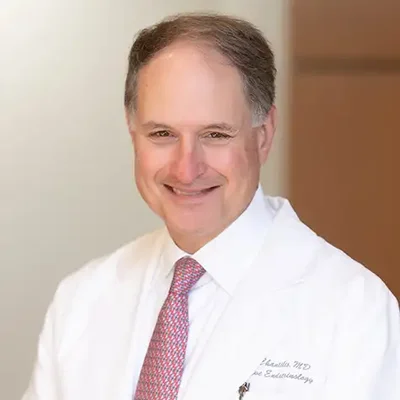
- A large donor egg program, described by the practice as one of the biggest in Texas; medical director Samuel J. Chantilis, MD, reports more than 500 donor egg cases personally
- Physicians named to magazine peer-survey lists — D Magazine Best Doctors in Dallas, Texas Monthly Super Doctors, Fort Worth Magazine Top Docs. These are recognition lists, not clinical accreditation, and the SART and CLIA records above carry more weight
- Predecessor program recognized by Child magazine as a national top-10 fertility center in 2005 (Presbyterian Hospital ARTS)
Why Choose Dallas-Fort Worth Fertility Associates
- Monitoring close to home: five offices with named physicians at each. Stimulation means repeated ultrasound and bloodwork visits, and a Plano or Southlake patient does not have to drive to south Dallas for them
- The lab stays with the cycle: eggs, sperm and embryos are cultured, vitrified and thawed in the practice’s own laboratories rather than an outside facility, with time-lapse EmbryoScope imaging recording development hour by hour instead of pulling embryos out of incubation to look at them
- Single embryo transfer as the default: 95.9% of under-35 transfers in the 2023 SART report were elective single embryo transfers. Twins are a complication in IVF, not a bonus, especially at 38 and over
- Donor eggs without leaving North Texas: a program the practice calls one of Texas’ largest, with both fresh donor arrangements and frozen donor eggs through national banks such as MyEggBank
- Surgery and male factor inside the same group: hysteroscopic and laparoscopic work, tubal reversal, endometriosis excision, plus semen analysis, testicular sperm retrieval and male hormone evaluation — rather than referral out to a urologist
- ABOG certification across the physician group: fellowship-trained reproductive endocrinologists, several of them certified by the American Board of Obstetrics and Gynecology in both obstetrics-gynecology and reproductive endocrinology and infertility
- Third-party reproduction handled end to end: donor eggs, donor sperm, gestational carriers and embryo donation, with the legal paperwork coordinated alongside the medical schedule
IVF & Fertility Services
- In Vitro Fertilization (IVF): individualized ovarian stimulation, bloodwork and ultrasound monitoring, transvaginal egg retrieval, embryo culture to blastocyst, and fresh or frozen transfer
- ICSI (Intracytoplasmic Sperm Injection): single-sperm injection for low count, poor motility or morphology, prior fertilization failure, and testicular or epididymal sperm
- PGT-A, PGT-M and PGT-SR: chromosome screening of blastocysts, testing for known single-gene conditions, and testing for structural chromosome rearrangements. The practice does not publish whether embryo biopsy and genetic sequencing are done in its own laboratory or sent out, so ask which genetics lab runs your analysis and who holds the results
- Egg, embryo and sperm freezing: vitrification for medical indications such as chemotherapy and for planned later childbearing
- Donor egg cycles: screened donors through the practice’s own program, plus frozen donor eggs from national banks
- Gestational carrier and embryo donation programs: third-party family building with legal coordination
- IUI and ovulation induction: letrozole or clomiphene, or injectable gonadotropins, with monitoring; partner or donor sperm
- LGBTQ+ family building: donor insemination, IVF with a donor egg, and reciprocal IVF for female partners; gestational carrier paths for male couples
- Male infertility treatment: semen analysis and morphology, hormone evaluation and replacement therapy, lifestyle and metabolic counseling, testicular sperm retrieval (TESA/TESE), and donor sperm as an alternative
- Surgical fertility treatment: hysteroscopic polypectomy, fibroid resection and lysis of intrauterine adhesions; laparoscopic endometriosis excision, ovarian cyst removal, tubal surgery and tubal reversal
- Fertility assessment: AMH and FSH, antral follicle counting by transvaginal ultrasound, hysterosalpingography, semen analysis and metabolic workup for PCOS
Fees & Packages
There is no published price list. DFW Fertility does not post what an IVF cycle, medications, PGT or a donor egg cycle costs, so no cycle price is quoted on this page. Ask for a written, itemized estimate for your own protocol before any medication is dispensed; the difference between quoted and actual cost is usually medication, lab and frozen-transfer add-ons.
What is documented:
- Self-pay consultation: the practice lists an initial consultation at roughly $250-$350 for patients not using insurance
- Insurance: the practice states that some plans cover part of fertility diagnosis and treatment. Get benefits verified in writing, procedure by procedure, before a cycle starts
- Financing: payment plans and loans are arranged through ARC Fertility, the fertility-specific lender the practice works with
- Donor and carrier programs: donor compensation, agency involvement and carrier legal fees sit on top of the medical bill, and none of those figures are published either — ask for them itemized before you commit to a matched cycle
Patient Journey
- Request a consultation and pick an office and, if you have a preference, a physician. Records, prior labs and any operative notes should reach the clinic before the visit
- Evaluation: for the female partner, AMH, FSH and other hormone panels, antral follicle count, uterine cavity assessment and tubal testing; for the male partner, semen analysis
- Plan review and cost check: the physician sets the protocol; insurance benefits are verified and ARC Fertility financing arranged if you need it
- Treatment first, where treatment fits: ovulation induction with timed intercourse or IUI comes before IVF for many patients, since not every diagnosis needs a laboratory cycle
- Stimulation and monitoring: injectable medications with bloodwork and ultrasound at intervals set by the protocol, at your local office; trigger is scheduled once follicles are mature
- Retrieval and fertilization: transvaginal egg retrieval, then insemination or ICSI in the on-site lab, with blastocyst culture and PGT where elected
- Transfer and pregnancy test: fresh transfer or freezing for a later programmed cycle, followed by a blood test about twelve days after transfer and continued monitoring once pregnancy is confirmed
Local Legal Framework
Donor gametes. Egg and sperm donation are legal in Texas and performed at this practice, and donation runs on a written agreement that spells out each party’s rights and obligations. Ask, before you sign, how parentage for a donor-conceived child will be documented in Texas — that is family-law work, not clinic work, and it should be settled while you are still choosing a program.
Gestational carriers. Texas law recognizes gestational carrier agreements when the statutory conditions are met, and the practice runs gestational cycles. The carrier needs her own independent legal representation, the agreement has to be in place before treatment, and compensated arrangements are workable in practice but require reproductive-law counsel rather than a template from the internet. Neither this practice’s materials nor the state’s published guidance sets out the paperwork step by step, so build that list with a Texas family-law attorney before you schedule a transfer.
Genetic testing. PGT-A and PGT-M face no Texas-specific restriction beyond informed consent and CLIA laboratory standards.
Embryos. Texas has no statute defining the legal status of an embryo. Storage, transfer, donation and disposition are controlled by the consent forms you sign when the embryos are created. After the 2022 overturning of Roe v. Wade, questions about transporting embryos and stored gametes across state lines became practical rather than theoretical — ask the clinic, in writing, what its policies are on shipping embryos or eggs out of Texas before you commit to a cycle.
Coverage. Nothing in the practice’s published materials describes a general Texas insurance guarantee for IVF; the practice states only that some plans cover part of diagnosis and treatment. Coverage therefore gets settled plan by plan, through benefits verification before the cycle starts.
Location
- Address: 5477 Glen Lakes Dr, Suite 200, Dallas, TX 75231
- Phone: (214) 363-5965