'%3e%3cpath%20fill='red'%20d='M0%200h720v480H0z'/%3e%3cpath%20fill='%23000095'%20d='M0%200h360v240H0z'/%3e%3cg%20fill='%23fff'%3e%3cpath%20d='m154%20126.9-2.5%209.6%209.4%202.6-1.8-7.1zm46.9%205.1-1.8%207.1%209.4-2.6-2.5-9.6zm-41.8-24-5.1%205.1%201.9%206.9z'/%3e%3cpath%20d='m155.9%20120-1.9%206.9%205.1%205.1z'/%3e%3cpath%20d='m154%20113.1-6.9%206.9%206.9%206.9%201.9-6.9zm14%2027.8%205.1%205.1%206.9-1.9zm18.9%205.1%209.6%202.5%202.6-9.4-7.1%201.8z'/%3e%3cpath%20d='m192%20140.9%207.1-1.8%201.8-7.1zm-31.1-1.8%202.6%209.4%209.6-2.5-5.1-5.1zm19.1%205%206.9%201.9%205.1-5.1z'/%3e%3cpath%20d='m173.1%20146%206.9%206.9%206.9-6.9-6.9-1.9zm-12.2-45.1-9.4%202.6%202.5%209.6%205.1-5.1zm-1.8%2031.1%201.8%207.1%207.1%201.8zm45-12%201.9-6.9-5.1-5.1z'/%3e%3cpath%20d='m168%2099.1-7.1%201.8-1.8%207.1zm32.9%208.9-1.8-7.1-7.1-1.8zm5.1%2018.9%206.9-6.9-6.9-6.9-1.9%206.9z'/%3e%3cpath%20d='m200.9%20108-8.9-8.9-12-3.2-12%203.2-8.9%208.9-3.2%2012%203.2%2012%208.9%208.9%2012%203.2%2012-3.2%208.9-8.9%203.2-12z'/%3e%3cpath%20d='m200.9%20132%205.1-5.1-1.9-6.9zm5.1-18.9%202.5-9.6-9.4-2.6%201.8%207.1zm-6.9-12.2-2.6-9.4-9.6%202.5%205.1%205.1zm-26-6.9-9.6-2.5-2.6%209.4%207.1-1.8zm6.9%201.9-6.9-1.9-5.1%205.1z'/%3e%3cpath%20d='m186.9%2094-6.9-6.9-6.9%206.9%206.9%201.9z'/%3e%3cpath%20d='m192%2099.1-5.1-5.1-6.9%201.9zM173.1%20146l-9.6%202.5%204.5%2016.6%2012-12.2zm-5.1%2019.1%2012%2044.9%2012-44.9-12-12.2zm-7.1-26-9.4-2.6-4.4%2016.4%2016.4-4.4z'/%3e%3cpath%20d='m147.1%20152.9-12%2045.1%2032.9-32.9-4.5-16.6zm-12-20.9L102%20165.1l45.1-12.2%204.4-16.4z'/%3e%3cpath%20d='m154%20126.9-6.9-6.9-12%2012%2016.4%204.5zm0-13.8-2.5-9.6-16.4%204.5%2012%2012z'/%3e%3cpath%20d='M135.1%20108%2090%20120l45.1%2012%2012-12zm90%2024-16.6%204.5%204.4%2016.4%2045.1%2012.2z'/%3e%3cpath%20d='m199.1%20139.1-2.6%209.4%2016.4%204.4-4.4-16.4zm-12.2%206.9-6.9%206.9%2012%2012.2%204.5-16.6zm19.1-19.1%202.5%209.6%2016.6-4.5-12.2-12z'/%3e%3cpath%20d='m192%20165.1%2033.1%2032.9-12.2-45.1-16.4-4.4zm7.1-64.2%209.4%202.6%204.4-16.4-16.4%204.4z'/%3e%3cpath%20d='M225.1%20108%20258%2075.1l-45.1%2012-4.4%2016.4zm-12.2-20.9L225.1%2042%20192%2075.1l4.5%2016.4zm12.2%2044.9%2044.9-12-44.9-12-12.2%2012z'/%3e%3cpath%20d='m206%20113.1%206.9%206.9%2012.2-12-16.6-4.5zm-38-38L135.1%2042l12%2045.1%2016.4%204.4z'/%3e%3cpath%20d='m160.9%20100.9%202.6-9.4-16.4-4.4%204.4%2016.4z'/%3e%3cpath%20d='m147.1%2087.1-45.1-12%2033.1%2032.9%2016.4-4.5zm39.8%206.9%209.6-2.5-4.5-16.4-12%2012z'/%3e%3cpath%20d='M192%2075.1%20180%2030l-12%2045.1%2012%2012z'/%3e%3cpath%20d='m173.1%2094%206.9-6.9-12-12-4.5%2016.4z'/%3e%3c/g%3e%3ccircle%20cx='180'%20cy='120'%20r='51.1'%20fill='%23000095'/%3e%3ccircle%20cx='180'%20cy='120'%20r='45.1'%20fill='%23fff'/%3e%3c/g%3e%3c/svg%3e)
About
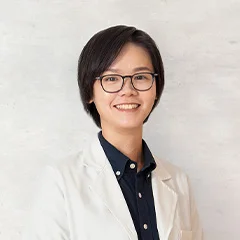
Two hospital systems in Taiwan sit behind Dr. Tzu-Hsuan Jin’s reproductive practice, and they gave her different things. At Linkou Chang Gung Memorial Hospital she worked in the reproductive endocrinology division as a research physician and then as an attending physician — the depth training, where stimulation protocols and endocrine interpretation are the daily work. At New Taipei Municipal TuCheng Hospital, a district hospital, she held an attending post in obstetrics and gynecology — the breadth training, where the same physician handles gynecologic disease, obstetrics and first-contact infertility care without referring it out.
She now practices reproductive medicine at Stork 11’s Taipei campus, and the clinic’s team page lists Taipei as her only location. For a patient building a cycle there, that matters more than it sounds: stimulation monitoring means repeat scans and blood draws on consecutive days, and a physician who is on site rather than splitting between two cities keeps those visits inside one clinic.
Her published schedule reinforces the same point. The clinic’s timetable shows her Taipei sessions across the morning, afternoon and evening blocks, which is the practical difference between fitting monitoring into a working week and losing three days of pay to it.
Eight specialties are listed for her: infertility work-up, IVF, insemination, egg freezing, polycystic ovary syndrome, reproductive endocrine disorders, endometriosis, and hysteroscopic examination and treatment. Read as a set, they describe a sequence rather than a menu — correct the endocrine or anatomic problem first, then choose the treatment tier.
Clinical Expertise
- Infertility work-up and treatment decisions: systematic evaluation of both partners — ovulation, tubal patency, uterine cavity, semen analysis — followed by a judgment about which treatment tier the findings actually support
- IVF: protocol selection by ovarian reserve, cycle monitoring, retrieval, embryo culture and transfer
- Insemination (IUI): washed sperm placed in the uterine cavity around ovulation, for ovulation disorders after induction, mild male factor, or unexplained infertility where IVF is not yet indicated
- Egg freezing: vitrification for patients postponing childbirth, with timing set by the ovarian reserve result rather than by the patient’s preferred date
- Polycystic ovary syndrome: management of the combination that makes PCOS hard to treat — irregular ovulation, variable drug response, and the metabolic picture underneath it
- Reproductive endocrine disorders: reading hormone panels and correcting the endocrine conditions that block ovulation or implantation
- Endometriosis: assessment of how the disease affects ovarian reserve, tubal function and the implantation environment, and of whether surgery should come before a cycle
- Hysteroscopy: direct visualization and correction of polyps, adhesions and cavity shape before embryos are transferred
Why Choose Dr. Tzu-Hsuan Jin
The reproductive endocrinology route runs both ways. Her Linkou Chang Gung record lists research physician and attending physician in the same division. The first role is mechanism and evidence; the second is signing off on cycles. Physicians who hold both tend to be the ones who can explain why a protocol changed, not only that it did.
A district hospital post widens what she handles in one visit. TuCheng Hospital’s obstetrics and gynecology service is general practice, not a fertility clinic. Patients who arrive with a gynecologic problem and a fertility deadline usually get them split across two doctors. That combination makes it more likely she can sequence treatment and conception rather than defer one to the other.
Eight specialties cover the pre-cycle work and the cycle itself. PCOS, endometriosis and cavity disease are the three findings most often corrected before transfer, and hysteroscopy is how the third one gets fixed. Because those four are on her list alongside IVF, IUI and egg freezing, the corrective step and the treatment step can stay in the same clinic — which is where cycles are usually lost to scheduling.
Three session blocks at the Taipei campus. Follicle monitoring has to happen on the days the follicles require it. Her morning, afternoon and evening coverage decides whether a monitored cycle is compatible with a job.
Credentials
She graduated from the School of Medicine at China Medical University (中國醫藥大學醫學系). Her qualifications, as listed on the clinic’s team page, are a certified specialist credential in obstetrics and gynecology from the Taiwan Society of Obstetrics and Gynecology and the physician qualification to perform assisted reproduction procedures under Taiwan’s Artificial Reproduction Act — the latter is the credential a patient should confirm when evaluating any Taiwan fertility clinic, because cycles are legally tied to physicians who hold it.
Positions at Linkou Chang Gung Memorial Hospital (reproductive endocrinology, attending physician and research physician) and New Taipei Municipal TuCheng Hospital (obstetrics and gynecology, attending physician) are listed with titles only. The clinic publishes no start or end years for them, so this page does not estimate them. Whether she additionally holds a fellowship in reproductive endocrinology is not stated in the clinic’s materials, and is not assumed here. The clinic also publishes her name only in Chinese; the romanization used on this page is a pronunciation guide, not a registered English name.
Suitable For
Infertility driven by PCOS or an ovulation disorder: response to ovulation-induction drugs varies widely in PCOS, and overstimulation is the main risk to manage. Her endocrinology and PCOS specialties both address the monitoring-intensive version of that cycle.
Endometriosis with infertility, dysmenorrhea or pelvic pain: the hard question is order of operations — operate first, or stimulate first, since ovarian surgery can cost reserve. Holding both endometriosis care and ART cycles lets that trade-off be settled once, by one physician.
Uterine cavity disease needing hysteroscopy: polyps, adhesions and septa reduce implantation, and transferring into an uncorrected cavity wastes cycles. Her hysteroscopy specialty covers assessment and correction before transfer.
Choosing between insemination and IVF: not every case should start with IVF. Because both tiers are hers, the escalation decision stays inside one doctor-patient relationship instead of restarting the work-up elsewhere.
Egg freezing after an ovarian reserve work-up: yield depends on reserve at the time of retrieval, so the plan is only as good as the assessment. That assessment is endocrine reading, which is her first-tier specialty.