'%20d='m0%200%2016%2011h61%2061%2061%2061%2060L47%2037h61%2061%2060%2061L16%2063h61%2061%2061%2061%2060L47%2089h61%2061%2060%2061L16%20115h61%2061%2061%2061%2060L47%20141h61%2061%2060%2061L16%20166h61%2061%2061%2061%2060L47%20192h61%2061%2060%2061L16%20218h61%2061%2061%2061%2060z'/%3e%3c/svg%3e)
About
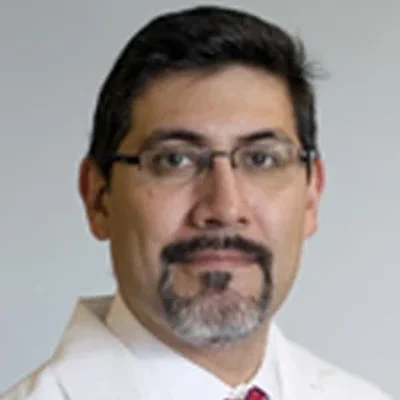
The name on this center’s federal ART filings is John C. Petrozza’s. He is the medical director of record on the CDC report for the program, the director of the Mass General Fertility Center itself, and chief of the hospital’s Division of Reproductive Medicine — which is why he is not listed in Mass General’s patient-facing booking directory the way his colleagues are. Administrative and surgical roles absorb the schedule. Patients who want him specifically for a surgical opinion should ask for that when contacting the center rather than assume an open slot.
His own practice is surgery applied to fertility. Petrozza treats infertility caused by endometriosis, uterine fibroids, tubal blockage and pelvic adhesions, working laparoscopically and robotically, and he has published on the cytogenetics of fibroids — the chromosomal changes inside fibroid tissue that help explain why they behave as they do. He trained entirely in Texas and then at Tufts: biology at the University of Texas at El Paso, an MD from the University of Texas Medical Branch at Galveston, obstetrics and gynecology residency at LBJ Hospital in Houston, and a reproductive endocrinology and infertility fellowship at Tufts Medical School and New England Medical Center. He holds American Board of Obstetrics and Gynecology certification in both general obstetrics and gynecology (1999) and the reproductive endocrinology and infertility subspecialty (2001), and teaches as an assistant professor of obstetrics, gynecology and reproductive biology at Harvard Medical School.
The research thread he pulls hardest is exposure science. He is a co-investigator on the EARTH Study, funded by the National Institute of Environmental Health Sciences, which examines how environmental chemicals, diet and body composition affect fertility and pregnancy outcomes. He has also worked on smartphone-based semen analysis, an attempt to put a basic male fertility test in a patient’s pocket rather than a andrology lab, and pushed telehealth for reproductive care during the pandemic.
Clinical Expertise
- Reproductive surgery for endometriosis and adhesions: laparoscopic and robot-assisted excision and adhesiolysis where anatomy is the barrier to conception, with fertility preservation as the operative goal
- Fibroids and uterine surgery: myomectomy and fibroid-centered treatment planning for patients who intend to conceive, grounded in his published work on fibroid genetic abnormalities
- Tubal factors and pelvic pathology: reconstruction and surgical decision-making on whether to operate or move straight to IVF
- IVF and ICSI cycle oversight: stimulation, retrieval and lab management as division chief, with male factor evaluation inside the same practice
- Environmental and lifestyle reproductive medicine: counseling on chemical exposure, diet and body composition drawn from the EARTH Study cohort rather than generic advice
- Male fertility assessment innovation: work on smartphone-based semen analysis for simpler, earlier male-factor screening
Why Choose Dr. Petrozza
The surgeon who runs the center. Most patients meet either an administrator or a surgeon. Here it is one person, which shortens the distance between a surgical recommendation and getting it done inside Mass General.
Board certification in both halves of the field. ABOG certification in obstetrics and gynecology since 1999 and in reproductive endocrinology and infertility since 2001, with AAGL membership reflecting the surgical emphasis.
A documented interest in the pre-clinical questions. Exposure research and home-based semen analysis both aim at earlier information for patients, not only later intervention.
Recognized by name and by year. Boston Magazine Top Doctor across multiple years and Castle Connolly Top Doctor recorded over fifteen years — physician-level awards, published as such.
Professional Affiliations
American Society for Reproductive Medicine; Society for Assisted Reproductive Technology; American Association of Gynecologic Laparoscopists. Assistant Professor of Obstetrics, Gynecology and Reproductive Biology, Harvard Medical School. Co-investigator, EARTH Study (NIEHS-funded). His MGH profile is maintained administratively rather than as a direct-scheduling page, which is worth knowing when you call.
Suitable For
- Patients whose infertility has an anatomical cause — endometriosis, fibroids, blocked tubes, adhesions — where surgery and IVF sequencing decides the outcome
- Second opinions on whether to operate at all: the person who supervises both services at this center
- Couples asking about environmental exposures, work chemicals, diet and weight as fertility variables
- Male factor workups, including patients who want a semen analysis before traveling or before a partner’s cycle begins