'%20d='m0%200%2016%2011h61%2061%2061%2061%2060L47%2037h61%2061%2060%2061L16%2063h61%2061%2061%2061%2060L47%2089h61%2061%2060%2061L16%20115h61%2061%2061%2061%2060L47%20141h61%2061%2060%2061L16%20166h61%2061%2061%2061%2060L47%20192h61%2061%2060%2061L16%20218h61%2061%2061%2061%2060z'/%3e%3c/svg%3e)


About Massachusetts General Hospital Fertility Center
This is a hospital department, not a freestanding IVF clinic. The fertility center sits inside Massachusetts General Hospital at 55 Fruit Street in Boston, reporting to the hospital’s obstetrics and gynecology service, and it is the Harvard Medical School teaching site for reproductive endocrinology and infertility. The center dates its own program to 1992 and marks thirty years of reported cycles from that start. Practically, that structure means a medical record number issued by the hospital, a self-contained clinic suite where consultation, monitoring, procedures and lab work happen under one roof, and access to the rest of Mass General’s specialists when a cycle runs into a medical problem. The staffing model is team-based: the center lists certified fertility assistants, nurse practitioners, fellows, sonographers, social workers and financial coordinators alongside its reproductive endocrinologists.
The outcome numbers, and what they do not say. SART’s 2023 clinic report for this program (clinic ID 1993) records 1,691 treatment cycles, against a national per-clinic average near 932, and the following live birth rates by age band: 49.2% under 35, 49.7% at 35-37, 27.4% at 38-40, and 13.3% over 40. Set against the national figures carried on this page, the program is clearly above the national line at 35-37 (49.7% versus 39.9%), modestly above at 38-40 (27.4% versus 26.2%) and over 40 (13.3% versus 9.4%), and below it in the under-35 band, 49.2% against 53.2%. That is the honest reading: this is a center whose results strengthen with age band rather than one that leads across the board, and the youngest group is where it trails.
Two caveats belong with those numbers. First, the denominator: the age bands are cumulative live birth per intended egg retrieval, reported as one row per band with no fresh-retrieval versus frozen-transfer split, so they cannot be read as per-transfer rates. Second, the national row on this page is labeled “CDC 2022 ART” in our data fields, but its four values — 53.2, 39.9, 26.2, 9.4 — are the SART 2023 National Summary figures for the same measure and the same year as the clinic row. The label is a data-entry error we have logged for correction; the comparison above is same registry, same reporting year. Pull the clinic’s own SART report if you want to check either row line by line.
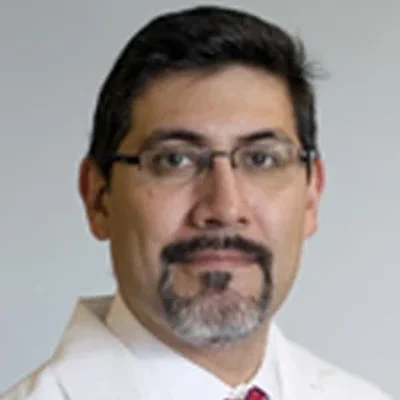
The CDC’s national ART report for 2022 lists this program separately, with 1,605 cycles and live birth rates of 52.4% under 35, 46.7% at 35-37, 28.3% at 38-40 and 13.0% over 40, medical director recorded as John C. Petrozza, MD. Read across the two reporting years, the pattern is consistent: results at or just under the national line for the youngest patients and above it from the mid-thirties up. Neither source breaks those totals down by diagnosis or by whether an embryo was tested, so a below-average under-35 number here is not evidence of a lab problem — and an above-average over-40 number is not a promise either.
The Google rating shown on this page, 2.6 from 46 reviews, is too small and too unrepresentative a sample to rank a program, and it conflicts with the volume and registry data above. Treat the SART and CDC figures as the load-bearing numbers and read reviews only for front-desk and scheduling experience.
One clarification about brand. Massachusetts General Hospital is ranked nationally and globally as a hospital, and several of this center’s physicians hold Harvard Medical School faculty appointments — assistant, associate and full professor, varying by person. Those are individual credentials verified physician by physician, not a property of the fertility unit as a whole, and they are attributed to named physicians in the sections below rather than spread across the roster.
Accreditations & Awards
- SART Platinum member rating. The center reports the highest member tier in SART’s program, which is built on registry participation and clinic practice standards. It is not an outcome ranking, and the age-band results above are the outcome evidence.
- Annual federal reporting. Cycle data is submitted to SART and to the CDC under the ART reporting requirement for U.S. clinics. The 2022 CDC entry is published under the name Massachusetts General Hospital Fertility Center with 1,605 cycles, and the SART report is searchable by clinic ID 1993.
- CLIA-certified laboratory work. The center states that its embryology and diagnostic lab operations run under Clinical Laboratory Improvement Amendments certification. No certificate number is published here, so verify it in the CDC CLIA registry if the lab is decisive for you.
- Human Rights Campaign Healthcare Equality Index. Massachusetts General is listed for LGBTQ+ inclusive care policy, which lines up with a standing family-building service line rather than an ad hoc accommodation.
- Newsweek and Statista, top 10 U.S. fertility centers. The fertility center is the unit named in this ranking. Mass General’s separate placing in Newsweek’s 2024 World’s Best Hospitals list measures the health system, not the ART program, and is not claimed here as a fertility result.
- One of ten founding sites for the Society of Reproductive Surgeons Surgical Scholars Track. This is a reproductive-surgery training designation, and Evelyn E. Minis, MD completed the track’s first cohort.
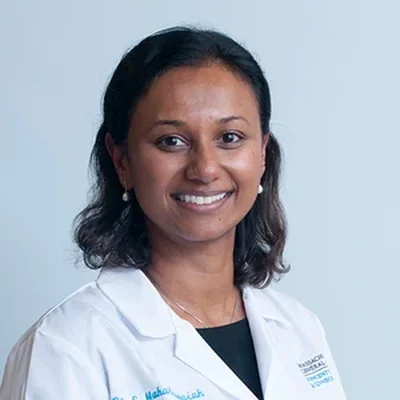
- Named physician honors, not center-wide ones. John C. Petrozza, MD is recorded as a Castle Connolly Top Doctor across fifteen years and a Boston Magazine Top Doctor in multiple years; Shruthi Mahalingaiah, MD, MS received the Endocrine Society Early Investigator Award in 2016; Irene Dimitriadis, MD holds ASRM research awards and a Healthgrades patient-experience recognition. Awards attach to individuals and to specific years.
- Active research programs. The center’s clinicians are investigators on the NIEHS-funded EARTH Study of environmental exposures and reproductive health, on AI-based embryo assessment in the embryology lab, and on the role of AMH in follicular development. Research activity is a real difference from clinic-only practices; it is not a success-rate claim.
Why Choose Massachusetts General Hospital Fertility Center
Programs are named and each has an owner. The center publishes distinct service programs rather than one generic menu: an IVF/ART program, a Cryopreservation program, a Preimplantation Genetic Testing program, a Third Party Reproduction program, a Fibroid program, a Male Infertility program, an Ovulation Disorders clinic, a Clinic for Reproductive Health and Cancer, a Complex Family Planning program and a Minimally Invasive Gynecologic Surgery Center. Physicians direct specific ones — Irene C. Souter, MD runs the PGD program, Irene Dimitriadis, MD is medical director of third-party reproduction, Shruthi Mahalingaiah, MD, MS directs both the PCOS clinic and the center’s clinical research, Jan L. Shifren, MD directs the Midlife Women’s Health Center.
Reproductive surgery sits inside the fertility unit. Hysteroscopic and laparoscopic surgery, fibroid treatment and endometriosis surgery are handled by surgeons in the same department that runs your cycles, backed by the Surgical Scholars Track training pipeline. If a uterus needs work before an embryo goes back, that is a conversation inside one clinic.
Volume that documents repetition. 1,691 SART-reported cycles in 2023 and 1,605 in the CDC’s 2022 record. High volume does not prove better outcomes; it does mean the lab, the retrieval team and the monitoring nurses run these cycles constantly rather than occasionally.
Preservation before gonadotoxic treatment. The Clinic for Reproductive Health and Cancer exists specifically for patients facing chemotherapy or radiation, with egg, embryo and sperm freezing on the front end of cancer care.
Family building for non-traditional paths. Donor egg, donor sperm, reciprocal IVF for two mothers and gestational carrier cycles are a program with a medical director, and the hospital’s Healthcare Equality Index listing supports the practice side of that with policy.
Four sites, so monitoring is not a Boston commute. Clinic locations are recorded in Boston (Yawkey Center, Suite 10A), Waltham (52 Second Avenue, Suite 402), Danvers (102-104 Endicott Street, Suite 304) and Newton (2000 Washington Street). A stimulated cycle asks for scans every few days, and which physician you book partly decides which door you walk into.
A teaching hospital underneath you. Fellows and nurse practitioners participate in care, and if ovarian hyperstimulation, a torsion or an anesthetic problem appears, the inpatient department is in the same building rather than a phone call away.
What is not documented here. The center publishes no price list, no wait time from first call to cycle start, no elective single-embryo-transfer rate or multiple-birth rate, no claim about time-lapse culture, and no statement of whether PGT biopsy and analysis are done in house or sent out. Its own service pages name single-embryo transfer as part of the IVF program without publishing the rate at which it is applied. Ask those four questions directly; the answers are not on the public pages used for this profile.
IVF & Fertility Services
- IVF with single-embryo transfer. Ovarian stimulation, monitoring, transvaginal retrieval, fertilization and embryo transfer, with the center naming elective single-embryo transfer as a standing part of its ART program.
- ICSI. Injection of a single sperm into each egg for male factor infertility or prior fertilization failure.
- PGT-A and PGT-M / PGD. Preimplantation genetic testing for aneuploidy and for known single-gene conditions, under the PGD program directed by Irene C. Souter, MD.
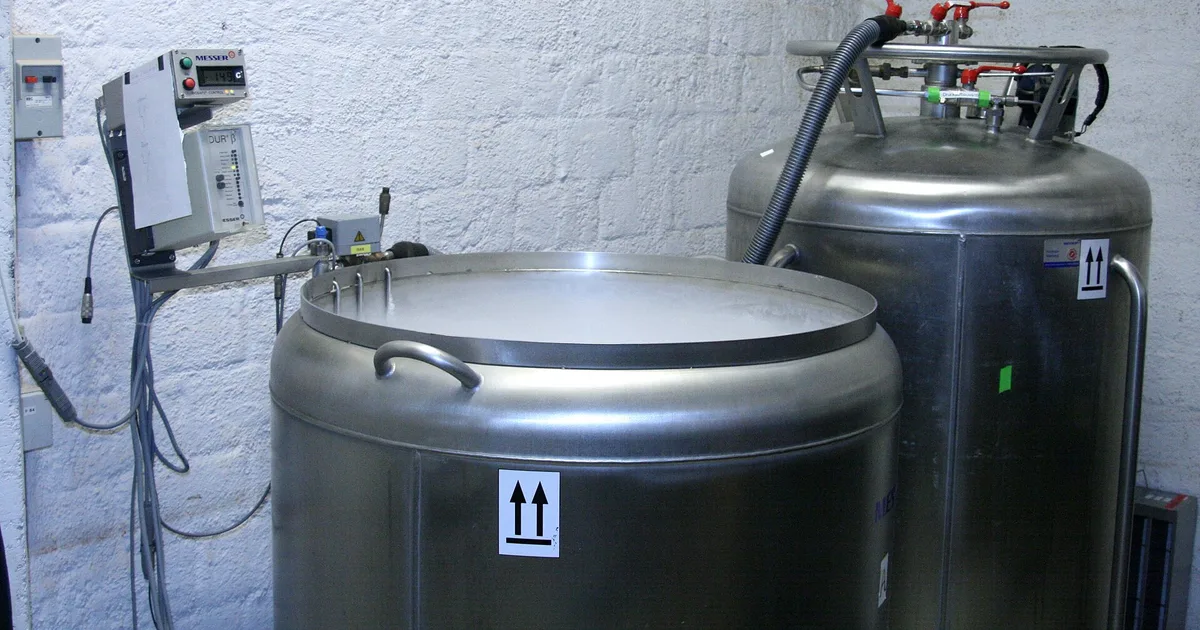
- Egg, embryo and sperm freezing. A standing Cryopreservation program covering medically indicated and elective oocyte banking.
- Fertility preservation for cancer patients. The Clinic for Reproductive Health and Cancer coordinates preservation before chemotherapy, radiation or surgery.
- Donor egg, donor sperm and gestational carrier cycles. Third-party reproduction is a named program with a medical director, including screening and coordination for donated gametes and carried pregnancies.
- LGBTQ+ family building. Reciprocal IVF, donor gametes and carrier paths for same-sex couples and single patients.
- Ovulation induction and IUI. Managed through the Ovulation Disorders clinic for PCOS and other ovulation problems, with intrauterine insemination as the lower-intensity option.
- Male infertility evaluation. A Male Infertility program emphasizing the least invasive effective treatment.
- Reproductive and minimally invasive gynecologic surgery. Fibroid treatment through a multidisciplinary Fibroid program, endometriosis surgery and hysteroscopic procedures, delivered via the Minimally Invasive Gynecologic Surgery Center.
- Complex family planning and recurrent loss care. Consultation for higher-complexity reproductive decisions, and evaluation of repeated pregnancy loss as a named physician interest.
- Menopause and midlife women’s health. Care after or instead of family building, through the Midlife Women’s Health Center.
- Fertility assessment. Hormonal and ovarian reserve testing including AMH, ultrasound evaluation, uterine cavity assessment and semen analysis.
- Remote second opinion. The center accepts records for a second-opinion review without an in-person visit, and offers telehealth follow-up.
Fees & Packages
There is no published price list. Massachusetts General posts no dollar figure for an IVF cycle, medications, PGT, donor egg cycles, frozen transfer or storage, and states plainly that costs are individualized to the treatment plan. No bundle and no money-back program is named. Treat any third-party figure you find elsewhere for this center as unverified.
What the center does publish about money is more useful than a menu:
- Massachusetts requires coverage. State law obligates regulated health plans to cover the diagnosis and treatment of infertility. The center’s own financing page lists the services typically treated as medically necessary under that mandate: artificial insemination and IUI, egg retrieval and embryo transfer, gamete and embryo handling and banking, ICSI, and related procedures. Coverage of your specific plan is a different question from the mandate, and self-funded employer plans sit outside state mandates — verify benefits in writing before medications are ordered.
- MassHealth does not pay for IUI or IVF. State Medicaid covers diagnosis and treatment of the underlying cause of infertility, but not the assisted reproduction procedures themselves.
- Connecticut and Rhode Island have mandates too; neighboring New England states without one will not protect an out-of-state plan the same way.
- Total cost is more than the cycle. The center states explicitly that the price of treatment includes the preparatory procedures and supporting care needed to get there, not only the retrieval and transfer.
- A financing resource and a coordinator exist. The center maintains a fertility financing guide and lists financial coordinators on the care team, which is where payment logistics and insurance appeals get settled.
- Commercial plans on physician listings. Individual physician profiles list accepted commercial coverage including Aetna, Blue Cross Blue Shield, Cigna, Harvard Pilgrim, Tufts and UnitedHealthcare. That is a per-provider listing, not a guarantee that a given plan pays for a given cycle.
Because this is a hospital department, expect facility and professional charges to be itemized separately rather than quoted as a clinic package. Ask for the itemized estimate in writing.
Patient Journey
- Request an appointment. New patients submit an online appointment request; existing Mass General patients use the Patient Gateway portal; referring physicians use a referral form. A remote second-opinion pathway accepts outside records without an office visit.
- Register and be triaged to a physician. Records open under a hospital medical record number, and your case routes to the program that owns it — IVF/ART, PCOS and ovulation, preservation before cancer treatment, third-party reproduction, genetic testing, fibroids or surgical evaluation.
- Evaluation. Hormonal and ovarian reserve testing including AMH, ultrasound, uterine cavity assessment and semen analysis, with the team — physician, nurse practitioner, fellow, certified fertility assistant and social worker as needed — reviewing results with you.
- Plan and cost check. Protocol is set with your physician; the financing resources and financial coordinator handle benefits verification, coverage limits and payment structure at this stage rather than after medications start.
- Stimulation and monitoring. Injectable medications with serial ultrasound and bloodwork at your assigned site — Boston, Waltham, Danvers or Newton.
- Retrieval and fertilization. Eggs are collected under anesthesia and fertilized by insemination or ICSI in the center’s laboratory, with culture and, where elected, biopsy for PGT.
- Transfer. Single-embryo transfer is the stated approach in the center’s ART program, either fresh or in a later frozen cycle.
- Confirm and follow through. A blood pregnancy test after transfer, early ultrasound monitoring, then transition to obstetric care. Social work support and support-group referrals, including RESOLVE New England, run alongside treatment, and telehealth covers result reviews between visits.
Local Legal Framework
Massachusetts is one of the more permissive and more protective states for assisted reproduction, and the practical difference shows up in your bill as much as in your paperwork.
- Insurance mandate. State law requires regulated plans to cover infertility diagnosis and treatment, including IVF-related procedures. It does not make treatment free or automatic: benefits verification, network status and whether your plan is self-funded all still decide what you pay. Massachusetts is one of a small group of mandate states; Connecticut and Rhode Island are the nearby examples.
- Egg and sperm donation. Legal, conducted under a written donation agreement that addresses the donor’s parental rights before treatment begins.
- Gestational surrogacy. Practiced in Massachusetts. Parentage for intended parents is settled through a court process rather than automatically by the birth record, so an attorney is retained before a carrier cycle starts, and the center’s third-party reproduction program coordinates that sequence.
- Genetic testing on embryos. PGT-A and PGT-M carry no Massachusetts-specific restriction; they are governed by informed consent and laboratory certification.
- LGBTQ+ family building. Massachusetts was the first state in the country to recognize same-sex marriage, and its protections extend to treatment access. For a non-genetic parent — in reciprocal IVF or a donor-scheme pregnancy — parentage still has to be secured through the legal process rather than assumed from the birth certificate.
- Embryo legal status. Massachusetts has no statute declaring what a frozen embryo is. That absence is why the disposition agreement signed when embryos are created — for divorce, death, non-payment or a change of mind — is the controlling document. Read it before the first retrieval, not after.
- Practice regulation. Clinics reporting to the CDC and SART, plus FDA rules on gamete and tissue handling, form the regulatory floor under which this center operates.
Location
- Address: 55 Fruit St, Boston, MA 02114
- Phone: (617) 726-8868