'%20d='m0%200%2016%2011h61%2061%2061%2061%2060L47%2037h61%2061%2060%2061L16%2063h61%2061%2061%2061%2060L47%2089h61%2061%2060%2061L16%20115h61%2061%2061%2061%2060L47%20141h61%2061%2060%2061L16%20166h61%2061%2061%2061%2060L47%20192h61%2061%2060%2061L16%20218h61%2061%2061%2061%2060z'/%3e%3c/svg%3e)
About
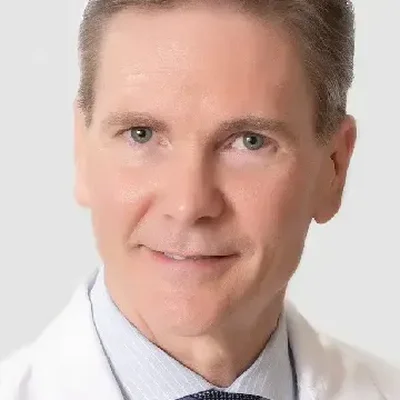
He joined this group in 1996, when it was still called Huntington Reproductive Center, and has been in the same Pasadena chair through the years that rebuilt IVF around him: ICSI arriving in US clinics in the early 1990s, blastocyst culture to day five, the switch from slow freezing to vitrification, and preimplantation genetic testing moving from single-gene disorders to whole-chromosome screening. John Wilcox has run cycles across all of it, and continues to publish on the pieces that changed — cryopreservation, ovarian reserve assessment, GnRH antagonist protocols.
He is a product of one Los Angeles training pipeline: USC medical school, then obstetrics and gynecology residency and REI fellowship at USC Los Angeles County Women’s and Children’s Hospital, followed by an assistant clinical professorship in the USC Keck School of Medicine department. Board-certified in both obstetrics and gynecology and reproductive endocrinology and infertility, a Fellow of the American College of Obstetricians and Gynecologists, practicing since 1994.
Two things to weigh honestly. His profile advertises a meticulous approach and high pregnancy rates — that is the clinic’s own marketing language, and physician-level outcome data is not published in the US; the only audited figures are clinic-level, which are discussed on this group’s hospital page. And the awards listing he carries — IAHCP Leading Physicians of the World, Los Angeles Magazine and Pasadena Magazine top-doctor slots, America’s Top Obstetricians and Gynecologists — are nomination and peer-recognition honors, not verified outcomes. The Searle Pharmaceutical Outstanding Teacher Award and the Ortho Pharmaceutical Uwe Goebelsmann Memorial Resident Research Award are the two that point at something checkable: how he trained residents, and what he presented as a fellow. He has also consulted for Ferring Pharmaceutical, Merck and Columbia Laboratories, and published dozens of abstracts at national and international meetings.
Clinical Expertise
- Stimulation protocol design: GnRH antagonist and long agonist protocols, dose selection by reserve and prior response, and OHSS avoidance strategies — the research interest he has kept longest
- IVF with ICSI: insemination by direct sperm injection for male factor, prior fertilization failure, and surgically retrieved sperm
- Preimplantation genetic testing: PGT-A for chromosome screening and PGT-M for known single-gene conditions, with counseling about what a biopsy can and cannot rule out
- Cryopreservation: egg, embryo and semen banking, including vitrified embryo transfer cycles, through the period when this field’s freezing technique was reinvented twice
- Blastocyst culture and elective single embryo transfer: extended culture to day five or six with selective single-transfer practice to cut twin risk
- Ovarian reserve, DOR and recurrent loss workup: testing before committing to a protocol, plus menopause and estrogen-physiology questions he has published on directly
Why Choose Dr. Wilcox
Thirty years in one chair with one laboratory team. In IVF, physician experience matters less in isolation than the continuity between the physician and the embryologists who assess your eggs. He has worked with the same Pasadena lab through the field’s entire technique overhaul, which is a different thing from a senior physician new to a clinic.
A clinician who kept publishing on protocol mechanics. Antagonist protocols, cryopreservation, reserve assessment and estrogen physiology are his stated research areas — the operational decisions inside a cycle rather than abstract lab science.
Industry consulting background. Advisory work for Ferring, Merck and Columbia Laboratories means exposure to the drug development and trial design behind the gonadotropins and antagonists used in stimulation.
Teaching recognized by the people taught. An outstanding-teacher award from residents and a memorial resident research award are the least inflated items on his honors list, and they correlate with a physician who explains a plan rather than issuing one.
English and Spanish consultations, with Pasadena front-office staff also working in Chinese.
Professional Affiliations
Board-certified by the American Board of Obstetrics and Gynecology in Reproductive Endocrinology and Infertility and in Obstetrics and Gynecology; Fellow of the American College of Obstetricians and Gynecologists (FACOG). Assistant clinical professor in the Department of Obstetrics and Gynecology at the USC Keck School of Medicine. Partner of this Pasadena practice since 1996, having joined while the group operated as Huntington Reproductive Center. Author of dozens of abstracts and research papers presented at national and international meetings, with prior consulting relationships with Ferring Pharmaceutical, Merck and Columbia Laboratories.
Suitable For
Patients who ask “how many cycles like mine have you managed?” A physician practicing since 1994 at a single site is the clearest answer to that question this roster can give.
Male-factor infertility requiring ICSI, including cases where prior conventional IVF failed to fertilize.
Anyone banking eggs or embryos for later use, with a doctor who worked through the field’s move to vitrification rather than learning it as standard practice.
Diminished reserve, repeated implantation failure or recurrent loss, where protocol history matters as much as protocol choice.
Patients suspicious of award lists. He is a strong pick if you want experience; bring the questions about outcomes to the clinic-level data rather than to the plaques.