'%20d='m0%200%2016%2011h61%2061%2061%2061%2060L47%2037h61%2061%2060%2061L16%2063h61%2061%2061%2061%2060L47%2089h61%2061%2060%2061L16%20115h61%2061%2061%2061%2060L47%20141h61%2061%2060%2061L16%20166h61%2061%2061%2061%2060L47%20192h61%2061%2060%2061L16%20218h61%2061%2061%2061%2060z'/%3e%3c/svg%3e)
About
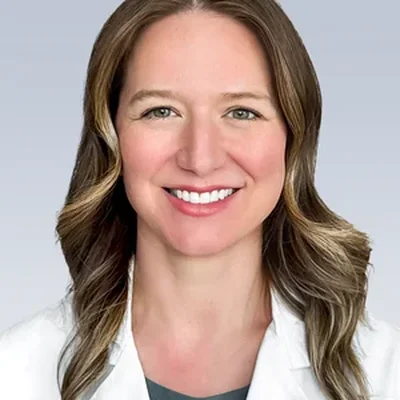
Kathleen O’Neill is co-principal investigator of a fertility trial where the treatment is an organ transplant. UNTIL — Uterus Transplant for Uterine Factor Infertility — is one of the first US studies offering a transplanted uterus to patients who cannot carry a pregnancy for any other reason: born without one, without one after surgery, or with a uterus that cannot sustain a pregnancy. As co-PI she is responsible for the reproductive side of a program that also needs transplant surgery, immunosuppression and ethics committees to line up before a single embryo goes in. She joined the founding group of the national uterus transplant association, which is where the clinical standards for that work were negotiated.
The research portfolio around it is broad for an assistant professor: NIH funding for uterus transplant immunosuppression, oncofertility, and cell-surface proteomics, plus an NICHD loan repayment award that protects research time for early-career physicians. Her MTR — a master’s in clinical research from Penn — is the reason those projects read as designed studies rather than case reports: she is trained in the mechanics of protocol writing, endpoints and enrollment.
Clinically that means two populations she handles personally. Patients facing sterilizing cancer treatment, for whom the referral question is how many days exist before chemotherapy and what can be frozen in them — eggs, embryos or ovarian tissue. And patients with no functioning uterus, for whom the conversation may end in a gestational carrier, a donor embryo or an assessment for the transplant trial. She trained at the University of Michigan for her MD, did residency at Barnes-Jewish Hospital with Washington University, and completed REI fellowship at the Hospital of the University of Pennsylvania in 2014, the year she certified in obstetrics and gynecology. She consults in English and Spanish.
Clinical Expertise
- Uterine factor infertility — diagnosis and the full option set: gestational carrier, donor embryo transfer, or trial evaluation for transplantation
- Uterus transplant follow-up — as trial co-PI, the immunosuppressed patient’s ovarian stimulation, embryo transfer and early pregnancy management
- Oncofertility and fertility preservation — urgent egg, embryo and ovarian tissue freezing before gonadotoxic therapy
- IVF cycle management — stimulation, monitoring, retrieval and transfer
- PCOS and ovulatory disorders — induction and long-term metabolic follow-up
- LGBTQ+ reproduction — donor sperm and donor egg protocols, reciprocal IVF planning, carrier referrals
- Clinical trial execution — consent, endpoints and data collection on studies she helped design
Why Choose Dr. O’Neill
One of very few US physicians in this field. Uterus transplantation is performed at a handful of centers; she is a co-PI at one of them, so a patient with no uterus is meeting someone with an actual protocol to offer, not a referral letter to a brochure.
She writes studies, not just orders them. An MTR plus NIH funding means the answer to “what does the evidence show” comes with the study design attached.
Urgency experience. Cancer preservation runs on oncology’s calendar. Her practice includes same-week decisions about what can be frozen and when.
Translational reach. From proteomics to transplant immunosuppression to routine IVF, which is a wide arc for a clinician and narrows the gap between what is known and what is prescribed.
Spanish-language consultation, so the consent conversation can happen in the patient’s own language.
Professional Affiliations
American Society for Reproductive Medicine; American College of Obstetricians and Gynecologists; American Society of Transplantation’s community of practice in women’s health; founding member of the American Uterus Transplant Association. Board-certified in Obstetrics and Gynecology since 2014, fellowship-trained in reproductive endocrinology and infertility at Penn, NIH/NICHD-supported researcher and co-principal investigator of the UNTIL trial.
Suitable For
Patients told they have no uterus, or one that cannot carry — congenital absence, prior hysterectomy, or a uterus damaged by treatment. This is the population UNTIL was built for.
People newly diagnosed with cancer, where preservation must be arranged before therapy starts.
LGBTQ+ patients planning a family with donated gametes or a gestational carrier, inside Penn’s LGBTQ health program.
PCOS patients who need ovulation induction and metabolic follow-up rather than a single prescription.
Anyone who wants a trial option on the table and a physician who can say honestly whether they qualify.