'%20d='m0%200%2016%2011h61%2061%2061%2061%2060L47%2037h61%2061%2060%2061L16%2063h61%2061%2061%2061%2060L47%2089h61%2061%2060%2061L16%20115h61%2061%2061%2061%2060L47%20141h61%2061%2060%2061L16%20166h61%2061%2061%2061%2060L47%20192h61%2061%2060%2061L16%20218h61%2061%2061%2061%2060z'/%3e%3c/svg%3e)
About
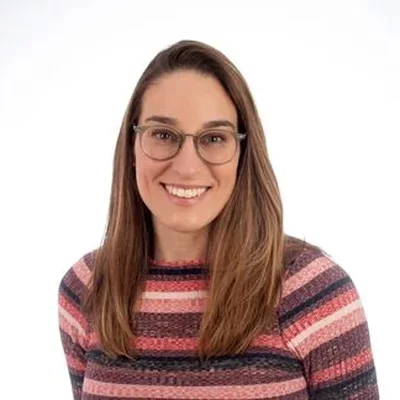
Some doctors treat patients inside a protocol. Lauren Verrilli wrote the ones her last clinic ran on. Before joining Pacific Northwest Fertility she was an Assistant Professor and Medical Director at the Utah Center for Reproductive Medicine at the University of Utah, where her job was to oversee and implement every clinical and operational protocol that clinic ran — not one treatment path but the whole set of them — and to train fellows, residents and medical students in reproductive endocrinology and in surgery for complex mullerian anomalies.
Her clinical center of gravity is the hardest part of the calendar: primary ovarian insufficiency and diminished ovarian reserve, the subjects of more than ten publications she has authored. That is the end of reproductive medicine where evidence is thinnest and where promises are easiest to make. Alongside it she is a surgeon with extensive training in complex mullerian anomalies, and she won awards for both laparoscopic surgery and research during her obstetrics and gynecology residency.
She is a Seattle native. She did her undergraduate degree at Santa Clara University, came home for medical school at the University of Washington, took residency at the University of Wisconsin and fellowship at the University of Utah — and her own profile notes she was born at Swedish Hospital in the city she now practices in. At PNWF her stated scope runs from PCOS, endometriosis and egg freezing to male infertility.
Clinical Expertise
- Diminished Ovarian Reserve and Primary Ovarian Insufficiency: Her main research and clinical interest, with more than ten publications — protocol selection, cycle expectations, and when a donor-egg conversation should happen
- Surgery for Complex Mullerian Anomalies: Septate, bicornuate and other uterine and tubal malformations that bear directly on whether a pregnancy can be carried; she also teaches this operation
- Laparoscopic Surgery: Recognized with an award for excellence in laparoscopic surgery during residency, applicable to endometriosis and pelvic disease
- Egg Freezing and Fertility Preservation: Part of her listed scope, and informed by her ovarian reserve research
- PCOS and Endometriosis-Related Infertility: Named areas of her practice
- Male Infertility: Within her clinical range, which matters because PNWF states that roughly 50% of infertility is associated with sperm quality or quantity
Why Choose Dr. Lauren Verrilli
She wrote the protocols rather than only following them. As Medical Director of the Utah Center for Reproductive Medicine, she oversaw and implemented all clinic and operational protocols. That is a different skill from handling one difficult cycle: it is deciding how an entire clinic’s care should run and then getting it adopted. Patients never see that work, but it is what determines whether every cycle is run the same way.
Ten-plus papers on the topic where evidence is thinnest. Diminished ovarian reserve and primary ovarian insufficiency are the areas where stimulation strategy is least settled and where patients are most exposed to optimistic claims. A physician who has published repeatedly in that narrow space knows both the limits of what can be done and which numbers are defensible.
She does the surgery and the cycle. Her training in complex mullerian anomalies is deep enough that she teaches it to fellows and residents, and her residency awards cover laparoscopic surgery. For a patient who may need a uterine cavity or endometriosis issue dealt with before transfer, the decision about whether to operate first — and how long to wait after — doesn’t have to be split between two clinics.
She trains the next generation. At Utah she taught REI and complex mullerian anomaly surgery to fellows, residents and medical students. Teaching a procedure means being unable to fall back on “this is how it’s always done,” which is a reasonable proxy for how a plan gets explained to a patient.
Both partners can be started in one place. Male infertility is inside her listed scope, and PNWF reports that around half of infertility involves sperm quality or quantity. Couples who want a single first visit that sets an agenda for both sides can get one.
Professional Affiliations
Her clinic profile describes her as a double board-certified reproductive endocrinologist and infertility specialist and gives her degree as MD, MSCI; the profile page carries no structured Board Certification, Fellowship or Professional Organizations section, so the certification statement above is reproduced from its biography rather than from a credentials block, and no society membership is listed for her on that page. Training: Santa Clara University, University of Washington School of Medicine, University of Wisconsin obstetrics and gynecology residency (awards for excellence in laparoscopic surgery and research), and University of Utah reproductive endocrinology and infertility fellowship. She then joined the University of Utah faculty as Assistant Professor and Medical Director of the Utah Center for Reproductive Medicine.
Suitable For
- Low AMH, few follicles, or a poor previous response: Diminished ovarian reserve and POI are where her publications concentrate, which is what the conversation about protocol and expectations needs
- A uterine or tubal anomaly, or repeated loss and failed implantation: Complex mullerian anomaly surgery is an explicit specialty and a teaching area, so structure and cycle can be judged by the same physician
- Later-age family building and freezing eggs or embryos: Egg freezing is in her scope, and her reserve research bears directly on what “how many can we get” means at a given age
- Endometriosis and PCOS with infertility: Both named in her practice, with laparoscopic capability for the surgical side of endometriosis
- Couples wanting one first appointment that covers both sides: Male infertility is included in the care she lists