'%3e%3cpath%20fill='red'%20d='M0%200h720v480H0z'/%3e%3cpath%20fill='%23000095'%20d='M0%200h360v240H0z'/%3e%3cg%20fill='%23fff'%3e%3cpath%20d='m154%20126.9-2.5%209.6%209.4%202.6-1.8-7.1zm46.9%205.1-1.8%207.1%209.4-2.6-2.5-9.6zm-41.8-24-5.1%205.1%201.9%206.9z'/%3e%3cpath%20d='m155.9%20120-1.9%206.9%205.1%205.1z'/%3e%3cpath%20d='m154%20113.1-6.9%206.9%206.9%206.9%201.9-6.9zm14%2027.8%205.1%205.1%206.9-1.9zm18.9%205.1%209.6%202.5%202.6-9.4-7.1%201.8z'/%3e%3cpath%20d='m192%20140.9%207.1-1.8%201.8-7.1zm-31.1-1.8%202.6%209.4%209.6-2.5-5.1-5.1zm19.1%205%206.9%201.9%205.1-5.1z'/%3e%3cpath%20d='m173.1%20146%206.9%206.9%206.9-6.9-6.9-1.9zm-12.2-45.1-9.4%202.6%202.5%209.6%205.1-5.1zm-1.8%2031.1%201.8%207.1%207.1%201.8zm45-12%201.9-6.9-5.1-5.1z'/%3e%3cpath%20d='m168%2099.1-7.1%201.8-1.8%207.1zm32.9%208.9-1.8-7.1-7.1-1.8zm5.1%2018.9%206.9-6.9-6.9-6.9-1.9%206.9z'/%3e%3cpath%20d='m200.9%20108-8.9-8.9-12-3.2-12%203.2-8.9%208.9-3.2%2012%203.2%2012%208.9%208.9%2012%203.2%2012-3.2%208.9-8.9%203.2-12z'/%3e%3cpath%20d='m200.9%20132%205.1-5.1-1.9-6.9zm5.1-18.9%202.5-9.6-9.4-2.6%201.8%207.1zm-6.9-12.2-2.6-9.4-9.6%202.5%205.1%205.1zm-26-6.9-9.6-2.5-2.6%209.4%207.1-1.8zm6.9%201.9-6.9-1.9-5.1%205.1z'/%3e%3cpath%20d='m186.9%2094-6.9-6.9-6.9%206.9%206.9%201.9z'/%3e%3cpath%20d='m192%2099.1-5.1-5.1-6.9%201.9zM173.1%20146l-9.6%202.5%204.5%2016.6%2012-12.2zm-5.1%2019.1%2012%2044.9%2012-44.9-12-12.2zm-7.1-26-9.4-2.6-4.4%2016.4%2016.4-4.4z'/%3e%3cpath%20d='m147.1%20152.9-12%2045.1%2032.9-32.9-4.5-16.6zm-12-20.9L102%20165.1l45.1-12.2%204.4-16.4z'/%3e%3cpath%20d='m154%20126.9-6.9-6.9-12%2012%2016.4%204.5zm0-13.8-2.5-9.6-16.4%204.5%2012%2012z'/%3e%3cpath%20d='M135.1%20108%2090%20120l45.1%2012%2012-12zm90%2024-16.6%204.5%204.4%2016.4%2045.1%2012.2z'/%3e%3cpath%20d='m199.1%20139.1-2.6%209.4%2016.4%204.4-4.4-16.4zm-12.2%206.9-6.9%206.9%2012%2012.2%204.5-16.6zm19.1-19.1%202.5%209.6%2016.6-4.5-12.2-12z'/%3e%3cpath%20d='m192%20165.1%2033.1%2032.9-12.2-45.1-16.4-4.4zm7.1-64.2%209.4%202.6%204.4-16.4-16.4%204.4z'/%3e%3cpath%20d='M225.1%20108%20258%2075.1l-45.1%2012-4.4%2016.4zm-12.2-20.9L225.1%2042%20192%2075.1l4.5%2016.4zm12.2%2044.9%2044.9-12-44.9-12-12.2%2012z'/%3e%3cpath%20d='m206%20113.1%206.9%206.9%2012.2-12-16.6-4.5zm-38-38L135.1%2042l12%2045.1%2016.4%204.4z'/%3e%3cpath%20d='m160.9%20100.9%202.6-9.4-16.4-4.4%204.4%2016.4z'/%3e%3cpath%20d='m147.1%2087.1-45.1-12%2033.1%2032.9%2016.4-4.5zm39.8%206.9%209.6-2.5-4.5-16.4-12%2012z'/%3e%3cpath%20d='M192%2075.1%20180%2030l-12%2045.1%2012%2012z'/%3e%3cpath%20d='m173.1%2094%206.9-6.9-12-12-4.5%2016.4z'/%3e%3c/g%3e%3ccircle%20cx='180'%20cy='120'%20r='51.1'%20fill='%23000095'/%3e%3ccircle%20cx='180'%20cy='120'%20r='45.1'%20fill='%23fff'/%3e%3c/g%3e%3c/svg%3e)
About
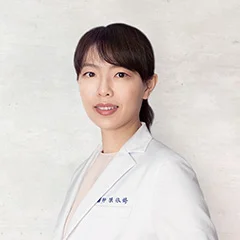
Dr. Yi-Ting Liang’s CV has a detour in it, and that is the interesting part. She completed the Chang Gung sequence in order — residency in obstetrics and gynecology at Linkou Chang Gung Memorial Hospital, then chief residency there, then a research post in the same hospital’s reproductive endocrinology and infertility division. Then she went to Keelung Chang Gung Memorial Hospital to practice general obstetrics and gynecology, and only after that returned to Linkou’s fertility division, this time as an attending physician.
Chief residency is the year that forces generalist competence: labor, delivery, gynecologic emergencies, the cases that arrive undifferentiated. The Keelung post extended the same pressure into community practice, where a physician cannot route a complicated patient to a subspecialist down the corridor. Both sit underneath her current work in ways that matter — the two most common causes she treats, polycystic ovary syndrome and endometriosis, are conditions where the fertility question and the general gynecologic question arrive together.
Her listing runs to eight specialties, and they read as a treatment order rather than a list. Infertility work-up first; then correction of the cause — endocrine imbalance, endometriosis, uterine cavity lesions by hysteroscopy; then the reproductive tier itself, whether insemination, IVF or egg freezing.
She is registered at both the Hsinchu and Taipei campuses, and the clinic’s Taipei patients can book her at that site.
Clinical Expertise
- Infertility work-up and treatment: sequential evaluation of ovulation, tubal patency, uterine cavity and semen parameters, with the treatment tier chosen from what the findings show
- IVF: individualized stimulation, monitoring, retrieval, culture and transfer decisions across the cycle
- Insemination (IUI): processed sperm placed in the uterine cavity near ovulation — the appropriate first tier for induced ovulation disorders, mild male factor, and unexplained infertility
- Egg freezing: vitrification to preserve the option of using one’s own eggs later, scheduled against measured reserve
- Polycystic ovary syndrome: the triad of irregular cycles, anovulation and metabolic disturbance, managed together rather than one symptom at a time
- Reproductive endocrine disorders: hormone panel interpretation and correction of the endocrine states that interfere with ovulation and implantation
- Endometriosis: how the disease bears on ovarian reserve, tubes and the implantation environment, and in what sequence surgery and conception attempts should run
- Hysteroscopy: inspection of the cavity for polyps, adhesions, septa and endometrial lesions, with surgical correction available in the same procedure
Why Choose Dr. Yi-Ting Liang
She trained to be a generalist before specializing, not after. Residency, chief residency and then a research post in reproductive endocrinology is the deliberate order, and the chief year in particular is where broad OB/GYN judgment gets built. Patients whose infertility comes with a gynecologic problem rather than instead of it get a physician who reads both.
Community hospital practice on top of academic fertility training. Keelung Chang Gung is where she handled first-line obstetric and gynecologic work. For patients who need treatment for a gynecologic condition and a realistic view of how much time that costs before trying to conceive, that background is the difference between sequencing the two and deferring one indefinitely.
Cause-correction and cycle execution under one name. PCOS, endometriosis and cavity pathology are the three findings most often handled before transfer, and hysteroscopy is the tool for the third. All three appear alongside IVF, IUI and egg freezing on her listing, so the preparatory work does not have to be referred out and re-presented later.
She runs both insemination and IVF. Some cases should try IUI before IVF. When one physician covers both tiers, the decision to escalate is made from the same set of records, in the same consultation series.
Credentials
She is a graduate of Chang Gung University’s medical program (長庚大學中西醫學系), the dual Chinese-and-Western medicine curriculum. She holds a certified specialist credential in obstetrics and gynecology from the Taiwan Society of Obstetrics and Gynecology, membership in the Taiwan Society of Reproductive Medicine, and the qualification to perform assisted reproduction procedures required of physicians practicing ART under Taiwan’s Artificial Reproduction Act.
Her Chang Gung appointments — residency and chief residency at Linkou, researcher in reproductive endocrinology and infertility at Linkou, attending obstetrician-gynecologist at Keelung, and attending physician in Linkou’s reproductive endocrinology and infertility division — are published by the clinic with titles and departments but no years. This page therefore lists them as positions held, not as a dated timeline. The clinic publishes her name in Chinese only; the romanization here is a pronunciation guide.
Suitable For
Infertility from PCOS and anovulation: drug response varies widely between PCOS patients, and overstimulation is the risk that constrains dosing. That makes the cycle a monitoring problem as much as a prescription, which is where her endocrinology and PCOS specialties meet.
Endometriosis with infertility or pelvic pain: operating on endometriosis can reduce ovarian reserve, and skipping surgery can leave the environment hostile. She covers both the disease and the ART tiers, so the trade-off is decided against one set of measurements.
Uterine cavity lesions before a cycle: polyps, adhesions and abnormal cavity shape lower implantation odds, and transferring into them wastes attempts. Hysteroscopic assessment and correction come first in her plan.
Staged planning, IUI before IVF: whether to start with insemination depends on cause, age and how long the couple has been trying. Because both tiers are hers, escalation does not require a new physician repeating the work-up.
Egg freezing and preservation counseling: the outcome tracks the follicle count at retrieval, so timing is an assessment question before it is a scheduling one.