
About
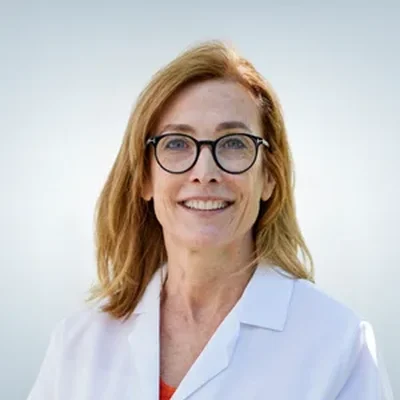
Fertility preservation for cancer patients is the branch of reproductive medicine where the deadline is set by somebody else’s schedule. An oncology team starts chemotherapy on a Tuesday, and the egg-freezing or embryo-freezing cycle has to fit in the days before it. Dr. Mary Morris held that job as Medical Director for Oncofertility and Third Party Reproduction at Massachusetts General Hospital, with a Harvard Medical School faculty appointment in Obstetrics, Gynecology and Reproductive Biology, before joining Boston IVF.
She arrived at reproductive endocrinology by an unusual route: a doctorate in neuroscience first. She has said she came to it honestly — reproductive endocrinology let her keep thinking about the brain and the pituitary, the signaling axis that actually drives an ovarian cycle. That background shows in her research list, which runs from single-cell sequencing of the mouse ovary to anti-Müllerian hormone studies to oncofertility questions, 18 papers in all. Her named clinical interests are preservation before cancer treatment, hereditary cancer syndromes, and the infertility that comes with polycystic ovary syndrome.
She trained inside the MGH system: OB/GYN residency in the Massachusetts General Hospital and Brigham and Women’s Hospital combined program, then REI fellowship at Massachusetts General. She is double board-certified in OB/GYN and REI. She consults in person at the Stoneham and Waltham fertility centers and by telehealth to patients anywhere in Massachusetts, and she is direct about her own method — after years in the field, she says, listening is the part that works.
Clinical Expertise
- Oncofertility and urgent preservation: Egg, embryo and ovarian tissue planning compressed into the window before chemo, radiation or pelvic surgery
- Hereditary cancer syndromes: BRCA and related carriers deciding between preservation, prevention and pregnancy timing
- Fertility preservation generally: Elective egg and embryo freezing with an evidence-based view of what stored eggs do later
- PCOS-related infertility: Ovulation and stimulation strategy in polycystic ovaries
- IVF and ICSI: Standard and modified protocols, including cycles after gonadotoxic treatment
- Third-party reproduction: Donor egg and other paths for patients whose own ovarian function was lost to treatment
- Ovarian reserve interpretation: AMH and follicle-count results read against the research literature rather than a lab reference range alone
Why Choose Dr. Mary Morris
She ran the program, not just the clinic room. A medical directorship in oncofertility at Mass General means she built the pathway a cancer patient moves through — oncology referral to retrieval — at one of the country’s busiest hospitals.
A PhD in the organ system upstream of the ovary. Neuroscience training plus pituitary-signaling research is a different foundation from most REI specialists, and it is the part of her record that explains why she works on reserve markers like AMH.
She moved from academic medicine into practice. Leaving an MGH directorship and Harvard faculty for a private network is usually read one of two ways: as a step down, or as a trade of research time for patient time. Here it bought patients faster access to a physician with an academic track record.
Eighteen papers, including ovarian single-cell work. Basic science that keeps her reading the primary literature behind preservation counseling.
Harvard-affiliated training end to end. MGH/Brigham residency and MGH fellowship, double board-certified.
Professional Affiliations
Double board-certified by the American Board of Obstetrics and Gynecology in OB/GYN and in Reproductive Endocrinology and Infertility. Former Assistant Professor of Obstetrics, Gynecology and Reproductive Biology, Harvard Medical School. Former Medical Director for Oncofertility and Third Party Reproduction, Massachusetts General Hospital.
Suitable For
- A cancer diagnosis with treatment starting within weeks: Time-critical preservation is the exact service she directed at Mass General
- BRCA or another hereditary syndrome: Preservation and family planning alongside risk-reducing decisions
- PCOS patients whose cycles and stimulation responses are unpredictable: A named clinical interest, backed by ovarian research
- Low or unexplained AMH results: Interpretation from someone who has published on the marker itself
- Patients who lost ovarian function to treatment and want to talk through donor paths: Third-party reproduction was part of her prior directorship