'%20transform='translate(88%20-32)'%3e%3cpath%20fill='%23fff'%20d='M-128%2032h720v480h-720z'/%3e%3ccircle%20cx='523.1'%20cy='344.1'%20r='194.9'%20fill='%23bc002d'%20transform='translate(-168.4%208.6)scale(.76554)'/%3e%3c/g%3e%3c/svg%3e)
About
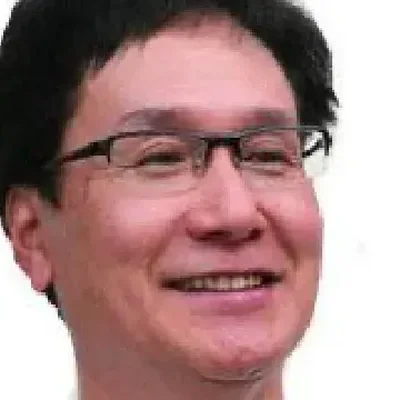
Dr. Masahide Shiotani is the founder and chairman of the Hanabusa Women’s Clinic (E-Women’s Clinic) group, a six-facility reproductive medicine network in Kobe spanning Sannomiya, Nishinomiya, Tarumi and Nishi-Akashi, plus a men’s fertility clinic and the ENA Yamashita clinic, with the overseas affiliate Hanabusa IVF in San Diego.
He graduated from Shimane Medical University in 1985 and joined Kyoto University’s Department of Obstetrics and Gynecology, where he worked on the university’s in vitro fertilization team researching clinical infertility treatment and the process of embryo implantation. He received his Doctor of Medicine (PhD) from Kyoto University in 1994, then joined the OB-GYN department of Kobe City Medical Center General Hospital, where he played a key role in the birth of Hyogo Prefecture’s first ICSI (micromanipulation) baby. In March 2000 he opened the first Hanabusa clinic, which has since grown into the group he now leads.
Beyond clinical work, Dr. Shiotani holds numerous academic posts — director of JISART (the Japanese Institution for Standardizing Assisted Reproductive Technology), director of the Japan Society of Fertility and Implantation and specially-appointed councilor of the Japan Society for Reproductive Medicine — and has authored and supervised many books on infertility treatment.
Clinical Expertise
- SEET (Simple Embryo and Endometrium Transfer): his patented innovation — instilling culture medium into the uterus before transfer to mimic natural implantation signaling, improving embryo implantation and clinical pregnancy rates
- Two-stage embryo transfer: transferring an early-stage embryo first and a blastocyst later in the same cycle, the predecessor technology to SEET
- Piezo ICSI: micro-vibration drilling of the egg membrane that reduces mechanical damage and supports fertilization rates and embryo quality
- Advanced maternal age infertility: ovarian function assessment and individualized — often mild — stimulation protocols that lower physical burden
- Recurrent implantation failure: multi-dimensional workups combining ERA, EMMA-ALICE microbiome testing and immune-factor analysis to build precise transfer strategies
Why Choose Dr. Shiotani
As a Kyoto University-trained reproductive pioneer with nearly 40 years in infertility care, Dr. Shiotani helped bring ICSI to Japan and contributed to Hyogo’s first ICSI baby. His patented SEET and two-stage transfer methods were developed from his own implantation research and are now applied widely in Japan and abroad — a rare case of a clinician inventing the protocol he practices. Leading a group completing more than 4,000 IVF cycles a year, he pairs laboratory depth with national standardization work as a JISART director, and has written extensively for patients on making fertility treatment decisions.
Professional Affiliations
Dr. Shiotani holds a Doctor of Medicine from Kyoto University and is a Board-Certified Specialist and Guidance-Trained (supervisor) Specialist of the Japan Society of Obstetrics and Gynecology, and a Specialist and supervisor of Reproductive Medicine of the Japan Society for Reproductive Medicine. He serves as a director of JISART, director of the Japan Society of Fertility and Implantation, and specially-appointed councilor of the Japan Society for Reproductive Medicine.
Suitable For
- Women planning pregnancy at advanced maternal age — deep experience in ovarian reserve assessment and mild stimulation protocols that protect wellbeing while pursuing outcomes.
- Patients with recurrent implantation failure — his signature SEET and two-stage transfer techniques, combined with ERA and microbiome testing, target exactly this problem.
- Patients seeking advanced embryo technology — the group runs time-lapse culture, IMSI and ZyMōt sperm selection among Japan’s highest-volume IVF laboratories.