'%20d='m0%200%2016%2011h61%2061%2061%2061%2060L47%2037h61%2061%2060%2061L16%2063h61%2061%2061%2061%2060L47%2089h61%2061%2060%2061L16%20115h61%2061%2061%2061%2060L47%20141h61%2061%2060%2061L16%20166h61%2061%2061%2061%2060L47%20192h61%2061%2060%2061L16%20218h61%2061%2061%2061%2060z'/%3e%3c/svg%3e)
About
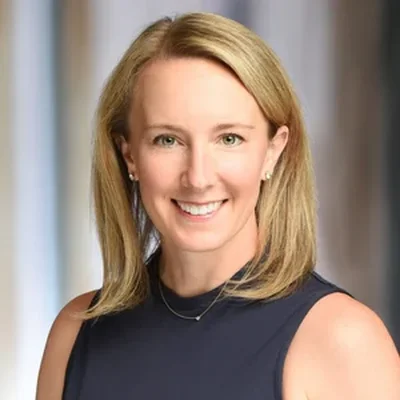
Meghan Smith came to Tennessee from a fertility practice in Southern California, carrying a training record that reads like a map of New York: a chemistry degree at NYU, medical school at NYU, OB/GYN residency at NYU — then a reproductive endocrinology and infertility fellowship at the University of Southern California Keck School of Medicine on the other coast. She is board-certified in both OB/GYN and REI, and members of ASRM and SREI.
Her research agenda is unusually lab-forward for a clinical profile: determining the optimal timing for ICSI, improving laboratory techniques to lift patient outcomes, and obstetric outcomes in gestational carrier pregnancies — the last of these won the Frank Lynch Memorial Essay Award. Papers sit in Fertility and Sterility and the Journal of Assisted Reproduction and Genetics, and she reviews for journals as an ad-hoc referee. One outlier topic — social media and health care — rounds out a physician who thinks about how patients actually find and process fertility information.
She practices from the Nashville and Franklin offices. Her stated philosophy is plain: every patient deserves a customized treatment plan, delivered with compassion and respect — and her chemistry background shows in how she talks about the embryology bench, where she believes cycles are won or lost.
Clinical Expertise
- IVF with lab-aware protocol choices: stimulation design informed by her ICSI-timing and embryo-culture research rather than one default recipe
- ICSI (Intracytoplasmic Sperm Injection): her named research question is when to inject, not just how — timing directly affects fertilization and embryo quality
- Gestational carrier cycles: research published on obstetric outcomes in surrogacy pregnancies; third-party family building is an active clinic program
- Egg and embryo freezing: fertility preservation for elective and oncologic indications
- PGT-A: embryo genetic screening coordinated with the clinic’s in-house reproductive genetics group
- Unexplained infertility: reassessment of protocol and lab variables after cycles that failed without a diagnosis
Why Choose Dr. Smith
She publishes on the mechanics of your cycle. ICSI timing is not a vanity topic — it is the step where male-factor and poor-responder cycles most often fail, and it is the thing she has formally studied.
Journals route papers past her desk. Serving as an ad-hoc reviewer for Fertility and Sterility-tier journals means new embryology methods are vetted by her before they reach clinic brochures.
Award-winning surrogacy-outcomes research. The Frank Lynch Memorial Essay Award recognizes published work on how gestational-carrier pregnancies end — directly relevant to intended parents comparing programs.
Two coasts of training, one practice. NYU for medicine, USC Keck for the subspecialty, Southern California practice experience before Nashville — a wider sample of protocols than a single-institution career offers.
Professional Affiliations
American Society for Reproductive Medicine; Society for Reproductive Endocrinology and Infertility (SREI). Author of peer-reviewed papers in Fertility and Sterility and the Journal of Assisted Reproduction and Genetics, ad-hoc reviewer for multiple reproductive-medicine journals, and a Frank Lynch Memorial Essay Award recipient.
Suitable For
- Failed-cycle replanning: patients whose prior IVF produced poor fertilization or arrest embryos — the variables Smith researches are exactly what gets re-examined
- Gestational carrier intended parents: management backed by her own published outcomes work, inside a clinic with three decades of surrogacy programs
- Egg freezers with a lab-quality checklist: she asks the bench questions most patients never think to
- Unexplained infertility: a customized-plan advocate rather than a protocol-pusher
- Donor-egg and donor-sperm families: third-party paths handled within the same SART-reporting program