'%20d='m0%200%2016%2011h61%2061%2061%2061%2060L47%2037h61%2061%2060%2061L16%2063h61%2061%2061%2061%2060L47%2089h61%2061%2060%2061L16%20115h61%2061%2061%2061%2060L47%20141h61%2061%2060%2061L16%20166h61%2061%2061%2061%2060L47%20192h61%2061%2060%2061L16%20218h61%2061%2061%2061%2060z'/%3e%3c/svg%3e)
About
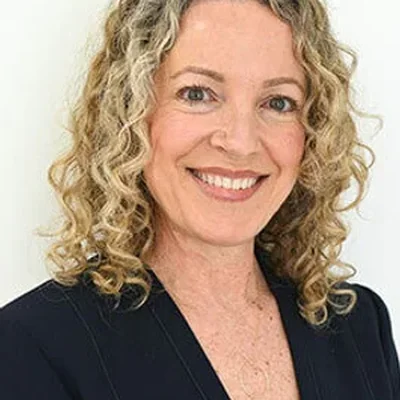
Preimplantation genetic testing is the part of IVF where patients most often get an explanation they cannot act on, and Dr. Michele Evans is the physician at this practice whose biography lists teaching it — she has lectured on embryo genetic testing at UCLA, in addition to publishing on women’s health topics and appearing on national health programming to discuss reproductive medicine.
She took a biology degree at UCLA, then went to Loma Linda University for her MD and her obstetrics and gynecology residency, where her biography lists teaching and academic honors awarded while she was still a student, and completed her reproductive endocrinology and infertility fellowship at the University of California, San Francisco. Before settling at PFCLA she spent years as a reproductive specialist at HRC Fertility, one of California’s larger private ART groups — so she has run cycles in both a network practice with standardized protocols and a single-team center where the same physician follows the case.
Her stated clinical range is wide in a way that clusters: recurrent pregnancy loss, PCOS, primary ovarian insufficiency, egg freezing, donor egg work, gestational carrier cycles, and LGBTQ+ family building. Three of those — loss, PCOS, and ovarian insufficiency — are diagnoses where the treatment decision is as much about what not to do as about stimulation, and where patients benefit from a physician who will show the arithmetic of their own odds.
Clinical Expertise
- Recurrent pregnancy loss: evaluation across parental karyotype, uterine anatomy, endocrine and autoimmune causes, and embryo genetics, with a plan before the next conception attempt
- PCOS and ovulatory disorders: letrozole and gonadotropin strategies, hyperstimulation risk management, and antagonist protocol choices
- Primary ovarian insufficiency and diminished reserve: honest yield expectations, and the timing question of when to move to donor eggs
- Egg freezing and fertility preservation: stimulation and vitrification for elective preservation and before medical treatment
- PGT-A: biopsy and screening decisions, including which patients the result actually changes management for
- IVF, donor egg, and gestational carrier cycles: third-party paths managed within California’s parentage framework
- LGBTQ+ family building: reciprocal IVF, donor sperm and donor egg routes, and carrier arrangements
- Advanced reproductive age: protocol adjustment and counseling keyed to age-specific success data rather than clinic averages
Why Choose Dr. Michele Evans
She teaches the genetics piece. A physician who lectures on preimplantation genetic testing is likelier to tell you when a PGT-A result will not answer your question, and what it costs to wait for one.
Network-practice experience, center-practice continuity. Years at HRC Fertility means she has seen how standardized high-volume protocols are written; at PFCLA she follows individual cases. Patients who have already done a cycle elsewhere often want exactly that comparison.
The loss patient group is her named focus. Recurrent pregnancy loss is where most clinics start guessing; her biography lists it as a clinical specialty alongside the endocrine conditions that cause it.
Full third-party menu in one consult. Donor egg, gestational carrier, and LGBTQ+ family building are all listed practice areas, so a single appointment can compare paths instead of requiring three referrals.
Regional recognition tied to this specific market: her biography lists Pasadena and Los Angeles area top-physician listings, including a Los Angeles Times Southland best-doctor recognition.
Professional Affiliations
Board-certified in Obstetrics and Gynecology and in Reproductive Endocrinology and Infertility; Fellow of the American College of Obstetricians and Gynecologists. Her biography lists membership in the American Society for Reproductive Medicine, academic and teaching honors from Loma Linda University, regional top-physician listings in Pasadena and Los Angeles, and media appearances on reproductive health, including national health and public-radio programming. Lectures at UCLA on preimplantation genetic testing, with peer-reviewed publications in women’s health.
Suitable For
- Two or more pregnancy losses: staged workup rather than another attempt on faith
- PCOS patients worried about hyperstimulation: protocol and trigger choices that manage OHSS risk
- Primary ovarian insufficiency or very low reserve: counseling that separates realistic options from expensive ones
- Egg freezing on a deadline: elective preservation, or preservation before cancer treatment
- Lesbian couples and single women: donor sperm, donor egg, and reciprocal paths she lists as practice areas
- Intended parents using a gestational carrier: cycle coordination inside California’s surrogacy framework