
About
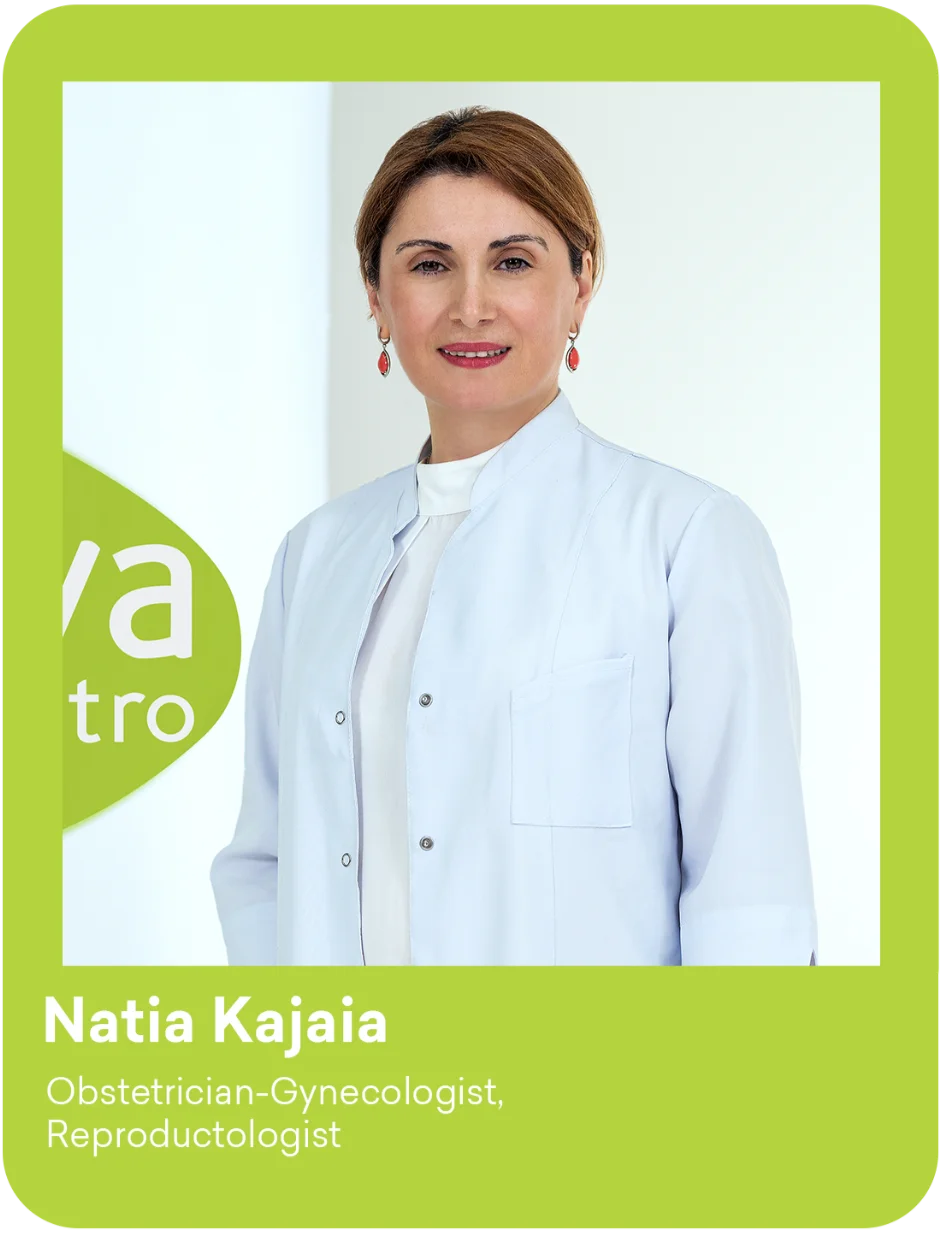
Most fertility problems that resist treatment turn out to have an endocrine component, and Natia Kajaia’s record is built around exactly that intersection. She completed residency training at Sechenov First Moscow State Medical University from 1998, worked gynecology at Moscow’s Endocrinology Research Institute and served as a gynecological endocrinologist at the D. Mellitus Central Clinic in 2001, then took a doctorate from the endocrinology department of Tbilisi State Medical University between 2002 and 2005 while moving into reproductive medicine.
Of the five physicians on Innova In Vitro’s reproductive roster, she is the only one whose education and professional history are published in full. Her first fertility posting was the I. Mgaloblishvili Center of Reproductive Medicine and Infertility in 2003-2004; she has held a gynecology-reproduction practice at Todua Clinic since 2007 and joined Innova’s gynecology department when it was formed in 2016, keeping both.
That dual practice is unusual in Tbilisi’s small reproductive-medicine field and says something about continuity of workload: an established clinic and a newer fertility center have both retained the same physician for years at a time. Her clinical base now sits inside a group that runs IVF at its own embryology laboratory, performs PGT-A and PGD biopsy on site, and shares an address with a 28-department general hospital, so metabolic and imaging investigations that her endocrine background makes her ask for are available in the same building.
Clinical Expertise
- Endocrine infertility: assessment and treatment of ovulatory failure, PCOS, thyroid-reproductive axis disturbance and hyperprolactinaemia as the primary obstacle to conception
- Metabolic factors in fertility: cycle planning for patients whose glucose metabolism or weight-related endocrine change affects stimulation response, drawing on her 2001 endocrinology-clinic post
- IVF and ICSI protocol design: stimulation choices set against hormone profile, ovarian reserve and previous response rather than a default regimen
- Advanced maternal age and diminished reserve: individualized approaches where the window for retrieval is narrow
- Repeated implantation failure: systematic endocrine and uterine re-evaluation before another transfer is attempted
- Combined gynecological examination and fertility planning: pelvic assessment, imaging review and treatment decision taken in one consultation
Why Choose Natia Kajaia
A doctorate from an endocrinology department is not a decorative credential in reproductive medicine. Stimulation protocols, ovulation induction and luteal support are endocrine interventions, and a physician trained in that discipline reads a hormone panel as a diagnosis rather than as a number to be worked around. This is the axis on which her published record runs: Moscow residency, an endocrinology institute post, an endocrine-focused clinic, then a doctorate, then fertility practice.
Her career also gives her direct experience of Georgian reproductive medicine across three settings — a state-affiliated fertility center, an established private clinic she has held since 2007, and a purpose-built IVF unit from its 2016 foundation. Protocols in these environments differ in laboratory support and monitoring density, so a patient’s plan is less likely to be constrained by whichever single clinic they walk into.
The two-practice arrangement matters logistically as well. Patients already under Todua Clinic for obstetric or gynecological care can have fertility treatment sequenced with the same physician, and those arriving at Innova for a cycle keep a senior clinician who has been practicing in Tbilisi for close to three decades.
Professional Affiliations
Her published qualifications are a doctorate in medicine from Tbilisi State Medical University’s endocrinology department (2002-2005) and general practice qualification from AIELTI Higher Medical School (1992-1997), followed by residency training at Sechenov First Moscow State Medical University. Georgian physicians must be registered with the Ministry of Health to practice, and Innova describes its reproductive doctors as credentialed in reproductive medicine and obstetrics-gynecology. Her endocrinology doctorate is the credential that sets her apart inside that team, and it is the reason her consultations start with the hormonal picture rather than the scan.
Suitable For
- Endocrine causes of infertility: where PCOS, thyroid disease or ovulatory failure is the driving problem, her training is in the discipline that governs those conditions rather than adjacent to it.
- Advanced maternal age and reduced ovarian reserve: cases where response to stimulation is unpredictable benefit from protocols built from hormone profile and prior response.
- Repeated implantation failure: patients who have transferred without success and need the endocrine and uterine picture re-examined systematically before another attempt.
- Metabolic disease with infertility: diabetes, insulin resistance or weight-related endocrine disturbance alongside a fertility goal — a combination she handled as a gynecological endocrinologist in 2001.
- Combined gynecology and fertility assessment: those who want examination, imaging interpretation and treatment planning from one senior physician.