'%20d='m0%200%2016%2011h61%2061%2061%2061%2060L47%2037h61%2061%2060%2061L16%2063h61%2061%2061%2061%2060L47%2089h61%2061%2060%2061L16%20115h61%2061%2061%2061%2060L47%20141h61%2061%2060%2061L16%20166h61%2061%2061%2061%2060L47%20192h61%2061%2060%2061L16%20218h61%2061%2061%2061%2060z'/%3e%3c/svg%3e)
About
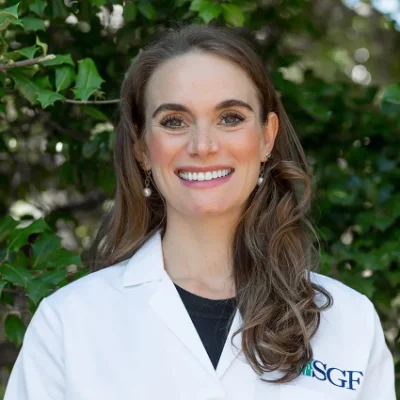
One of the questions Nicole M. Marchetto, M.D., MPH has put her name at the front of is not a laboratory question. It is who actually gets assisted reproductive technology in the United States and who does not - a study of racial and ethnic disparities in the use of different aspects of ART between 2008 and 2018, built as a database query proposal against SART’s CORS registry, submitted by Marchetto and co-authors on January 8, 2021.
That project is possible only because she holds two degrees rather than one. She earned her medical degree at Drexel University College of Medicine in Philadelphia and took her Master of Public Health in the same period. The MPH is what turns a clinical interest into a population-level question, and it shows up in her publication list alongside work on hypertension treatment disparity in pregnancy (2018) and on prenatal stress and newborn telomere length in the American Journal of Obstetrics and Gynecology (2016; Current Zoology 2010 and Proceedings of the Royal Society B 2012 on the same stress-telomere mechanism).
The clinical credential is standard and stated plainly at the top of her profile: board certification in Obstetrics and Gynecology and in Reproductive Endocrinology and Infertility. Residency training in OB/GYN took her to Mount Sinai St. Luke’s - Mount Sinai West in New York; the REI subspecialty came at Rutgers New Jersey Medical School in Newark. She has been recognized for women’s health education inside those programs - an Outstanding Teacher Award selected by medical students, an award for most contributions to intern education, Women’s Health Scholar, the Women’s Health Education Award for overall academic excellence, and the Diana J. Egan Award for Excellence in Clinical Obstetrics & Gynecology - and she served on her resident selection committee and as resident representative on a quality improvement committee.
Her research now sits closest to the decisions she makes in clinic: preimplantation genetic testing, PCOS, and disparities in fertility care. The practical version of that is her SART-CORS comparison, with co-authors, of pregnancy outcomes after IVF frozen embryo transfer with or without PGT-A in women with recurrent pregnancy loss, accepted for publication in Human Reproduction in April 2021 according to her profile. She describes REI as “really on the leading edge of technology and discovery,” and says she came to this practice partly because it has “leveraged our high-volume experience to advance the field of research.”
Clinical Expertise
- IVF and frozen embryo transfer: assisted reproduction cycles and FET planning, the setting in which she published her registry analysis of add-on testing
- PGT-A: embryo screening for chromosome imbalance is her stated research topic and part of her practice; her registry work asks the narrower, harder question of whether screening changes outcomes in recurrent pregnancy loss
- Recurrent pregnancy loss: the study population of that SART-CORS analysis, and the patient group most often offered PGT-A without being told what the evidence does and does not show
- ICSI: listed among her practice areas, the laboratory step used for fertilization failure risk and male factor cases
- PCOS and metabolic factors: a stated research topic; she is co-author of a continuing-medical-education review on PCOS and metabolic syndrome accepted for publication in Topics in Obstetrics & Gynecology in April 2021
- Endocrine causes of infertility: co-author with her mentor of “Diagnosis and Management of Hyperprolactinemia” in Topics in Obstetrics & Gynecology (volume 42, issue 14, September 2022, in press as listed on her profile) - prolactin disorder being one of the ordinary, fixable reasons a cycle does not conceive
- Egg freezing and fertility preservation: listed among her areas of practice, including cycle monitoring and counseling
- Basic science of early pregnancy: co-author of work on endothelial Jagged1 in decidual angiogenesis during early mouse pregnancy (International Journal of Molecular Biology, 2020) and on bone marrow-derived mesenchymal stem cells modulating endometrial stromal cell behavior (Society for Reproductive Investigation abstract, March 2020)
Why Choose Dr. Marchetto
She answers the PGT-A question with registry data, not with a brochure. “Should we screen the embryos?” is the most-asked add-on question in an IVF program, and the honest answer depends on age, indication and diagnosis. Her own published work is a large-registry comparison of screened and unscreened frozen transfers in recurrent loss.
An MPH on a reproductive endocrinology CV means someone is looking at who gets left out. Her disparities research and her hypertension-treatment-disparity abstract are population studies, not case reports. For patients who worry that a recommendation is a habit rather than evidence, that orientation is worth asking about directly.
Teaching awards chosen by the people being taught. The Outstanding Teacher Award on her profile was selected by medical students, and she was recognized for contributions to intern education. In a field where the plan has to be understood to be followed, the ability to explain is documented rather than assumed.
She is searchable in the local media as a fertility-specialist voice, including a WGAL News 8 segment on when couples should see a fertility specialist (January 14, 2025), and appears on regional top-doctor lists: Philadelphia Magazine Top Doctor (2026), Castle Connolly Top Doctor (2025, 2026), Suburban Life Magazine Top Physician (2024, 2025) and Delaware Today Top Doc (2024).
One caveat we will not paper over. Her profile carries patient testimonials selected by the practice; our sources did not capture individual review text for her, so nothing on this page treats those quotes as evidence of outcome. Her memberships in professional societies are also not listed on her profile, so this page makes no claim about society affiliation. And her publications, as listed, include abstracts, continuing-medical-education reviews, a database query proposal and accepted-in-press items - a normal researcher’s mix, but not a list of randomized trials bearing her name.
Professional Affiliations
Board certified in Obstetrics and Gynecology and in Reproductive Endocrinology and Infertility, as labeled on her practice profile; the practice does not publish the years certification was obtained. She holds an M.D. and a Master of Public Health from Drexel University College of Medicine, trained in OB/GYN at Mount Sinai St. Luke’s - Mount Sinai West and in REI at Rutgers New Jersey Medical School. Her profile does not list professional society memberships, so none are asserted here; her SART CORS work is a research relationship with that registry’s data, not a membership. Awards named on her profile include the Diana J. Egan Award for Excellence in Clinical Obstetrics & Gynecology and the Women’s Health Education Award for Overall Academic Excellence.
Suitable For
- Couples deciding about PGT-A, especially where the recommendation rests on recurrent loss rather than on age alone
- Recurrent pregnancy loss evaluation, the population of her registry analysis and the area where her explanation of the evidence is most useful
- PCOS and infertility with a metabolic component, where ovulation induction, weight, insulin and the order of treatments all need deciding
- Egg freezing and fertility preservation, listed among her practice areas, in a network that uses vitrification and publishes its own guidance on eggs per frozen cohort
- Patients who want to know what the national data says about their specific case - the question an MPH-trained REI can be pushed on
- Families scheduling across southeastern Pennsylvania or into Delaware, since she is listed at four offices rather than one
On the numbers she is associated with: the success rates shown for this clinic are SART 2023 data reported for the registry entity “Shady Grove Fertility | Chesterbrook” (ClinicPKID 2029, SART number 0317), which combines cycles from several Pennsylvania offices - Allentown, Chesterbrook, Lancaster and Mechanicsburg - and is not a Chesterbrook-only result, let alone a single physician’s. No per-physician or per-office outcome breakdown for Dr. Marchetto exists in our sources, and she splits her listed practice among two states. Statements such as the group’s size or cumulative baby counts are the brand’s own marketing, not data about her care at any one address.