'%20d='m0%200%2016%2011h61%2061%2061%2061%2060L47%2037h61%2061%2060%2061L16%2063h61%2061%2061%2061%2060L47%2089h61%2061%2060%2061L16%20115h61%2061%2061%2061%2060L47%20141h61%2061%2060%2061L16%20166h61%2061%2061%2061%2060L47%20192h61%2061%2060%2061L16%20218h61%2061%2061%2061%2060z'/%3e%3c/svg%3e)


About Shady Grove Fertility - Pennsylvania
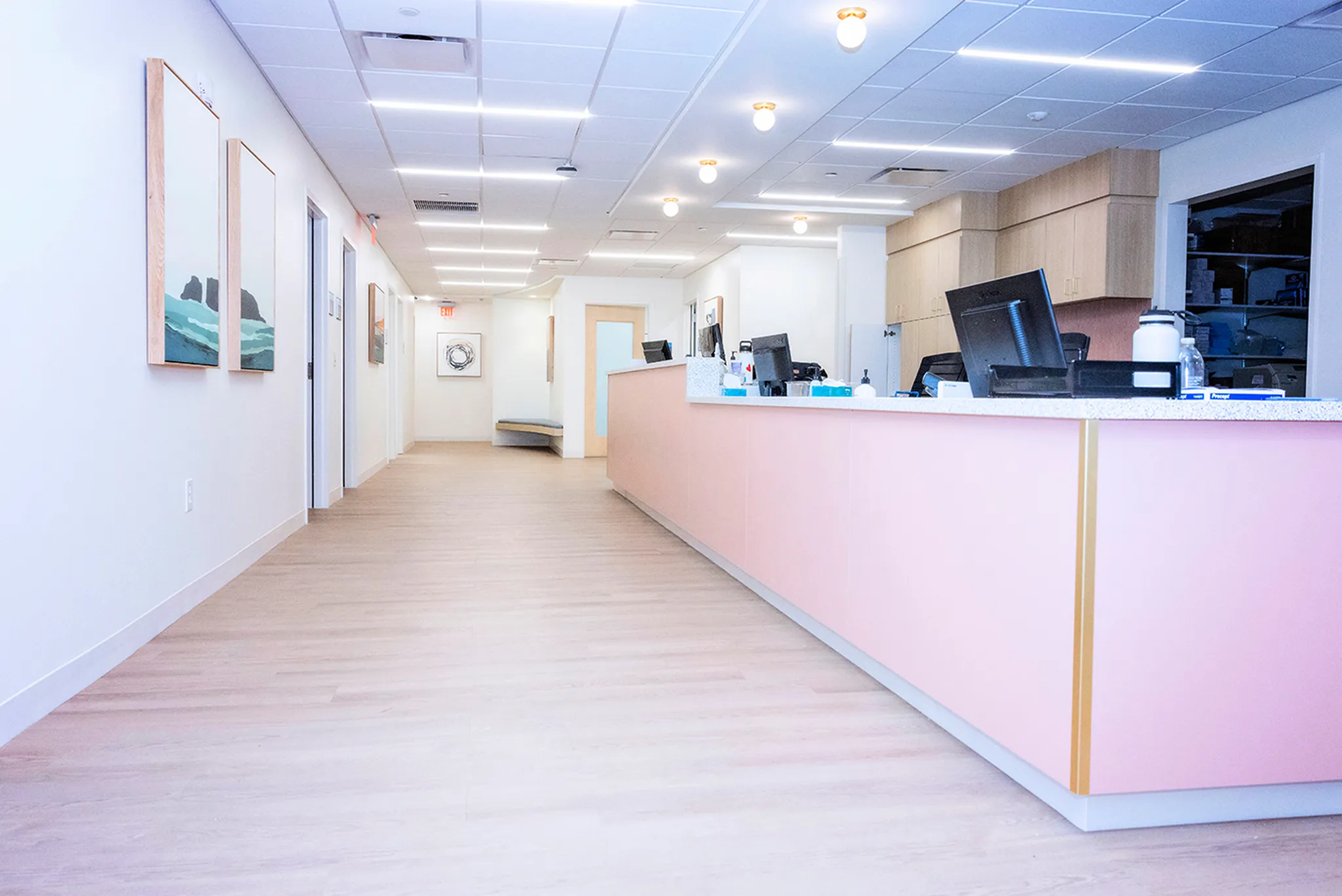
Chesterbrook is a business park in Philadelphia’s western suburbs, and the Shady Grove Fertility (SGF) office at 735 Chesterbrook Blvd is the one Pennsylvania location the practice marks as an “IVF and embryology lab” site. Of the 12 SGF centers listed for Pennsylvania, only Chesterbrook carries that label, and only two - Chesterbrook and Wexford - carry a weekend monitoring label. If your protocol needs an embryology laboratory rather than a monitoring room, this is the address inside the Pennsylvania network where that laboratory sits.
The brand behind it is national. SGF was started by Michael J. Levy, M.D. and Arthur W. Sagoskin, M.D. more than 30 years ago, runs 60 locations across the U.S., and sits inside US Fertility, a physician-owned partnership of fertility practices. The practice calls itself the largest fertility clinic in the United States, says more than 100,000 babies have been born across SGF, and reports that 96% of patients would refer a friend. All three are the company’s own network-wide statements. None of them describes this office’s workload, and this page does not reuse them as Chesterbrook figures.
The 1991 date on this page is not a Chesterbrook founding year either. It traces to SGF’s statement that the practice has published statistics on all assisted reproductive technology performed in its centers “since the inception of our IVF program in 1991” - the history of the founding program, not of this Pennsylvania building, which the practice presents as a new location. No inception year for Chesterbrook is documented in our sources, so we make no “serving Chesterbrook since…” claim.
Here is the part that matters most when you read the numbers below. In the SART registry this office reports as the entity “Shady Grove Fertility | Chesterbrook” (ClinicPKID 2029, registry clinic number 0317), with Isaac Sasson, M.D. named as Medical Director and as the verifier of the 2023 report. That registration unit covers more than one address: the collection record names Allentown, Chesterbrook, Lancaster and Mechanicsburg as Pennsylvania offices reporting under clinic number 0317. So the success rates and the cycle count on this page belong to the Pennsylvania reporting group, not to Chesterbrook alone. No Chesterbrook-only cycle count is published in our sources, and we have not invented one. What does belong to this address is the care team of six listed on the office page, the laboratory described below, and the 4.4-star rating across 205 Google reviews recorded for the Chesterbrook listing.
For the reporting group, SART 2023 Final reports live birth per intended egg retrieval, counting all embryo transfers:
- Under 35: 53.8% on 632 retrievals
- 35 to 37: 41.2% on 379
- 38 to 40: 27.7% on 296
- 41 to 42: 11.6% on 86, and over 42: 6.2% on 32 - weighted together as 10.1% for the over-40 band
The national row of the same registry and the same reporting year (SART 2023 National Summary) is 53.2% / 39.9% / 26.2% / 9.4%. Read honestly, the group’s edge over the national summary is 53.8% against 53.2% under 35, 41.2% against 39.9% at 35 to 37, 27.7% against 26.2% at 38 to 40 and 10.1% against 9.4% over 40. That is a consistent but narrow edge - close to the national picture, not a different league from it. Two further notes on the same report: new patients did better than the per-retrieval averages, with cumulative live birth of 71.8% under 35 (483 patients), 64.5% at 35 to 37 (214) and 45.8% at 38 to 40 (155); and the group’s over-42 new-patient result is masked in the public report at 2 of 17 patients, which is too few cases to interpret.
Volume follows the same rule. The 3,663 cycles in this page’s data are the reporting group’s 2023 total, set against 932, the per-clinic national average printed on this page for the same reporting year. The gap is roughly fourfold, but it is a scale reference rather than a like-for-like benchmark: one figure spans several Pennsylvania offices, the other is a national mean across reporting clinics.
One transfer-type caution. This page carries no fresh-transfer or frozen-transfer split for the reporting group, so no comparison between the two is possible here, and this page makes none. SGF’s own treatment pages do still display a Chesterbrook dataset built on cycles from January 1 to December 31, 2021 - for example 44.1% in the 38 to 40 band, and a 4-of-4 result shown for patients over 42. We did not use it. That block is two reporting years behind, its own headings label the same column both “Per Egg Retrieval Cycle” and “Live Birth Rate per Transfer”, it states that it covers fresh transfers only and excludes PGS cycles requiring frozen transfer, and a 4-of-4 denominator is not a rate. The federal CDC record for the same program covers 2022 with a different cycle denominator (3,084 cycles) and is useful only as an identity cross-check, since it verifies as Isaac E. Sasson, M.D., Ph.D.; those CDC figures cannot be laid next to the SART row above. One practical wrinkle from that same federal record: it lists the program’s address as 945 Chesterbrook Blvd in Wayne, while every SGF page and the mapping data use 735 Chesterbrook Blvd, Chesterbrook, PA 19087. Use the office address for visits; expect the Wayne label if you search registry records.
Accreditations & Awards
Read this list by tier. The first block concerns this laboratory; the next concerns the Pennsylvania reporting group; the last belongs to the national brand.
This site and this laboratory
- Joint Commission laboratory accreditation, with a caveat. The Chesterbrook IVF lab page states the lab is accredited by the Joint Commission and by SART. The Joint Commission’s public directory does hold a “Shady Grove Fertility Center” record, so an accreditation relationship exists - but the directory’s program names and effective dates load in a browser component and were not readable in our collection. Scope and expiry are therefore unverified.
- SART membership and verified lab accreditation. Both flags appear on the SART CORS 2023 Final report for this entity, alongside the Medical Director and Laboratory Director names. This is registry-visible, not self-published.
- CAP accreditation is not established here. SGF’s group lab page says labs are accredited by the Joint Commission or the College of American Pathologists - an either/or brand statement that never names Pennsylvania, and the CAP accredited-lab directory returned no public Chesterbrook entry. Treat CAP as unverified for this site.
- Not applicable to this office: SGF states that AAAHC accredits the Ambulatory Surgery Center at the Rockville, MD headquarters. That is a different state and a different building.
- No Pennsylvania clinic license number is published on the office pages or the practice’s About pages. If you want it before signing a Shared Risk contract, ask for it and check it with the state regulator.
Pennsylvania reporting group
- Newsweek’s America’s Best Fertility Clinics 2026, with the state page asserting SGF ranks as the #2 fertility center in Pennsylvania. Newsweek built the ranking with Statista; the published per-lab tables were not readable in our collection, so this is the practice’s own reading of the ranking, at state and network level. The same 2026 listing states that SGF’s flagship IVF laboratory in Rockville, MD ranks #18 nationally, with other SGF labs also listed - none of them this Pennsylvania laboratory.
National brand
- Castle Connolly 2024, “#1 physician practice for reproductive care” - a badge that repeats across SGF location pages. It is a network-level accolade, not an award to Chesterbrook.
- Shared Risk 100% Refund programs: the practice says SGF was the first fertility practice in the country to offer a shared-risk 100% refund plan, created in 1993.
- Donor egg program described as the largest in the nation - the practice’s own wording on every location page, including this one.
- Physician honors - Philadelphia Magazine, Castle Connolly, Suburban Life, Delaware Today top-doctor listings - are attached to individual doctors on their own pages, not to the building.
Why Choose Shady Grove Fertility - Pennsylvania
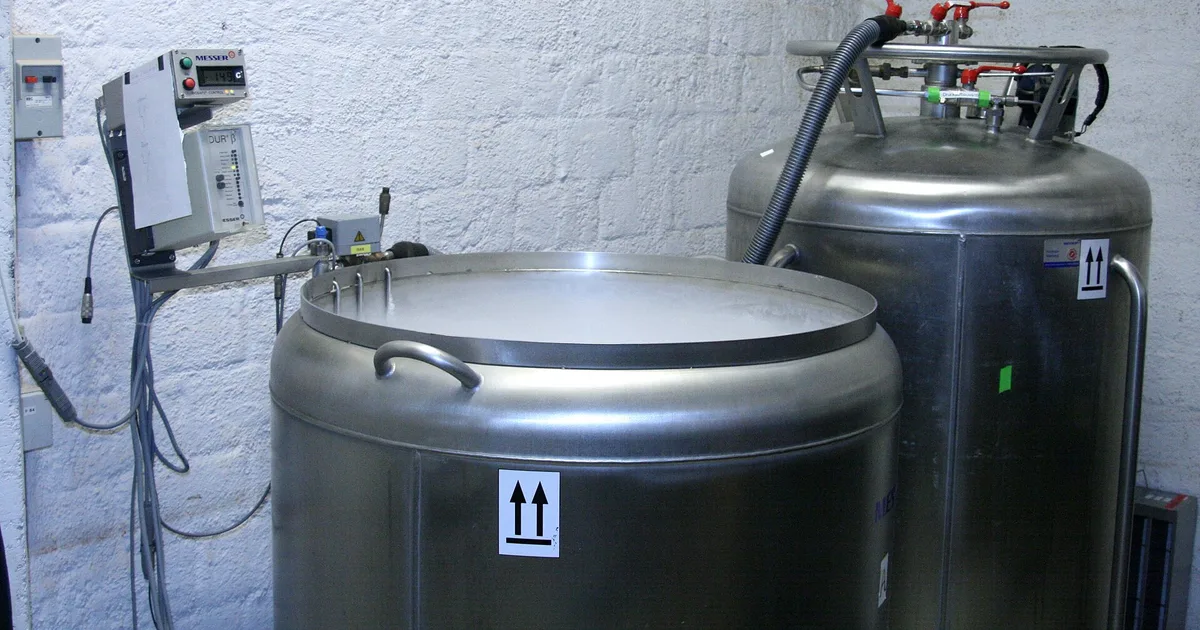
The laboratory stays on site - and it is the network’s Pennsylvania lab. The Chesterbrook lab page lists all twelve Pennsylvania offices as locations it supports: Abington, Bethlehem, Chesterbrook, Conemaugh Memorial Medical Center, Glen Mills, Lancaster, Mechanicsburg, Philadelphia, Quakertown, Warrington, Wexford and York. On the practice’s own account, that is where eggs retrieved at those offices are fertilized, cultured, biopsied and frozen, rather than being handed between independent laboratories. The equipment list the practice publishes for this lab runs to HEPA-filtered clean-air ventilation, heated workstations built to mimic the in-body environment, anti-vibration microscope tables, high-specification inverted microscopes, and current-generation incubators and culture media. Three lab disciplines sit under this roof: embryology, andrology and endocrine (hormone) testing.
Specimen identity controls. SGF describes a chain-of-custody protocol developed and revised over 30 years, pairing CooperSurgical’s RI Witness electronic checking system with manual staff witnessing at each step. The practice states it has never had an incorrect specimen identification. That is a self-published claim from the lab pages, and the strongest version of it - the group’s unblemished record - is a network statement, not an audited Pennsylvania one.
Monitoring that fits around a job. This is the operational detail working patients ask about first. Monitoring appointments run 7:00 to 9:45 a.m. Monday through Friday and 7:00 a.m. to 12:00 p.m. Saturday and Sunday, with office hours from 7 a.m. to 4 p.m. weekdays. A monitoring visit is 15 to 20 minutes: transvaginal ultrasound to measure follicle growth and lining thickness, plus a blood draw for estradiol. Your nurse calls back the same afternoon with dose changes and the next appointment, and after hours you call the office to reach the on-call provider. The endocrine lab is the reason that call can happen the same day - SGF describes automated systems processing thousands of blood samples daily.
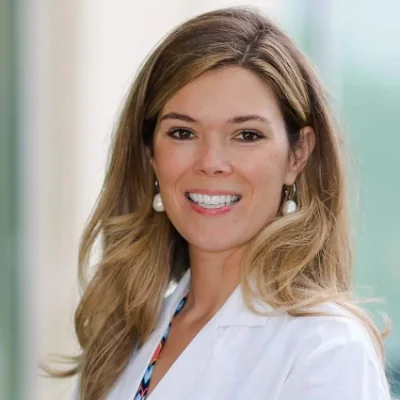
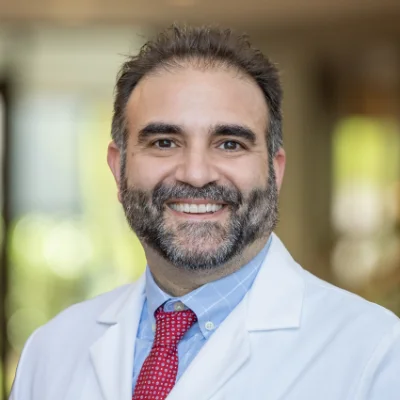
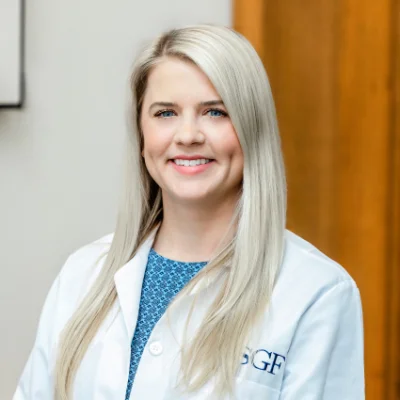
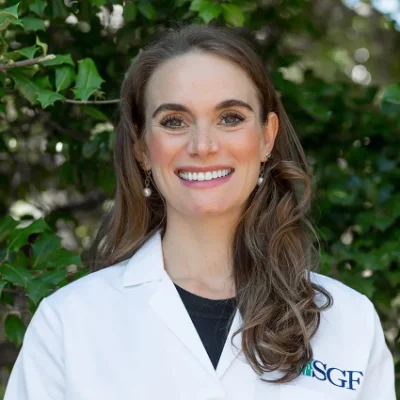
A team with real role separation, not three identical titles. The six clinicians on the Chesterbrook page are three reproductive endocrinologists (Isaac E. Sasson, M.D., Ph.D., who also serves as SGF’s Medical Director for Pennsylvania, Nicole M. Marchetto, M.D., MPH, and Brianna Schumacher, M.D.), one urologist with a male-infertility and microsurgery sub-specialty (Russell Hayden, M.D.), one physician assistant (Erin O’Brien, MMS, PA-C) and one nurse practitioner (London Pino, MSN, RN, FNP-C). The PA-C and the FNP-C carry the monitoring ultrasounds, IUIs, HSGs, saline sonograms, mock transfers and endometrial biopsies. That is who you see on a Tuesday at 7:30 a.m.
Male-factor care inside the same practice. Hayden joined SGF’s Center for Male Fertility in 2021. Semen analysis, workups for low or absent sperm counts, and surgeries such as vasectomy reversal and sperm retrieval sit in the same network as the IVF cycles that may follow, which shortens the coordination between the two halves of a couple’s treatment.
Financial counseling is a scheduled step, not a phone tree. After the first visit, a dedicated Financial Educator goes through your benefits line by line - covered, not covered, out of pocket - before you commit to anything.
IVF & Fertility Services
The service list below is the Chesterbrook office page’s own list, with the group’s treatment pages behind it. One limitation applies to the whole list: SGF states that surgical procedures are performed in-house or at the practice’s Towson, MD location, so retrieval and transfer scheduling at Chesterbrook may not be automatic.
- IVF. Full stimulated cycles with monitoring, transvaginal retrieval, fertilization, blastocyst culture and transfer. ICSI is performed when clinically indicated.
- ICSI and semen preparation. Sperm washing and preparation for IUI or IVF, and freezing of sperm when a partner cannot produce a fresh sample or faces gonadotoxic treatment.
- PGT. PGT-A for chromosome number, PGT-M for known single-gene conditions (cystic fibrosis, Huntington’s disease, BRCA and similar), and PGT-SR for structural rearrangements such as balanced translocations. Embryos are biopsied at the blastocyst stage on day 5 to 7, all embryos are frozen while results run, and PGT-A results typically take about two weeks - which makes the transfer a later frozen cycle, not the same visit.
- Frozen embryo transfer. A FET cycle runs roughly 6 to 8 weeks: about 3 to 4 weeks of birth control pills to suppress the cycle, a baseline with bloodwork and ultrasound, estrogen to build the lining, then progesterone before the transfer date is set.
- Egg freezing and fertility preservation. Vitrification is the freezing method. SGF’s published guidance from its own lab work: women under 38 are advised to freeze 15 to 20 mature eggs (estimated 70 to 80% chance of at least one live birth), and women 38 to 40, 25 to 30 eggs (65 to 75%). The practice also cites a published study of 1,171 egg-freezing cycles for 875 women, in which 117 of those women returned for 128 egg thaw cycles using 1,283 frozen eggs; those thaws produced 51 viable pregnancies. These are network figures from the practice’s own pages.
- Donor egg, donor sperm and donor embryo. Chesterbrook is also tagged as an egg donation center. SGF’s frozen-donor program runs through Fairfax EggBank, which screens over 1,000 applicants a year and approves fewer than 1% of them; each cohort comes with 6 to 8 eggs.
- Gestational carrier services. Embryo transfer and frozen-embryo management for families building through a carrier. The practice publishes gestational-carrier outcome figures only for its Rockville office, so there is no Chesterbrook number to quote.
- IUI, ovulation induction and timed intercourse, plus semen analysis, ovarian reserve and hormone testing, ultrasound and hysterosalpingogram (HSG) for the diagnostic workup.
- Male fertility. Evaluation and treatment of male infertility, including vasectomy reversal and surgical sperm retrieval through the Center for Male Fertility.
- OncoFertility. Egg and embryo preservation before chemotherapy or radiation.
- LGBTQIA+ family building and single-parent family building, with a virtual queer family-building support group open to patients in Maryland, DC, Virginia and Pennsylvania.
- First visits are offered in person or by video.
Fees & Packages
There is no published price list. Across the 50 pages collected for this unit, no dollar figure appears for an IVF cycle, IUI, egg freezing, donor eggs, medications or testing. The practice’s explanation is that fertility care is not one product - a consultation, basic testing, a simpler treatment and IVF sit at different price points - so a real number only exists after the consultation, when the Financial Educator prices what you would actually be doing. What the sources do document is the structure around the cost.
Shared Risk 100% Refund (network program, created 1993). For a single refundable deposit you may attempt up to 6 IVF or donor egg cycles plus every subsequent frozen transfer. If you do not take a baby home, or you withdraw at any point, 100% of the deposit comes back. The mechanics that matter:
- Included: all medical and lab services across up to 6 complete cycles, from the first medication through the first blood pregnancy test, plus assisted hatching and ICSI when needed, plus vitrification and unlimited FETs from those cycles. With a donor, monitoring done at SGF and the retrieval are included too.
- Not included: consultations, diagnostic testing, outside services, medications, surgical sperm retrieval by a urologist, care for complications, and non-IVF treatment. PGT is an extra fee on top.
- What counts as a cycle: only a cycle where a retrieval happens. A cycle canceled during stimulation, or one where no eggs were retrieved, does not consume one of your 6. A cycle that ends in a pregnancy loss before delivery does.
- Eligibility: you must be without insurance or choose not to use your benefits, and the plan cannot be combined with other discounts. The patient carrying the pregnancy must be 40 on completion of the IVF cycles; patients 41 and older can enroll using donor eggs. Donor-egg participants must use a known or agency-recruited donor.
- Other versions exist: unlimited FET cycles on embryos already vitrified at an SGF lab (embryos created before the patient turned 39, or from donor eggs); and unlimited thaw-and-transfer cycles for patients returning to eggs they froze at SGF, with a minimum of 10 mature eggs and all thaws completed by age 51.
- The practice states that Shared Risk participants get identical screening and identical protocols - it is a financing plan, not a clinical tier - and that its published take-home rates on the program are 82% with own eggs and 85% with donor eggs. Those are the company’s own program figures at network level, with no reporting years given, and they are not Chesterbrook results.
Other cost paths documented: Multi-Cycle Discount for IVF, which the practice says saves at least 40% against paying cycle by cycle; CapexMD financing with 0% interest six-month loans and longer options up to an 84-month term; the income-assessed Shared Help Treatment Discount for uninsured or denied-coverage households; a Military Discount for active and reserve members and veterans with service-related fertility injuries; and grant matching - SGF matches 100% of a grant awarded by a 501(c)(3) organization, up to 25% of the service charge. The Tinina Q. Cade Foundation, which SGF supports, advertises Family Building Grants of up to $10,000, and SGF patients who apply are also considered for two SGF-only grants (the Dr. Stephen Greenhouse Grant, one IVF cycle for two patients each round, and the Savannah Grant). One published fee does exist and is worth knowing: medical records released electronically cost a $6.50 flat fee, handled by a contracted records service.
Insurance. The office page states about 90% of patients have coverage for the initial consultation and about 70% have full or partial coverage for testing and treatment - the practice’s own experience figures, not actuarial or regulatory data. Pennsylvania plans listed for this location: Aetna (SGF is an Aetna Institute of Excellence), Amerihealth HMO, Capital Blue Cross Blue Shield, Cigna, Coventry Healthcare National Network, GEHA, Health America, Highmark BCBS, Independence BCBS, Keystone HMO, Tricare/Humana Military, UnitedHealthcare (excluding Navigate and Compass), United Resource Network and the VA Community Care Network. Carriers marked in the original list require a referral or prior authorization before the new patient visit. Fertility benefit platforms accepted: Carrot, Maven Clinic, Progyny and Optum, with SGF in Pennsylvania designated an Optum Center of Excellence. Participation varies by specific product, so confirm network status with your carrier rather than with this page.
Patient Journey
- Book a new patient consultation through online scheduling or the new patient center, in person or by video. Central Pennsylvania offices also advertise free second opinions.
- Complete the intake paperwork on time - this is the step that cancels appointments. SGF sends an email and a text from Phreesia, its HIPAA-compliant intake system. If new patient paperwork is not submitted three business days before the appointment, that appointment is canceled and has to be rescheduled.
- First visit. History, pelvic ultrasound, ovarian reserve and hormone bloodwork. Your partner gives a semen analysis; the andrology lab reviews the sample in person at drop-off, checks photo ID, and you receive results through the ordering physician within a few days. HSG is added when indicated. Your reproductive endocrinologist reviews results and proposes a plan.
- Financial review with a dedicated Financial Educator after that first visit, comparing insurance or employer benefits against Shared Risk and discount options - the two cannot be stacked.
- Stimulation and monitoring. Medications plus repeated 15 to 20 minute monitoring visits (ultrasound and estradiol bloodwork) in the early-morning or weekend windows above; a nurse phones back the same afternoon with dose changes.
- Retrieval. Transvaginal, 20 to 25 minutes under anesthesia, followed by about 30 minutes of recovery. The person driving you must stay inside the center for the whole procedure - budget roughly three hours for the two of you.
- In the lab. Fertilization, with ICSI where clinically indicated, then culture to blastocyst. Embryos are graded, biopsied if PGT is planned, and surplus embryos are vitrified and stored on site.
- Transfer. About 5 minutes, no anesthesia and no recovery time. You need a full bladder - drink the recommended fluids 30 to 40 minutes ahead - and the physician places the catheter under abdominal ultrasound guidance.
- Pregnancy test. A beta hCG blood draw about 10 days after blastocyst transfer, then early-pregnancy follow-up with the team.
- Frozen transfer cycles follow their own track: infectious-disease bloodwork current within the last year, an updated mock embryo transfer and HSG if your physician asks after a prior delivery or certain gynecologic surgery, and consent forms re-signed by both partners every FET cycle.
Getting there: parking in front of the building is free and plentiful. From Philadelphia, Septa Bus 124 runs to Chesterbrook and King of Prussia. There is no train service to this office.
Local Legal Framework
Pennsylvania has no fertility-coverage mandate in the sources behind this page. SGF maintains a state-by-state fertility insurance law page; it summarizes California, Colorado, Connecticut, Delaware, Maryland and New Jersey, and Pennsylvania does not appear on it. The same practice tells Pennsylvania readers that New Jersey and Delaware are the states with mandated fertility coverage. So nothing here should be read as “Pennsylvania requires IVF coverage”: your coverage depends on your plan, and for patients the more useful distinction is who insures it. The practice’s own guidance is that fully insured employer plans follow state law, while self-insured plans sit under federal law and are exempt from state mandates - which is why two coworkers on adjacent plans can have opposite results.
Donor gametes, embryo donation and gestational carriers. SGF runs all of these programs and describes its own screening in detail, but neither its service pages nor this unit’s sources state Pennsylvania parentage law, donor anonymity rules or intended-parent order procedures. Pennsylvania has no ART-specific parentage framework comparable to the statutes cited for California or Delaware in these sources, and we are not going to fill that gap from general practice. If you need a pre-birth order, a known-donor contract or a carrier agreement, get it reviewed by a Pennsylvania reproductive-law attorney before the cycle starts, not after.
Embryo disposition and PGT. No Pennsylvania statute restricting PGT-A, PGT-M or PGT-SR is documented in this unit’s sources. The clinic-side document that governs stored embryos is the consent you sign when they are created - the same consent that both partners must re-sign for each frozen transfer cycle.
Facility licensing. No Pennsylvania clinic license number is published for this site on the office or About pages, and the license field on this page is deliberately blank. Ask the practice for the number and verify it with the state rather than assuming it.
Location
735 Chesterbrook Blvd, Chesterbrook, PA 19087 Phone: (610) 981-6000